Loading...
Done
Eryn, owned by Tom Chudleigh in Canada. New global research has revealed that ‘shed-scapism’ is sweeping the world with more people than ever ditching their tools and transforming their sheds into zen dens. The research comes as the Cuprinol Shed of the Year competition joins forces with aspirational shed fan site, Cabin p*rn, to launch the first ever global category. We have a stunning suite of imagery of 9 sheds from across the world - from Norway to Slovenia, British Colombia to Colorado who have all submitted their sheds in the hopes of being crowned the first ever Global Shed of the Year. (Photo by Cuprinol/Rex Features/Shutterstock)

Eryn, owned by Tom Chudleigh in Canada. New global research has revealed that ‘shed-scapism’ is sweeping the world with more people than ever ditching their tools and transforming their sheds into zen dens. The research comes as the Cuprinol Shed of the Year competition joins forces with aspirational shed fan site, Cabin p*rn, to launch the first ever global category. We have a stunning suite of imagery of 9 sheds from across the world - from Norway to Slovenia, British Colombia to Colorado who have all submitted their sheds in the hopes of being crowned the first ever Global Shed of the Year. (Photo by Cuprinol/Rex Features/Shutterstock)
Details
15 Mar 2017 00:02:00
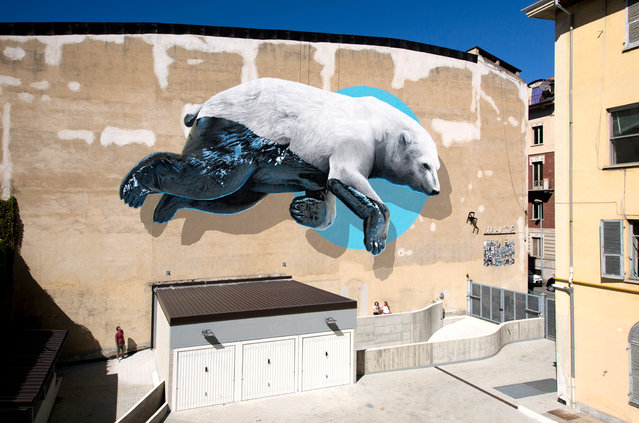
A polar bear whose bottom half is caked in oily black gunk. A whale wrapped in striped fabric: a pseudo straightjacket. These are the messes climate change leaves behind, the things we know are happening but often don’t have the opportunity to see with our own eyes. Swiss street art duo Christian Rebecchi and Pablo Togni, otherwise known as NeverCrew, met in art school when they were 15 and started making work together soon after. As a team, the artists adorn the world with eye-popping and gut-wrenching images depicting the consequences of humanity’s actions on earth. Here: “Black machine” mural painting and installation on the Colosseo theater in Turin, Italy, in September 2015. (Photo by NeverCrew/The Huffington Post)

A polar bear whose bottom half is caked in oily black gunk. A whale wrapped in striped fabric: a pseudo straightjacket. These are the messes climate change leaves behind, the things we know are happening but often don’t have the opportunity to see with our own eyes. Swiss street art duo Christian Rebecchi and Pablo Togni, otherwise known as NeverCrew, met in art school when they were 15 and started making work together soon after. As a team, the artists adorn the world with eye-popping and gut-wrenching images depicting the consequences of humanity’s actions on earth. (Photo by NeverCrew/The Huffington Post)
Details
13 Aug 2016 11:09:00
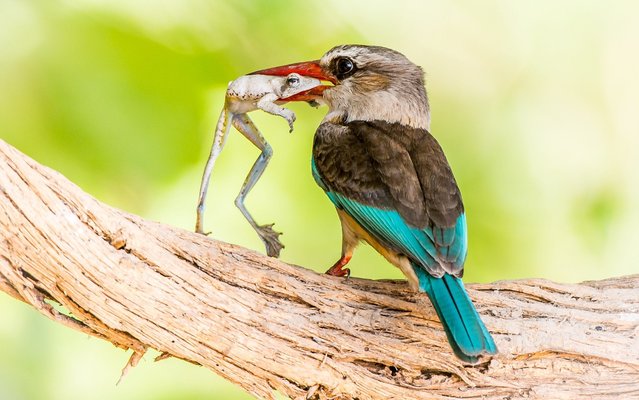
A brown-hooded kingfisher sits on a branch with a freshly caught frog in it's beak. Riaan Marais who took the photo said, “We were doing a boat safari on the Rufiji river in Selous Game Reserve, Tanzania when I spotted the bird with the frog on an overhanging branch on the river bank. It most probably caught the frog in the reeds along the river’s edge as this is where these frogs stay. The kingfisher must have caught the Common Reed Frog just before I took the image, as the frog was still alive, I had a brief moment to take the image before the bird flew off with the frog”. (Photo by Riaan Marais/Solent News and Photo Agency)

A brown-hooded kingfisher sits on a branch with a freshly caught frog in it's beak. Riaan Marais who took the photo said, “We were doing a boat safari on the Rufiji river in Selous Game Reserve, Tanzania when I spotted the bird with the frog on an overhanging branch on the river bank. It most probably caught the frog in the reeds along the river’s edge as this is where these frogs stay. The kingfisher must have caught the Common Reed Frog just before I took the image, as the frog was still alive, I had a brief moment to take the image before the bird flew off with the frog”. (Photo by Riaan Marais/Solent News and Photo Agency)
Details
10 Jun 2018 00:03:00
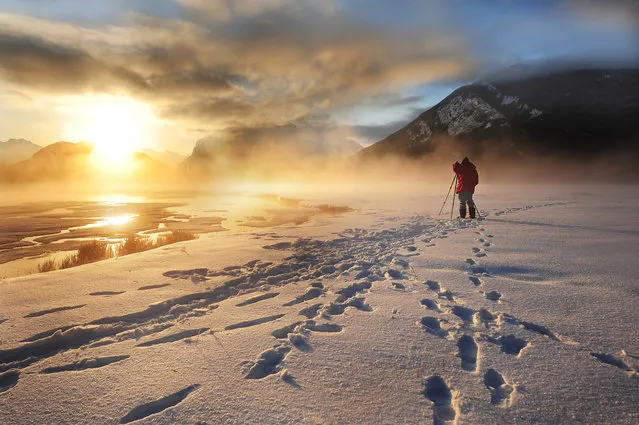
“Artist of the light”. While shooting sunrise in the Vermilion lakes area of Banff national park, Canada, I met a fellow photographer on the scene. Most of the time, we tried not to get in each other's way, however, just by accident, I snapped a picture with him in it working on his tripod settings, and it turned out to be a great photo compared to my sunrise shots. (Photo and caption by Victor Liu/National Geographic Traveler Photo Contest)

“Artist of the light”. While shooting sunrise in the Vermilion lakes area of Banff national park, Canada, I met a fellow photographer on the scene. Most of the time, we tried not to get in each other's way, however, just by accident, I snapped a picture with him in it working on his tripod settings, and it turned out to be a great photo compared to my sunrise shots. (Photo and caption by Victor Liu/National Geographic Traveler Photo Contest)

ATTENTION! All pictures are presented in high resolution. To see Hi-Res images – just TWICE click on any picture. In other words, click small picture – opens the BIG picture. Click BIG picture – opens VERY BIG picture.
Details
27 Jun 2013 13:11:00
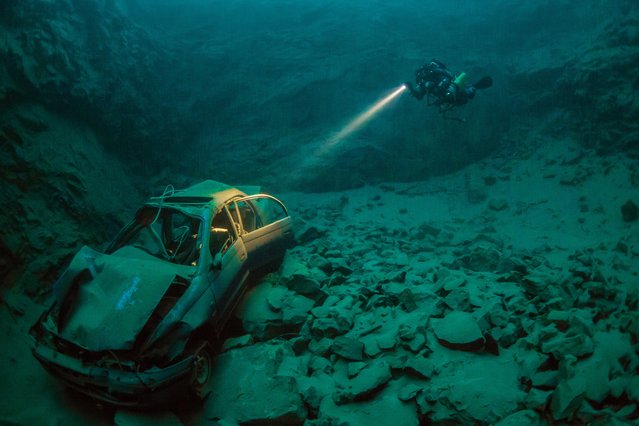
Wide-angle category winner. Part of the Illusion by Marcus Blatchford (UK). Location: National Dive & Activity Centre, Chepstow, Wales. “This is the deepest inland dive centre in the UK. The dive plan was to explore the deep end, but this time I dived ‘unplugged’ (without my strobes). With the exception of this change to my camera technique, there were no planned shots I wanted to achieve – just a fun dive with ad-hoc photos along the way. Shortly after this photo was captured, in 6C water and two hours of decompression ahead of us, we turned and started the long ascent back to the surface”. (Photo by Marcus Blatchford/Underwater Photographer of the Year 2016)

Wide-angle category winner. Part of the Illusion by Marcus Blatchford (UK). Location: National Dive & Activity Centre, Chepstow, Wales. “This is the deepest inland dive centre in the UK. The dive plan was to explore the deep end, but this time I dived ‘unplugged’ (without my strobes). With the exception of this change to my camera technique, there were no planned shots I wanted to achieve – just a fun dive with ad-hoc photos along the way. Shortly after this photo was captured, in 6C water and two hours of decompression ahead of us, we turned and started the long ascent back to the surface”. (Photo by Marcus Blatchford/Underwater Photographer of the Year 2016)
Details
18 Feb 2016 13:44:00
Ocean voyage

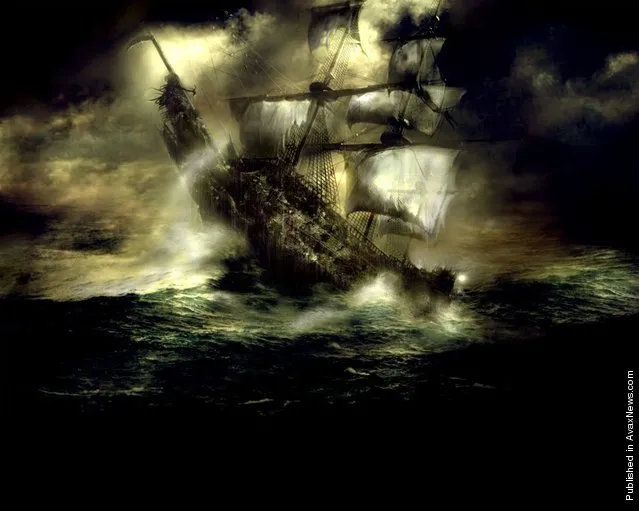
Do you think that history is a science? Well, not exactly. First, and foremost, history is the state's “legend of wars”, it’s official regalia. Of course, public historians are not interested in scientific truth – quite the opposite. In this respect, any attempt to present a state’s history as altruistic and benevolent as possible is welcomed and encouraged – as opposed to any revisionism attempts that may be more accurate. In this matter, Chinese have surpassed us all – they revised in highly creative manner (but rather shamelessly) the technology already invented by Europeans, a process that resulted in oldest state on the planet. Here is an interesting paradox: ask any sinologist about the Middle Kingdom during second century B.C., and he will describe it to you in such a vivid manner as if he has been living there all his life – but as soon as you will ask him to describe Chinese history in the 19-20th centuries… let's say, his eagerness will be greatly diminished. However, we will discuss China in a different article, and in the meantime we will try to understand how exactly historic “legend of wars” is formed and functions – based on a specific and well-known example. A great example is Ferdinand Magellan's first voyage around the world.
Details
14 Nov 2011 09:11:00
Things Cut in Half

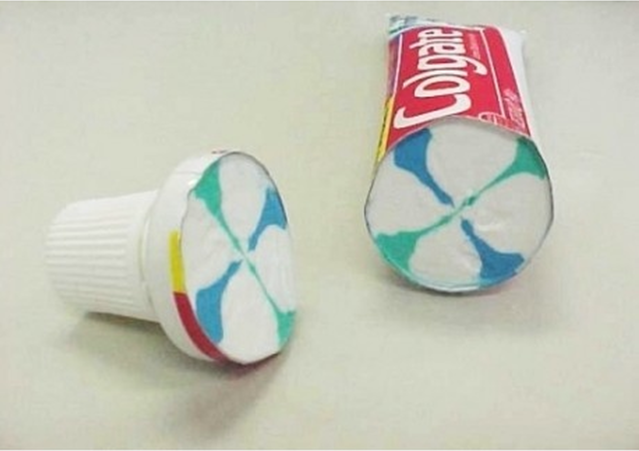
HalfPics is a Twitter feed pointing to things cut in half like a bowl of ramen, a Mini Cooper, and toothpaste. Their tagline: “Ever wonder what stuff looks like when it’s cut in half?” Yes. We previously posted about “Cut Food,” a photo series of foods cut neatly in half by food photographer Beth Galton and food stylist Charlotte Omnès.


See also:Things Cut in Half Part2
Details
07 Sep 2013 10:32:00
Food In Faces By Victor Nunes

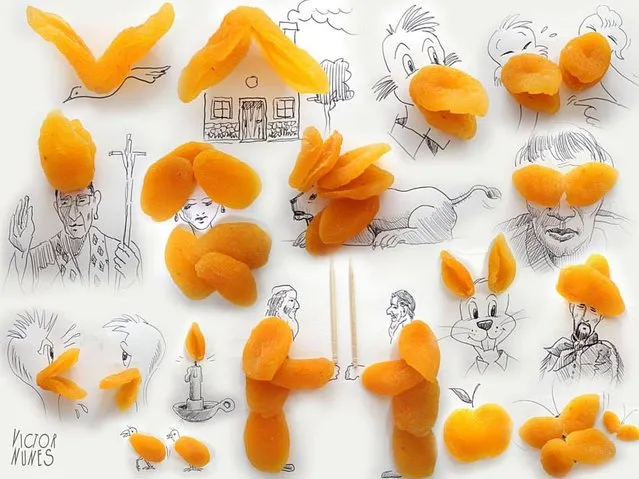
Artist Victor Nunes combines every-day objects with simple illustrations to turn them into pictures of faces, animals and other playful scenes. His images invite us to look at the world differently and find creative images in our surroundings. Nunes’ art is a great example of pareidolia, which is our propensity to give meaning to random objects (like in this post about seeing faces in random objects). It’s the reason why we associate a smiley face with a human face and why some of Nunes’ pieces of popcorn or bread resemble faces to us.
Details
02 Feb 2014 11:58:00