Loading...
Done
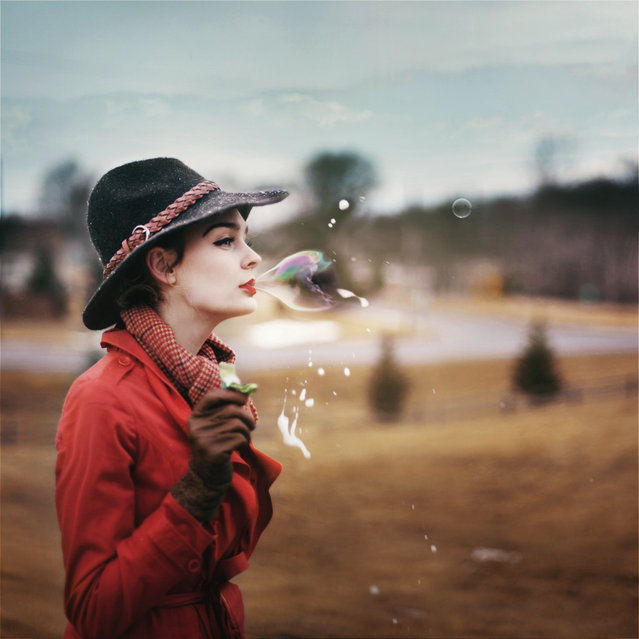
All my life i lived in a bubble. (Photo by Karrah Kobus)

“Sometimes i feel like photographers have uncovered a special secret. A crazy, amazing, and beautiful secret. The key to truly living. All i want is to be alive”. – Karrah Kobus

Photo: “All my life i lived in a bubble”. (Photo by Karrah Kobus)


Details
16 Dec 2012 11:05:00
Two animatronic velociraptors are on display during a technical rehearsal of “Walking with Dinosaurs The Live Experience” at the Indoor Stadium in Singapore, 29 August 2019. “Walking with Dinosaurs The Live Experience” is based on the BBC series of the same name and will run from 29 August to 08 September. (Photo by Wallace Woon/EPA/EFE/Rex Features/Shutterstock)

Two animatronic velociraptors are on display during a technical rehearsal of “Walking with Dinosaurs The Live Experience” at the Indoor Stadium in Singapore, 29 August 2019. “Walking with Dinosaurs The Live Experience” is based on the BBC series of the same name and will run from 29 August to 08 September. (Photo by Wallace Woon/EPA/EFE/Rex Features/Shutterstock)
Details
01 Sep 2019 00:07:00
A view of traditional bolinhos de bacalhau (fried codfish balls) in Rio de Janeiro, Brazil, May 7, 2016. (Photo by Sergio Moraes/Reuters)

If the most popular foods of Rio de Janeiro have one thing in common, it is their informality. You can find fine restaurants in the city, but they do not set Rio apart from other places. What does set it apart, and what invariably brings its residents, known as "Cariocas," together is the unpretentious food they eat in bright, loud, crowded bars and restaurants, on busy street corners, or after a day at the beach. Here: A view of traditional bolinhos de bacalhau (fried codfish balls) in Rio de Janeiro, Brazil, May 7, 2016. (Photo by Sergio Moraes/Reuters)
Details
05 Aug 2016 13:20:00
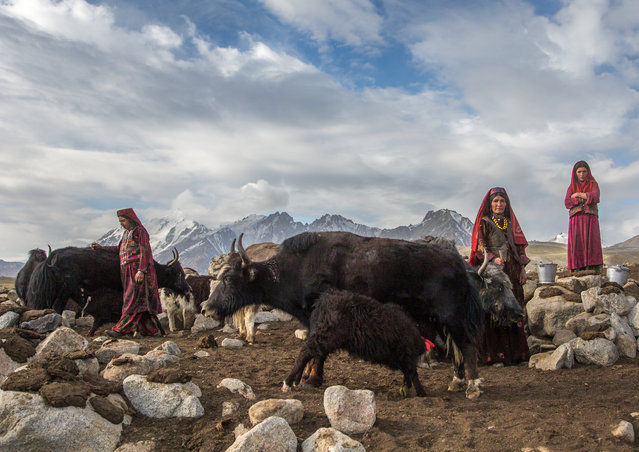
Wakhi nomad women milk yaks in Wakhan, Afghanistan. About 12,000 villagers live at an altitude of 4,500 metres in the harsh, desolate terrain. The Wakhi people live a simple, relaxed life with their livestock. (Photo by Eric Lafforgue/Barcroft Images)

Wakhi nomad women milk yaks in Wakhan, Afghanistan. About 12,000 villagers live at an altitude of 4,500 metres in the harsh, desolate terrain. The Wakhi people live a simple, relaxed life with their livestock. (Photo by Eric Lafforgue/Barcroft Images)
Details
12 Oct 2016 10:13:00
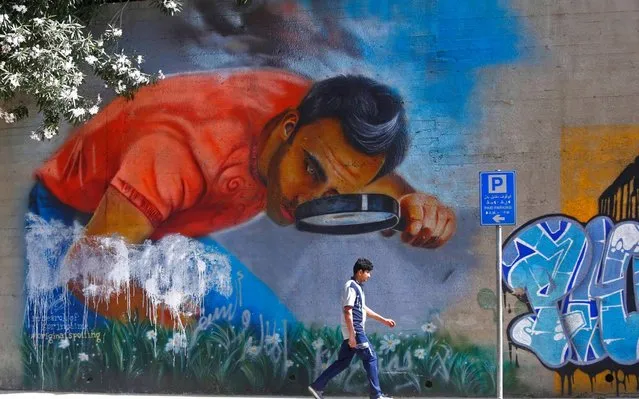
A man passes by a wall with graffiti in Beirut, Lebanon, on May 29, 2019. (Photo by Bilal Jawich/Xinhua News Agency/Alamy Live News)

A man passes by a wall with graffiti in Beirut, Lebanon, on May 29, 2019. (Photo by Bilal Jawich/Xinhua News Agency/Alamy Live News)
Details
27 Jun 2019 00:01:00
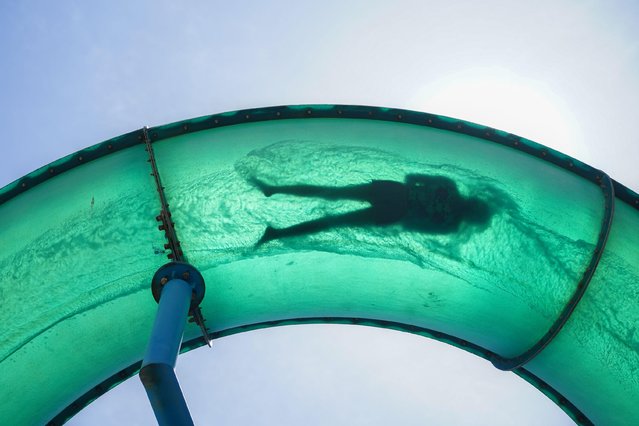
Swimmer silhouetted in a waterslide in the coastal suburb of Glenelg, Adelaide, Australia on January 21, 2025. (Photo by Amer Ghazzal/Alamy Live News)

Swimmer silhouetted in a waterslide in the coastal suburb of Glenelg, Adelaide, Australia on January 21, 2025. (Photo by Amer Ghazzal/Alamy Live News)
Details
24 Feb 2025 03:48:00
This Thursday, January 22, 2015 photo made with a long exposure shows the glow from a Noctiluca scintillans algal bloom along the seashore in Hong Kong. The luminescence, also called Sea Sparkle, is triggered by farm pollution that can be devastating to marine life and local fisheries, according to University of Georgia oceanographer Samantha Joye. (Photo by Kin Cheung/AP Photo)

This Thursday, January 22, 2015 photo made with a long exposure shows the glow from a Noctiluca scintillans algal bloom along the seashore in Hong Kong. The luminescence, also called Sea Sparkle, is triggered by farm pollution that can be devastating to marine life and local fisheries, according to University of Georgia oceanographer Samantha Joye. Noctiluca itself does not produce neurotoxins like other similar organisms do. But its role as both prey and predator tends can eventually magnify the accumulation of toxins in the food chain, according to R. Eugene Turner at Louisiana State University. (Photo by Kin Cheung/AP Photo)
Details
23 Jan 2015 13:12:00
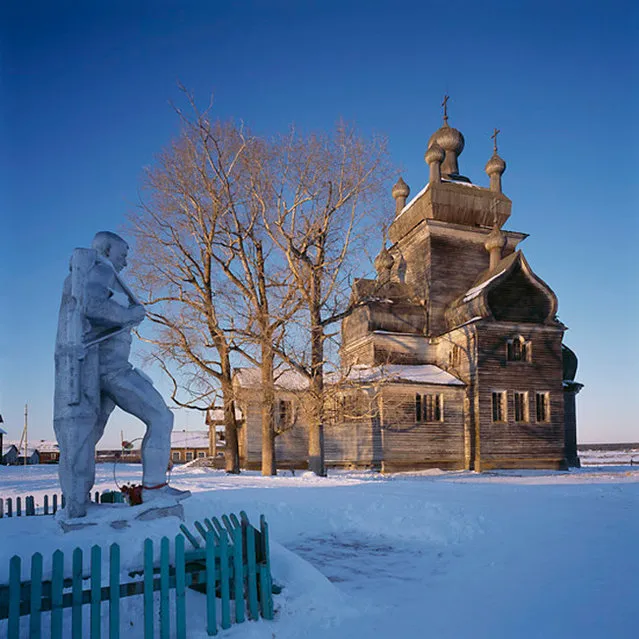
Wooden Churches - Travelling In The Russian North By Richard Davies Part 2

While communism, collectivism, worms, dry rot and casual looting failed to destroy the majestic wooden churches of Russia, it may be ordinary neglect that finally does them in. Dwindled now to several hundred remaining examples, these glories of vernacular architecture lie scattered amid the vastness of the world’s largest country. Just over a decade ago, Richard Davies, a British architectural photographer, struck out on a mission to record the fragile and poetic structures. Austerely beautiful and haunting, “Wooden Churches: Traveling in the Russian North” (White Sea Publishing; $132) is the result. Covering thousands of miles, Mr. Davies described how he and the writer Matilda Moreton tracked down the survivors from among the thousands of onion-domed structures built after Prince Vladimir converted to Christianity in 988.

See also: Wooden Churches Part1
Details
28 Nov 2013 12:13:00