Loading...
Done
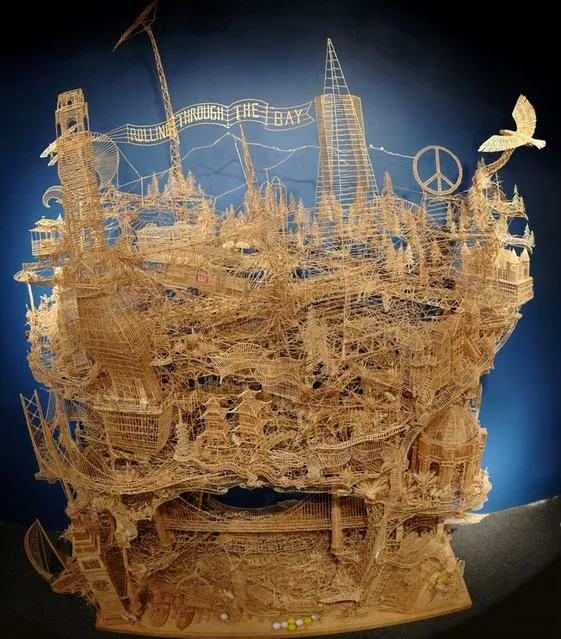
Rolling Through the Bay By Scott Weaver

It has taken 3,000 hours and 34 years to make – but the results are incredible. Artist Scott Weaver has created a huge but incredibly detailed model of San Francisco using 100,000 toothpicks. The work entitled Rolling Through the Bay also doubles as a marble run. Ping pong balls dropped on several ramps at the top of the model follow several “tours” through the city. They pass matchstick replicas of sights such as Alcatraz, Fisherman's Wharf, the Golden Gate Bridge and the city's trademark terraced houses on steep hills.
Details
21 Feb 2014 13:26:00
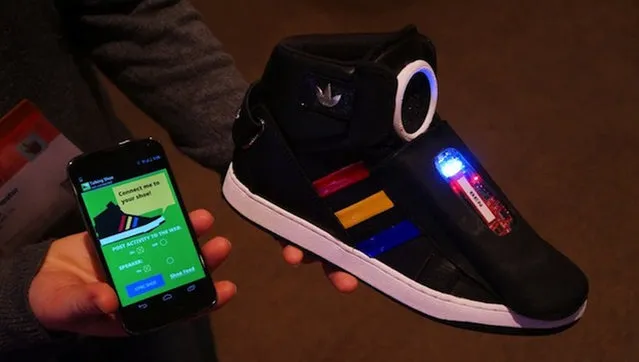
Google & Adidas – Talking Shoe

The shoe works similarly to a fitness tracking device, using an accelerometer, gyroscope, Bluetooth and other off-the-shelf technologies to analyze the wearer’s movements and offer motivating and timely commentary. It might tell you to get going if you’ve been idle for too long or cheer you on if it senses you being very active. Its comments can be posted to Google+ by the user, sent to real-time ad units, or broadcast via onboard speakers.
Details
13 Mar 2013 11:49:00
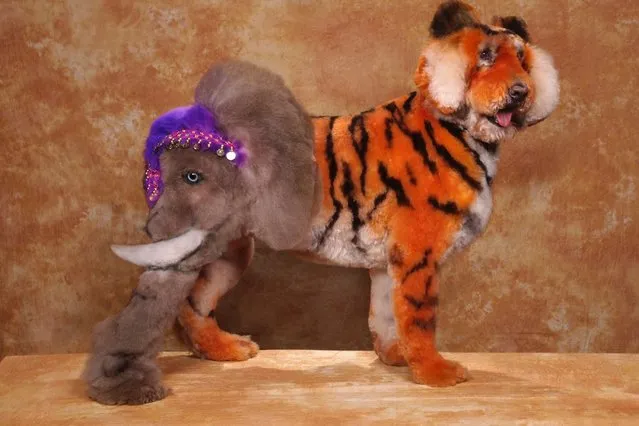
A dog with a half tiger and half elephant design at a creative grooming competition in Hershey, Pennsylvania. (Photo by Ren Netherland/Barcroft Media)

Anamal photographer Ren Netherland travels thousands of miles across America to creative dog grooming competitions every year. He captures the dogs with their striking designs – which include characters from Disney, Star Wars and Sesame Street.

Photo: A dog with a half tiger and half elephant design at a creative grooming competition in Hershey, Pennsylvania. (Photo by Ren Netherland/Barcroft Media). P.S. To see the first part, use please the “Creative dog grooming” tag.
Details
23 Jun 2013 07:16:00
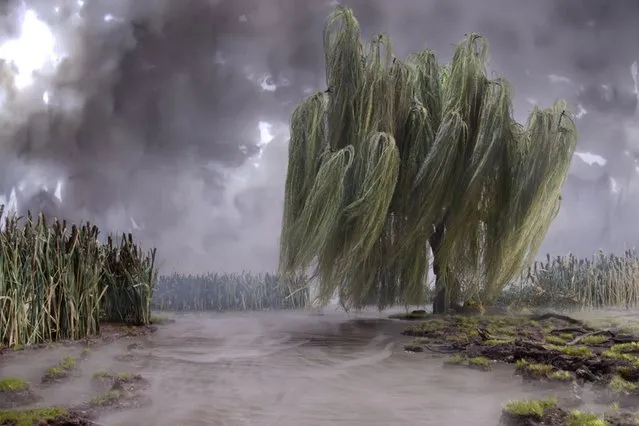
A stormy version of “New Life 2” created by Matthew Albanese. (Photo by Matthew Albanese/Barcroft Media)

Artist Matthew Albanese creates amazing miniature landscapes made from sugar, chocolate and even bits of ostrich in his living room. All the models were painstakingly recreated in his living room, which he uses as his studio. Each gruelling piece can take up to as many as 700 hours to complete. Photo: A stormy version of “New Life 2” created by Matthew Albanese. (Photo by Matthew Albanese/Barcroft Media)
Details
31 Jul 2013 12:20:00
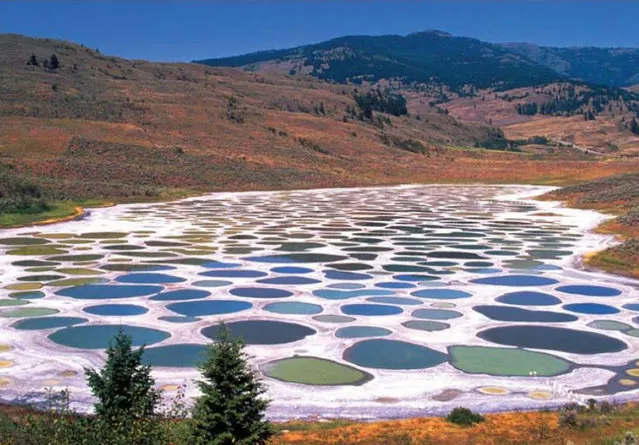
Kliluk, the Spotted Lake, Canada

Originally known to the First Nations of the Okanagan Valley as Khiluk, which was- and remains today revered as a sacred site producing therapeutic waters. During World War I the minerals of Spotted Lake were used in manufacturing ammunition. Later the area came under the control of the Ernest Smith Family, for a term of about 40 years. In 1979 Smith attempted to create interest in a spa at the lake. The First Nations responded with an effort to buy the lake; in October 2001 they finally struck a deal. First Nations arranged the purchase of 22 hectares of land for a total of $720,000, and contributed about 20% of the cost. The Indian Affairs Department paid the remainder.
Details
06 Mar 2015 12:59:00
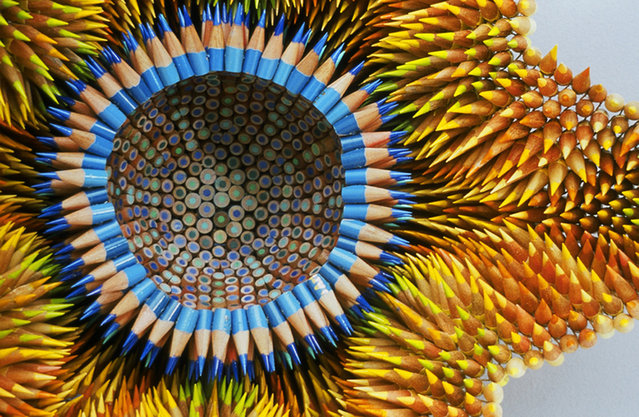
Pencil Sculptures - by Jennifer Maestre

Jennifer Maestre (born 1959 in Johannesburg, South Africa) is a Massachusetts-based artist, internationally known for her unique pencil sculptures.
She derives most of her inspiration from the form and texture of the sea urchin. To make the pencil sculptures, Jennifer makes use of a variety pencils, nails and stitching. She takes hundreds of pencils, cuts them into small 1-inch sections, drills a hole in each section, sharpens them all and sews them together.
Details
22 Aug 2012 13:16:00
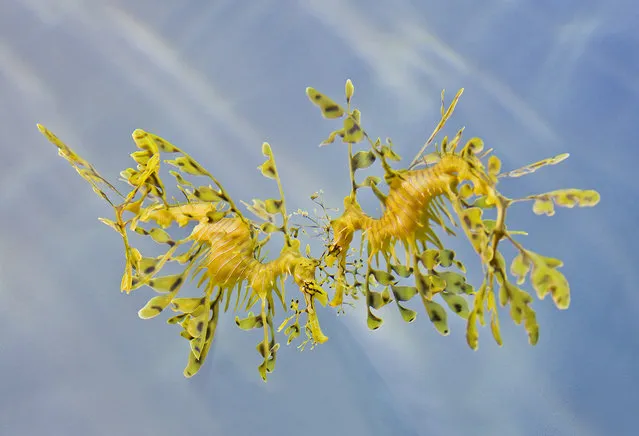
Leafy sea dragon

The leafy seadragon or Glauert's seadragon, Phycodurus eques, is a marine fish in the family Syngnathidae, which also includes the seahorses. It is the only member of the genus Phycodurus. It is found along the southern and western coasts of Australia. The name is derived from the appearance, with long leaf-like protrusions coming from all over the body. These protrusions are not used for propulsion; they serve only as camouflage. The leafy seadragon propels itself by means of a pectoral fin on the ridge of its neck and a dorsal fin on its back closer to the tail end. These small fins are almost completely transparent and difficult to see as they undulate minutely to move the creature sedately through the water, completing the illusion of floating seaweed.
Details
05 Sep 2012 08:51:00


A Galapagos Tortoise shell is used as a foot rest at Heathrow Airport's Animal Reception Centre on January 25, 2011 in London, England. Many animals pass through the centre's doors ranging from exotic animals such as snow leopards and elephants, snakes and crocodiles, to the more common such as cats and dogs. In 2010 alone the centre processed approximately 10,500 cats and dogs, 1,300 birds, 105,000 day old chicks, 246,000 reptiles, 230 horses and 29 million fish. Most animals are part of zoo transfer schemes, the pet trade, or are pets in transit. (Photo by Dan Kitwood/Getty Images)
Details
21 Mar 2011 12:30:00