Loading...
Done
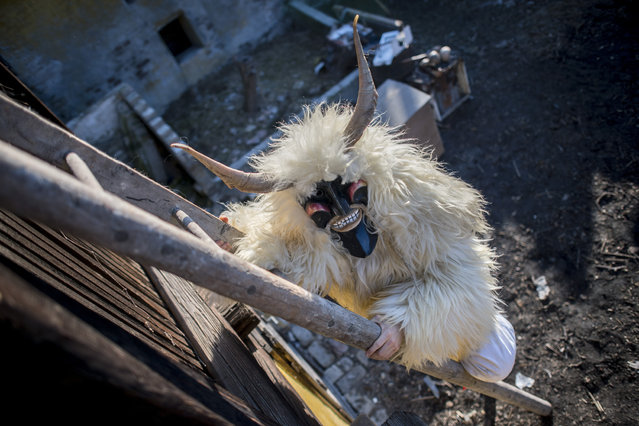
A man wears a busho mask and a costume made of sheep pelt while climbing up a ladder outside a barn in Mohacs, Hungary, 20 February 2020, on the first day of carnival. The traditional Busho carnival, which marks the end of winter, dates back to the 16th century. According to local legend, members of an ethnic South Slavic group living in Mohacs at the time dressed up in similar costumes and wore wooden masks to scare away Ottoman invaders, who mistook them for demons. (Photo by Tamas Soki/EPA/EFE)

A man wears a busho mask and a costume made of sheep pelt while climbing up a ladder outside a barn in Mohacs, Hungary, 20 February 2020, on the first day of carnival. The traditional Busho carnival, which marks the end of winter, dates back to the 16th century. According to local legend, members of an ethnic South Slavic group living in Mohacs at the time dressed up in similar costumes and wore wooden masks to scare away Ottoman invaders, who mistook them for demons. (Photo by Tamas Soki/EPA/EFE)
Details
23 Feb 2020 00:07:00
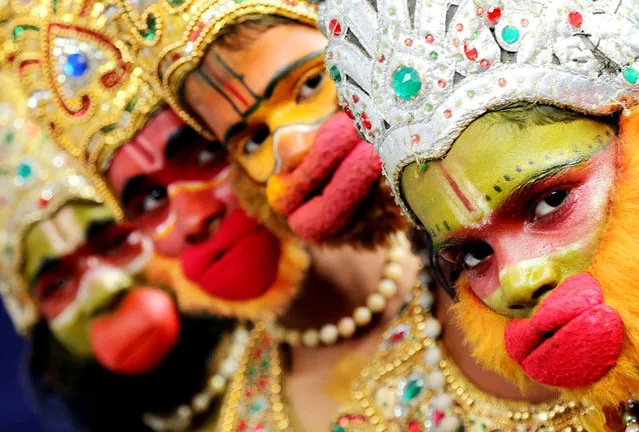
Indian School children's in a traditational attire of a characters of Indian epic Ramayan, on the eve of children's day celebration at cubbon park, in Bangalore, India, 13 November 2016. Children's day (also known as Bal Divas), in India is celebrated every year on 14th of November to increase the awareness of people towards the rights, care, and education of children. Many schools hold activities and allow students to have fun and attend their classes in coloured dresses. (Photo by Jagadeesh N.V./EPA)

Indian School children's in a traditational attire of a characters of Indian epic Ramayan, on the eve of children's day celebration at cubbon park, in Bangalore, India, 13 November 2016. Children's day (also known as Bal Divas), in India is celebrated every year on 14th of November to increase the awareness of people towards the rights, care, and education of children. Many schools hold activities and allow students to have fun and attend their classes in coloured dresses. (Photo by Jagadeesh N.V./EPA)
Details
14 Nov 2016 10:12:00
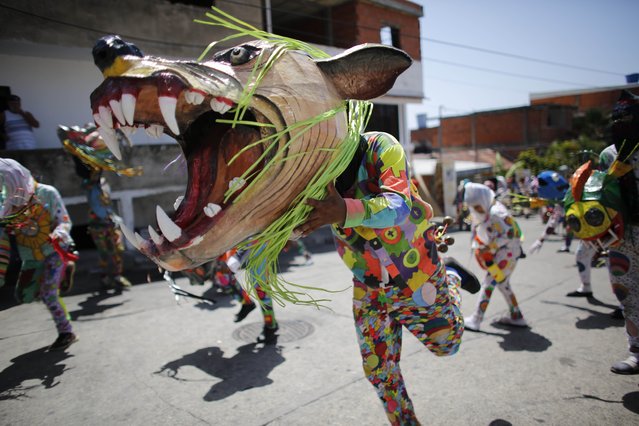
People dressed as a dancing devils with giant mask dance on a street, during a traditional celebration in Naiguata, Venezuela, Thursday, May 31, 2018. Carrying in their hands striking masks mostly animals and sea monsters, hundreds of men, women and children went out to dance frantically as possessed by evil spirits in an ancient ritual known as Dancing Devils of Naiguata, the unorthodox way of the coastal towns of Venezuela to venerate God during the celebrations of Corpus Christi. (Photo by Ariana Cubillos/AP Photo)

People dressed as a dancing devils with giant mask dance on a street, during a traditional celebration in Naiguata, Venezuela, Thursday, May 31, 2018. Carrying in their hands striking masks mostly animals and sea monsters, hundreds of men, women and children went out to dance frantically as possessed by evil spirits in an ancient ritual known as Dancing Devils of Naiguata, the unorthodox way of the coastal towns of Venezuela to venerate God during the celebrations of Corpus Christi. (Photo by Ariana Cubillos/AP Photo)
Details
02 Jun 2018 07:20:00
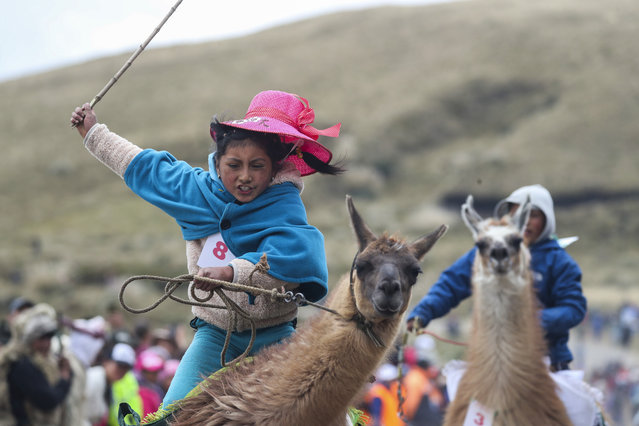
Milena Jami whips her llama to win the first place in the a race for children of ages seven and eight at the Llanganates National Park, Ecuador, Saturday, February 8, 2020. Wooly llamas, an animal emblematic of the Andean mountains in South America, become the star for a day each year when Ecuadoreans dress up their prized animals for children to ride them in 500-meter races. (Photo by Dolores Ochoa/AP Photo)

Milena Jami whips her llama to win the first place in the a race for children of ages seven and eight at the Llanganates National Park, Ecuador, Saturday, February 8, 2020. Wooly llamas, an animal emblematic of the Andean mountains in South America, become the star for a day each year when Ecuadoreans dress up their prized animals for children to ride them in 500-meter races. (Photo by Dolores Ochoa/AP Photo)
Details
02 Jan 2021 00:01:00
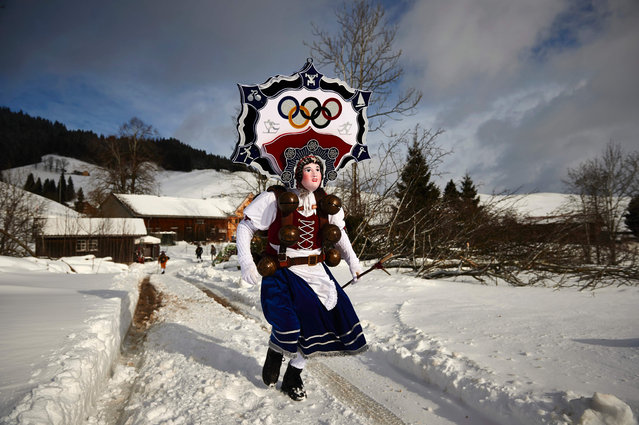
A leader “Rolli” of a yodel group “Schuppel” runs in the snow in front of a farmstead during the “Silvesterchlausen” in the early morning in Urnaesch in the Swiss canton Appenzell Ausserroden on January 13, 2017. The “Silvesterchlausen” is a tradition of the Swiss canton Appenzell, where colorfull characters organized in groups called “Schuppel”, chase out the old year and welcome the new one. They run all day long from farmstead to farmstead, gather together to sing a jodel and great the farmers. A “Schuppel” consists of some “Schelli” and two “Rolli”, sometimes with female dresses and nice scenes over the head, despite the dress all participants are males. The Silversterchlausen run twice a year, first for the new Silvester on December 31, and then again on January 13, for the old Silvester following the Julian calendar. (Photo by Michael Buholzer/AFP Photo)

A leader “Rolli” of a yodel group “Schuppel” runs in the snow in front of a farmstead during the “Silvesterchlausen” in the early morning in Urnaesch in the Swiss canton Appenzell Ausserroden on January 13, 2017. (Photo by Michael Buholzer/AFP Photo)
Details
14 Jan 2017 12:41:00
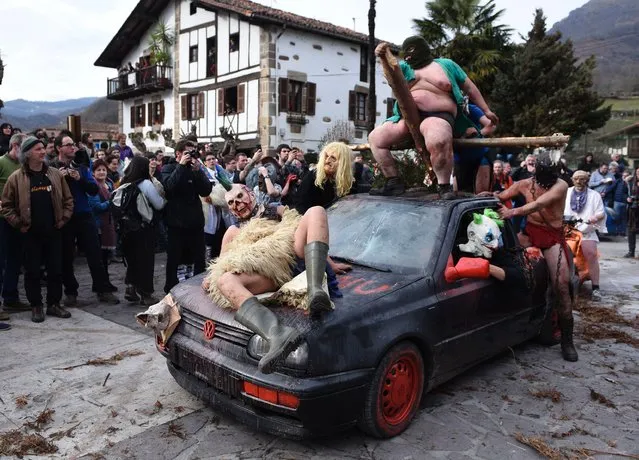
Disguised participants strike poses on a car during the ancient carnival of Ituren, in the northern Spanish Navarra province on January 30, 2017. The yearly three day festivities, revolving mainly around agriculture and principally sheep hearding, run on the last Sunday, Monday and Tuesday of January where Navarra Valley locals from two villages dress up and participate in a variety of activites as they perform a pilgrimage through each village. (Photo by Ander Gillenea/AFP Photo)

Disguised participants strike poses on a car during the ancient carnival of Ituren, in the northern Spanish Navarra province on January 30, 2017. The yearly three day festivities, revolving mainly around agriculture and principally sheep hearding, run on the last Sunday, Monday and Tuesday of January where Navarra Valley locals from two villages dress up and participate in a variety of activites as they perform a pilgrimage through each village. (Photo by Ander Gillenea/AFP Photo)
Details
31 Jan 2017 10:00:00
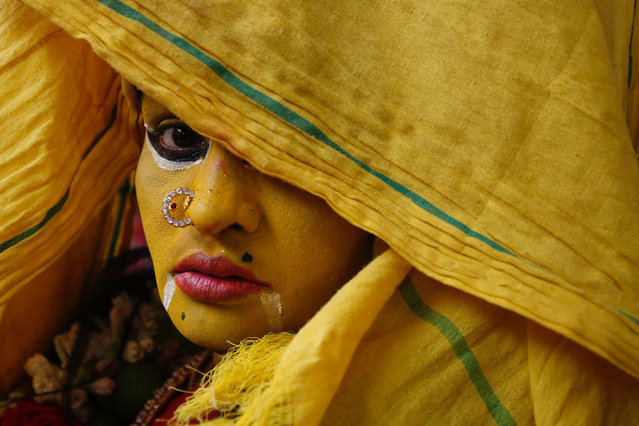
A woman dressed in the style of a Hindu goddess keeps her face partially covered for a ritual during Maha Shivaratri celebrations on March 12, 2021 in Kaveripattinam, India. Maha Shivaratri is a major Hindu festival celebrated annually in honour of the god, Shiva. The festival is observed with chanting prayers, fasting, and meditating to overcome “darkness and ignorance” in life. (Photo by Abhishek Chinnappa/Getty Images)

A woman dressed in the style of a Hindu goddess keeps her face partially covered for a ritual during Maha Shivaratri celebrations on March 12, 2021 in Kaveripattinam, India. Maha Shivaratri is a major Hindu festival celebrated annually in honour of the god, Shiva. The festival is observed with chanting prayers, fasting, and meditating to overcome “darkness and ignorance” in life. (Photo by Abhishek Chinnappa/Getty Images)
Details
28 Mar 2021 09:51:00
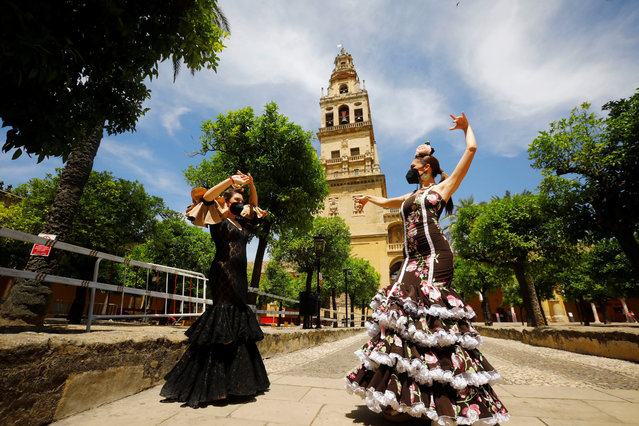
Women wearing traditional dresses dance next to Cathedral–Mosque of Cordoba, Andalusia, Spain, 26 May 2021, to celebrate the Cordoba Fair that was suspended due to coronavirus COVID-19 pandemic for a second consecutive year. The Cordoba Fair is held every year in May for a week during which flamenco, food, and wine are the main attractions for thousands of people. (Photo by Salas/EPA/EFE)

Women wearing traditional dresses dance next to Cathedral–Mosque of Cordoba, Andalusia, Spain, 26 May 2021, to celebrate the Cordoba Fair that was suspended due to coronavirus COVID-19 pandemic for a second consecutive year. The Cordoba Fair is held every year in May for a week during which flamenco, food, and wine are the main attractions for thousands of people. (Photo by Salas/EPA/EFE)
Details
27 May 2021 09:00:00