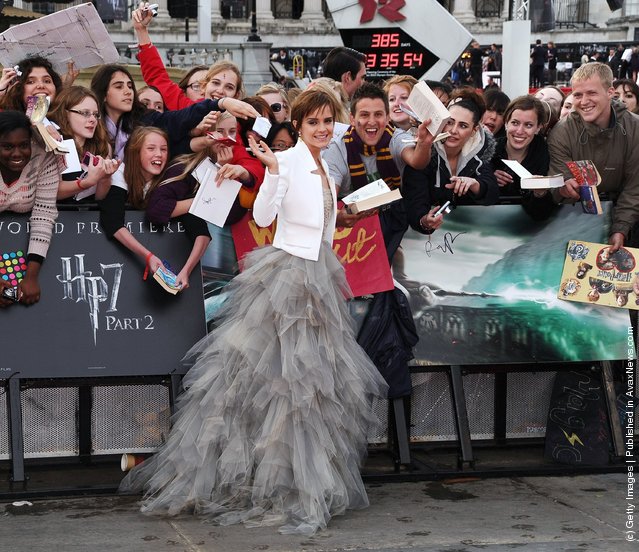
Actress Emma Watson attends the World Premiere of Harry Potter and The Deathly Hallows – Part 2 at Trafalgar Square on July 7, 2011 in London, England. (Photo by Ian Gavan/Getty Images)
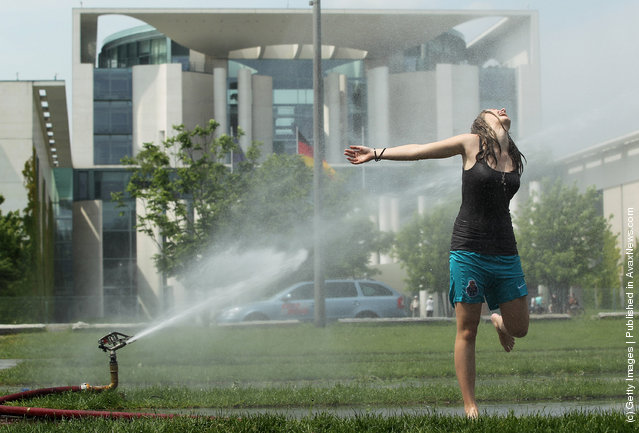
Finia, a visiting student from Hanover, cools off under a water sprinkler in front of the Chancellery on June 10, 2010 in Berlin, Germany. (Photo by Sean Gallup/Getty Images)
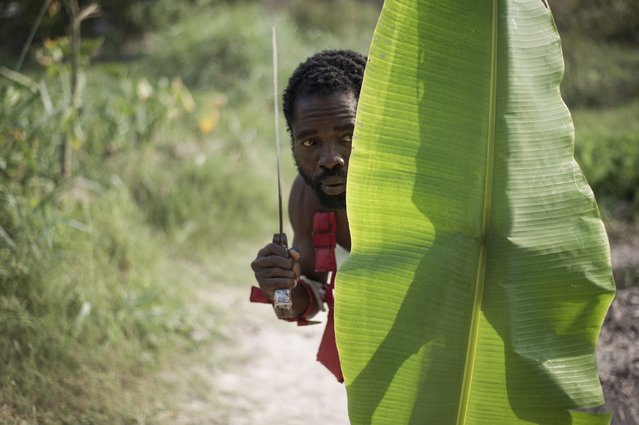
A member of the mainly Christian “anti-balaka” (anti-machete) militia trains in the Boeing neighbourhood of Bangui, Central African Republic, on February 24, 2014. (Photo by Fred Dufour/AFP Photo)
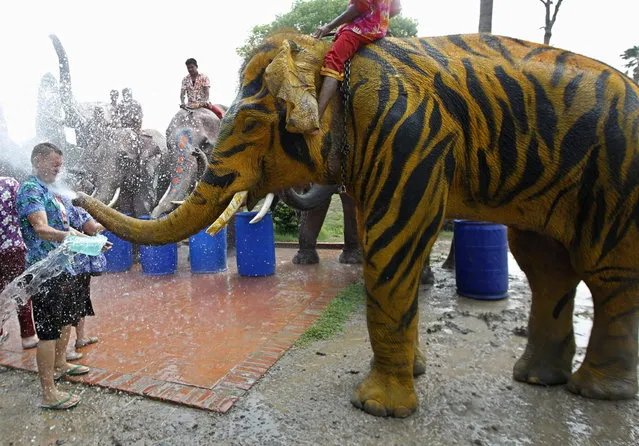
Elephants spray tourists with water in celebration of the Songkran water festival in Thailand's Ayutthaya province, about 80 km (50 miles) north of Bangkok, April 9, 2014. (Photo by Rungroj Yongrit/EFE)
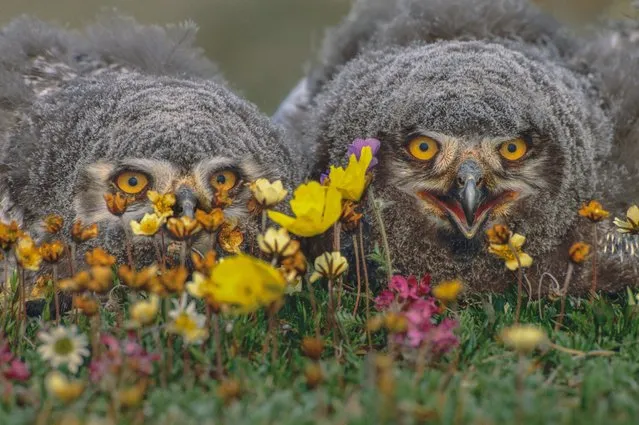
The photography of Art Wolfe covers the globe, capturing landscapes, wildlife, and cultures from every continent; here he talks through a selection of his favourite images. Art Wolfe is an American photographer and conservationist. His photographs have been noted by environmental advocacy groups for their “stunning” visual impact. Here: Snowy owlets (Bubo scandiacus), Arctic National Wildlife Refuge, Alaska, USA. (Photo by Art Wolfe/Art Wolfe Stock)
Christie Brinkley and Ashley Graham pose after Lifetime's American Beauty Star Season 2 Live Finale at Manhattan Center on March 27, 2019 in New York City. (Photo by Mike Coppola/Getty Images for Lifetime)
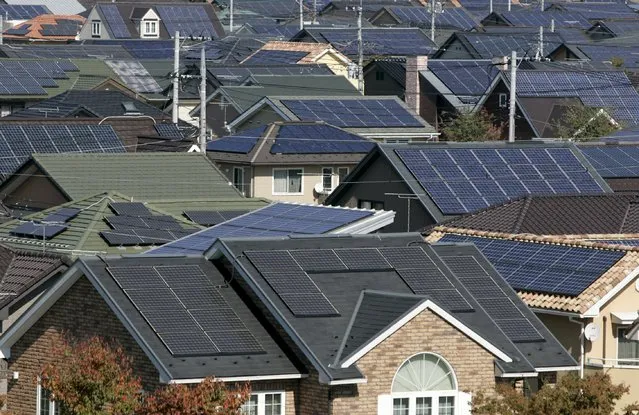
Rooftops of solar powered houses are pictured in Ota, 80 km northwest of Tokyo in this October 28, 2008 file photo. One by one, Japan is turning off the lights at the giant oil-fired power plants that propelled it to the ranks of the world's top industrialised nations. With nuclear power in the doldrums after the Fukushima disaster, it's solar energy that is becoming the alternative. Solar power is set to become profitable in Japan as early as this quarter, according to the Japan Renewable Energy Foundation (JREF), freeing it from the need for government subsidies and making it the last of the G7 economies where the technology has become economically viable. (Photo by Yuriko Nakao/Reuters)