Loading...
Done
A Hawker Hurricane Mk XIIa 5711 (G-HURI) fighter aircraft prepares to perform an aerobatic display at the IWM Duxford on October 18, 2012 in Duxford, England. The aeroplane, similar to those that defended British shores during the Battle of Britain in World War II, is due to be auctioned by Bonhams in their sale of “Collectors' Motor Cars and Automobilia” at Mercedes-Benz World Brooklands on December 3, 2012. The plane was built in 1942 and joined the Royal Canadian Air Force the following year, where it remained for the duration of the war, it is expected to fetch up to 17 million GBP.  (Photo by Oli Scarff)

A Hawker Hurricane Mk XIIa 5711 (G-HURI) fighter aircraft prepares to perform an aerobatic display at the IWM Duxford on October 18, 2012 in Duxford, England. The aeroplane, similar to those that defended British shores during the Battle of Britain in World War II, is due to be auctioned by Bonhams in their sale of “Collectors' Motor Cars and Automobilia” at Mercedes-Benz World Brooklands on December 3, 2012. The plane was built in 1942 and joined the Royal Canadian Air Force the following year, where it remained for the duration of the war, it is expected to fetch up to 17 million GBP. (Photo by Oli Scarff)
Details
20 Oct 2012 09:11:00


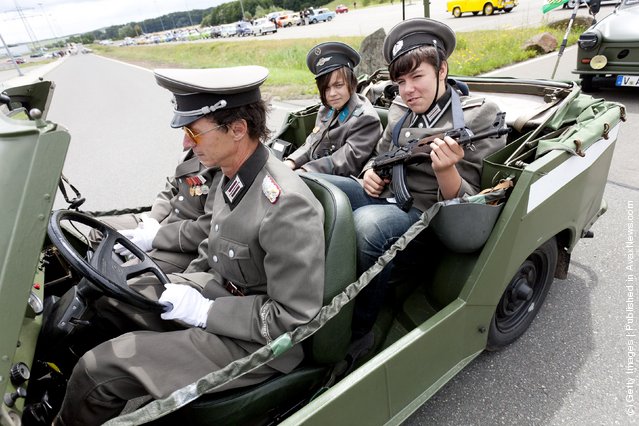
“The Trabant is a car that was produced by former East German auto maker VEB Sachsenring Automobilwerke Zwickau in Zwickau, Sachsen. It was the most common vehicle in East Germany, and was also exported to countries both inside and outside the communist bloc. The main selling points was that it had room for four adults and luggage in a compact, light and durable shell and that it was fast (when introduced) and durable. With its mediocre performance, smoky two-stroke engine, and production shortages, the Trabant is often cited as an example of the disadvantages of centralized planning; on the other hand, it is regarded with derisive affection as a symbol of the failed former East Germany and of the fall of communism (in former West Germany, as many East Germans streamed into West Berlin and West Germany in their Trabants after the opening of the Berlin Wall in 1989). It was in production without any significant changes for nearly 30 years with 3,096,099 Trabants produced in total”. – Wikipedia

Photo: Enthusiasts weared in uniforms of the former eastern german army trive in a military Trabant car as fans and owners of East German-era Trabant cars gather at the 2011 International Trabantfahrer Treffen (International Trabant Drivers Meeting) on June 26, 2011 in Zwickau, Germany. The Trabant, also known as the Trabi, was among the main cars produced in communist East Germany and built by VEB Sachsenring Automobilwerke in Zwickau for 30 years until 1989. Today the car has cult status for many followers and one company, IndiKar, is even seeking to revive the brand in a modern, electric version. (Photo by Carsten Koall/Getty Images)

Details
27 Jun 2011 12:21:00
A crane loads logs at the Novoyeniseisk wood processing plant, with the air temperature at about minus 20 degrees Celsius (minus 4 degrees Fahrenheit), in the town of Lesosibirsk in Krasnoyarsk Region, Siberia, Russia, February 16, 2016. The plant exports timber to Europe, Northern Africa and Asia. The Taiga, also known as the boreal forest, on the coast of the Angara River and Yenisei River is one of the main areas for the industrial cutting of wood thanks to the high quality of the Angara pine. (Photo by Ilya Naymushin/Reuters)

A crane loads logs at the Novoyeniseisk wood processing plant, with the air temperature at about minus 20 degrees Celsius (minus 4 degrees Fahrenheit), in the town of Lesosibirsk in Krasnoyarsk Region, Siberia, Russia, February 16, 2016. The plant exports timber to Europe, Northern Africa and Asia. The Taiga, also known as the boreal forest, on the coast of the Angara River and Yenisei River is one of the main areas for the industrial cutting of wood thanks to the high quality of the Angara pine. Open air work continues all year around regardless to temperatures which can drop to minus 52 degrees Celsius (minus 61.6 degrees Fahrenheit), according to employees. (Photo by Ilya Naymushin/Reuters)
Details
18 Feb 2016 13:10:00
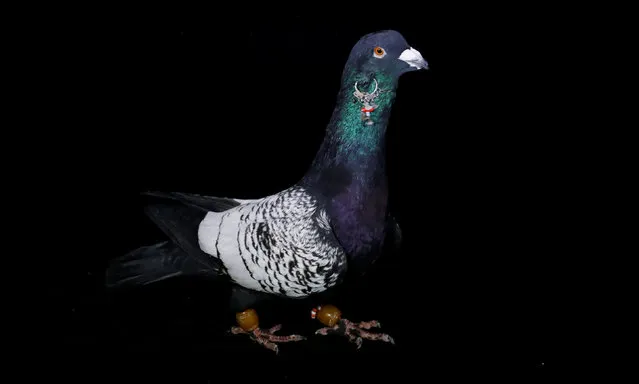
A pigeon, known as Siyah Kinifirli, with an approximate market value of 1000 Turkish Lira ($263), bred by 23-year-old Ismail Ozbek, is pictured in Sanliurfa, Turkey, December 23, 2016. As night-time approaches in Sanliurfa, southeastern Turkey, most of the alleyways of the city's old bazaar are emptying out of buyers and vendors, except for one. The bustle of daytime trading has died down, but on this little street, a stream of men carry cardboard boxes filled with pigeons to a cluster of three teahouses. Here, they sell the birds at Sanliurfa's famed auctions to a dedicated band of pigeon keepers and breeders, a pastime that has been thriving for hundreds of years across the region and over the nearby border into war-torn Syria. In a country where the minimum wage is about 1,400 Liras ($367) a month, enthusiasts regularly easily spend hundreds of dollars for one bird. “I once sold a pair of pigeons for 35,000 Turkish Lira”, says auctioneer Imam Dildas. “This is a passion, a hobby you cannot quit. I've been known to sell the fridge and my wife's gold bracelets to pay for pigeons”. (Photo by Umit Bektas/Reuters)

A pigeon, known as Siyah Kinifirli, with an approximate market value of 1000 Turkish Lira ($263), bred by 23-year-old Ismail Ozbek, is pictured in Sanliurfa, Turkey, December 23, 2016. As night-time approaches in Sanliurfa, southeastern Turkey, most of the alleyways of the city's old bazaar are emptying out of buyers and vendors, except for one. (Photo by Umit Bektas/Reuters)
Details
17 Jan 2017 12:05:00
A bullied student with vitiligo is celebrating learning to love her skin by turning it into art  making a world map, flowers and even a Van Gogh painting. Ashley Soto, 21, from Orlando in Florida, USA, has found turning her white patches of skin into art has empowered her and helped her to embrace her vitiligo. Here are some of the art pieces Ashleys made to celebrate and embrace her vitiligo from a world map to simply tracing her vitiligo and also Van Goghs Starry Night. (Photo by Ashley Soto/Caters News Agency)

A bullied student with vitiligo is celebrating learning to love her skin by turning it into art making a world map, flowers and even a Van Gogh painting. Ashley Soto, 21, from Orlando in Florida, USA, has found turning her white patches of skin into art has empowered her and helped her to embrace her vitiligo. Here are some of the art pieces Ashleys made to celebrate and embrace her vitiligo from a world map to simply tracing her vitiligo and also Van Goghs Starry Night. (Photo by Ashley Soto/Caters News Agency)
Details
16 Mar 2017 00:02:00
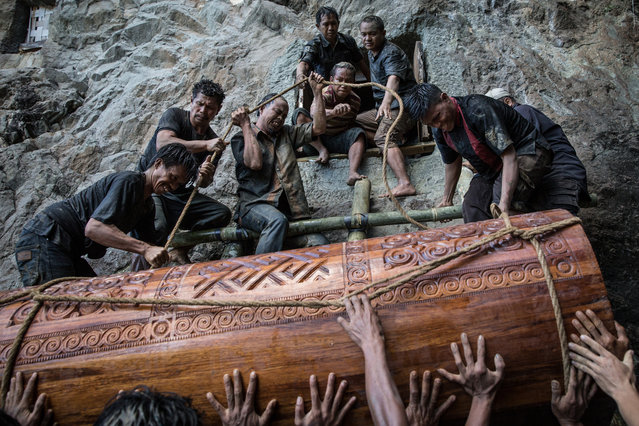
It is said that Torajans are people who “live to die”. For this Indonesian ethnic group, funerals are such extravagant events that they sometimes attract tourists. Families can postpone burials years (and the deceased are considered sick and hosted at home until the funeral) until the family can raise enough money and gather as many relatives as possible. And then it’s a jubilant multiday social event with a parade, dances and animal sacrifices. Agung Parameswara photographed these funerary practices when he traveled to South Sulawesi province, where the Torajans live. But often, their funeral isn’t the last time the dead are seen. In August, crypts are opened, coffins are slid back out and bodies delicately unsheathed. This tender ritual is known as Ma’Nene, which is customarily performed every few years. (Photo by Agung Parameswara/The Washington Post)

It is said that Torajans are people who “live to die”. For this Indonesian ethnic group, funerals are such extravagant events that they sometimes attract tourists. Families can postpone burials years (and the deceased are considered sick and hosted at home until the funeral) until the family can raise enough money and gather as many relatives as possible. And then it’s a jubilant multiday social event with a parade, dances and animal sacrifices. Agung Parameswara photographed these funerary practices when he traveled to South Sulawesi province, where the Torajans live. (Photo by Agung Parameswara/The Washington Post)
Details
06 Oct 2016 09:15:00
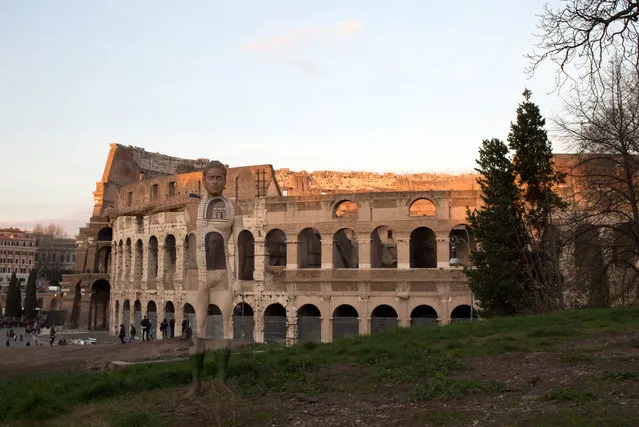
This artist has put together an amazing picture set of a man blending into the Seven Wonders of the World with her incredible body art. New York artist Trina Merry is known for her unique style that blends body art with photography but in her Lost in Wonder series shes painted a models body to blend into some of the worlds most iconic locations. She had her subject, UK model Kyle James, pose fully painted in front of the Great Pyramid of Giza, the Great Wall of China, Petra, The Colosseum, Machu Picchu, Stone Henge and Easter Island. Here: Colusseum. (Photo by Trina Merry/Caters News)

This artist has put together an amazing picture set of a man blending into the Seven Wonders of the World with her incredible body art. New York artist Trina Merry is known for her unique style that blends body art with photography but in her Lost in Wonder series shes painted a models body to blend into some of the worlds most iconic locations. She had her subject, UK model Kyle James, pose fully painted in front of the Great Pyramid of Giza, the Great Wall of China, Petra, The Colosseum, Machu Picchu, Stone Henge and Easter Island. Here: Colusseum. (Photo by Trina Merry/Caters News)
Details
10 Oct 2016 10:20:00
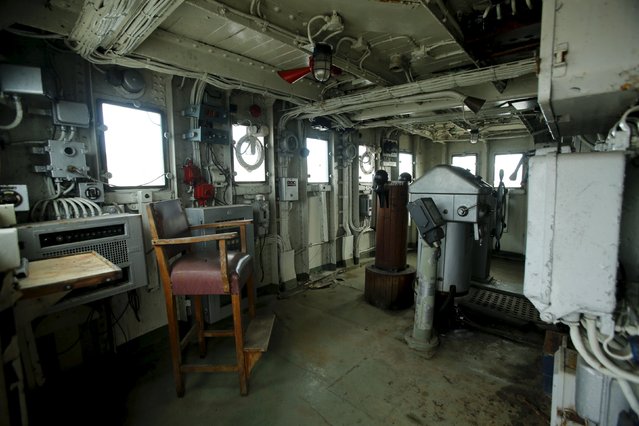
The interior of the ship's bridge on the yacht Galeb is seen in the port city of Rijeka, December 16, 2015. Rijeka announced plans to convert the yacht Galeb used by Yugoslavia's communist leader Josip Broz Tito into a floating museum moored in the city's harbour. Now in disrepair, the 117-metre ship was an iconic symbol of luxury and used by Tito from the 1950s until his death in 1980 to entertain world leaders and celebrities, including  the likes of Khruschev, Gaddafi, Indira Gandhi, Elizabeth Taylor and Richard Burton. (Photo by Antonio Bronic/Reuters)

The interior of the ship's bridge on the yacht Galeb is seen in the port city of Rijeka, December 16, 2015. Rijeka announced plans to convert the yacht Galeb used by Yugoslavia's communist leader Josip Broz Tito into a floating museum moored in the city's harbour. Now in disrepair, the 117-metre ship was an iconic symbol of luxury and used by Tito from the 1950s until his death in 1980 to entertain world leaders and celebrities, including the likes of Khruschev, Gaddafi, Indira Gandhi, Elizabeth Taylor and Richard Burton. (Photo by Antonio Bronic/Reuters)
Details
20 Dec 2015 08:03:00