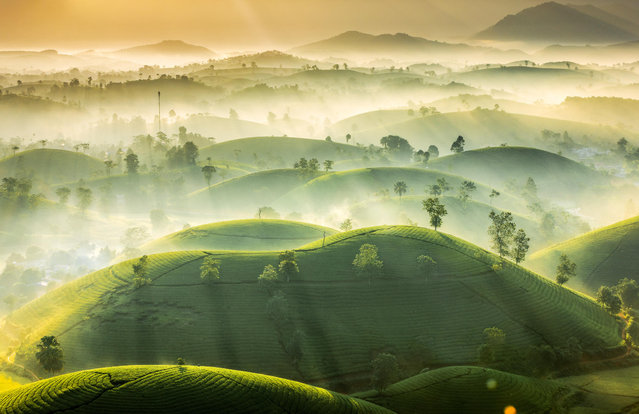
“Tea Hills”. Early-morning mist over the tea hills of Phu Tho province in Vietnam. (Photo by Vu Trung Huan/Royal Meteorological Society’s Weather Photographer of the Year Awards)
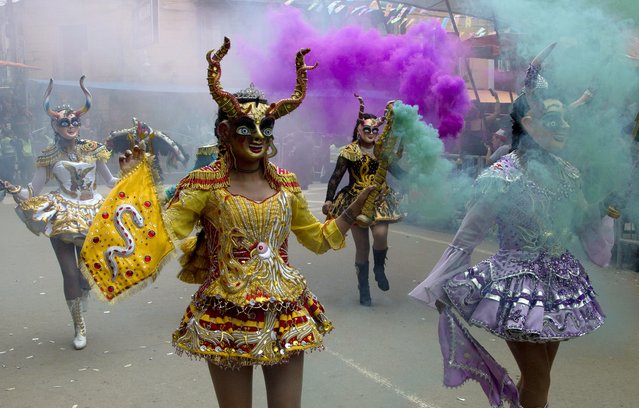
Dancers perform the traditional “Diablada” or Dance of the Devils during the Carnival in Oruro, Bolivia, Saturday, February 10, 2018. Thousands of colorfully dressed dancers and musicians kick off Carnival celebrations in the Bolivian city of Oruro. (Photo by Juan Karita/AP Photo)
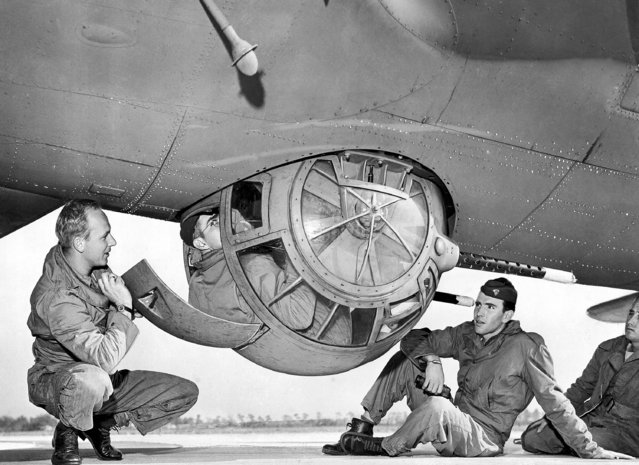
Private Harold L. Langhofer edges into the ball-turret, March 9, 1943. Curled in this position, he can turn the turret so that it fires in any direction. The turret can also be swung around so that the hatch opens into the plane, and the gunner can crawl into it while the Flying Fortress is in motion. (Photo by AP Photo)
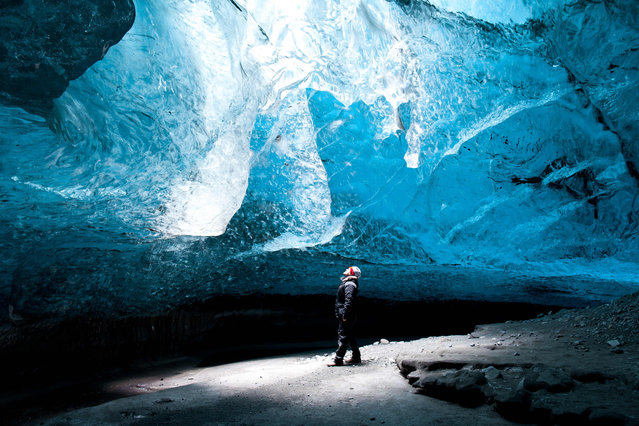
Shimmering clearest blue and stretching as far as the eye can see, this is one of Iceland's famed crystal ice caves. The giant solid waves look frozen in time but they are slowly moving along as part of the Vatnajokull Glacier – which stretches across eight per cent of the island. The images were captured in February 2014 by British photographer Rob Lott, 49. Photo: A wide view of Rob Lott in the crystal ice cave in the Vatnajokull Glacier, Iceland. (Photo by Rob Lott/Barcroft Media)
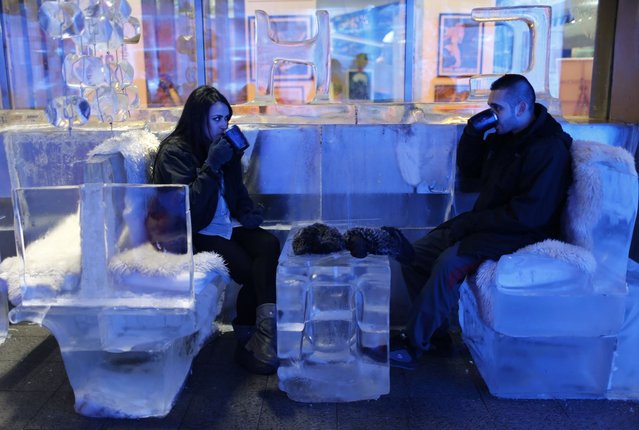
A British couple drink hot chocolate at Chillout cafe in Dubai May 12, 2013. Chillout, owned by UAE's Sharaf Group, is the first ice lounge in the Middle East, with temperatures set at –6 degrees Celsius (21 degrees Farenheit). The cafe, with its illuminated interiors, curtains, paintings and seating arrangements, is all made of carved ice and frozen sculptures. (Photo by Ahmed Jadallah/Reuters)
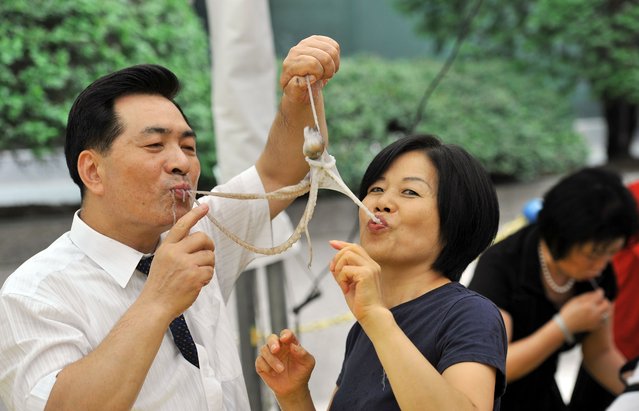
Live octopus is a delicacy in South Korea but is a known choking hazard, since the still-moving suction cups can cause tentacle pieces to stick in a person's throat. A baby octopus is often consumed whole, while larger varieties are cut up and the still-wriggling tentacles eaten with a splash of sesame oil. Photo: A South Korean man and a woman eat a live octopus during an event to promote a local food festival in Seoul on September 12, 2013. (Photo by Jung Yeon-Je/AFP Photo)
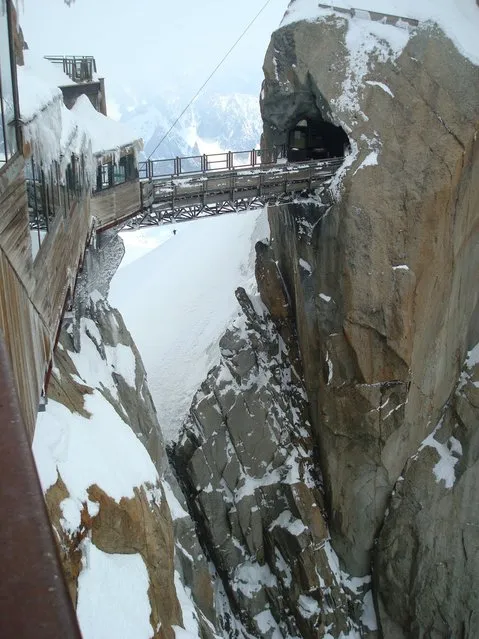
The name “Aiguille du Midi” translates literally as “Needle of the Noon” or “Needle of the South”. It gets its name from its tapered form and from its position when viewed from Chamonix: it approximately indicates noon when the sun passes over its summit.