Loading...
Done
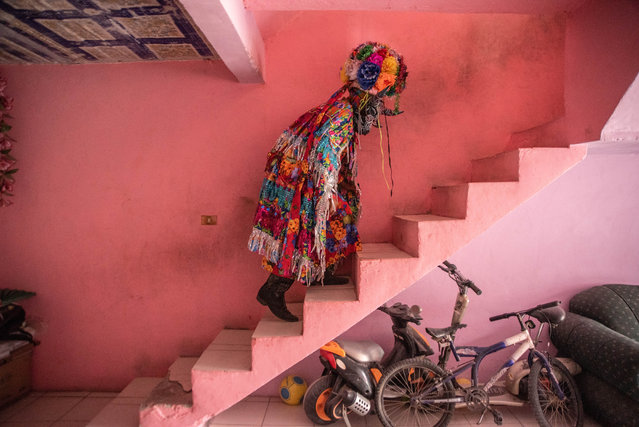
Inhabitants of the community of Coyolillo celebrate their Afro-descendant carnival in Veracruz, Mexico on February 25, 2020. This carnival has more than 100 years of history and is the heritage of the African workers who arrived in that area more than 300 years ago to work in the sugar cane fields. The event is known for the colourful robes, capes and animal masks – of bulls, deer, goats and cows – worn by participants. As such, the carnival is a unique expression of African-Mexican folk art. (Photo by Hector Adolfo Quintanar Perez/ZUMA Wire/Rex Features/Shutterstock)

Inhabitants of the community of Coyolillo celebrate their Afro-descendant carnival in Veracruz, Mexico on February 25, 2020. This carnival has more than 100 years of history and is the heritage of the African workers who arrived in that area more than 300 years ago to work in the sugar cane fields. (Photo by Hector Adolfo Quintanar Perez/ZUMA Wire/Rex Features/Shutterstock)
Details
05 Mar 2020 00:03:00
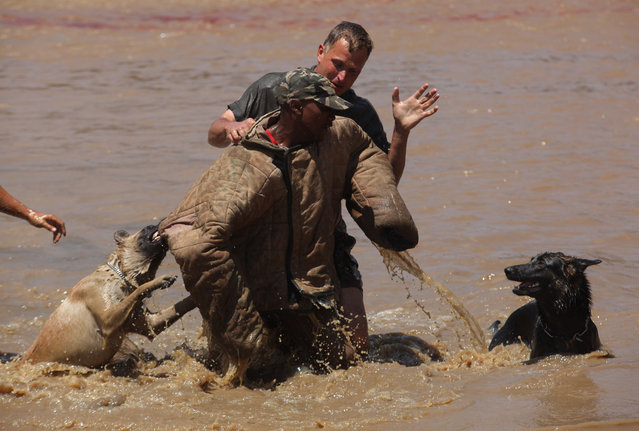
In this photo taken Wednesday, November 26, 2014 attack dogs and their handlers apprehend a “rhino poacher” center, after alighting from a helicopter into water,  in a simulation exercise showing training at an academy run by the Paramount Group, near Rustenburg, South Africa. (Photo by Denis Farrell/AP Photo)

In this photo taken Wednesday, November 26, 2014 attack dogs and their handlers apprehend a “rhino poacher” center, after alighting from a helicopter into water, in a simulation exercise showing training at an academy run by the Paramount Group, near Rustenburg, South Africa. The course prepares canine units to find firearms or contraband, track suspects in the undergrowth and abseil in harnesses from helicopters in pursuit of poachers. Dogs and handlers learn to trust each other and fine tune a relationship balancing control and aggression. (Photo by Denis Farrell/AP Photo)
Details
01 Dec 2014 14:14:00
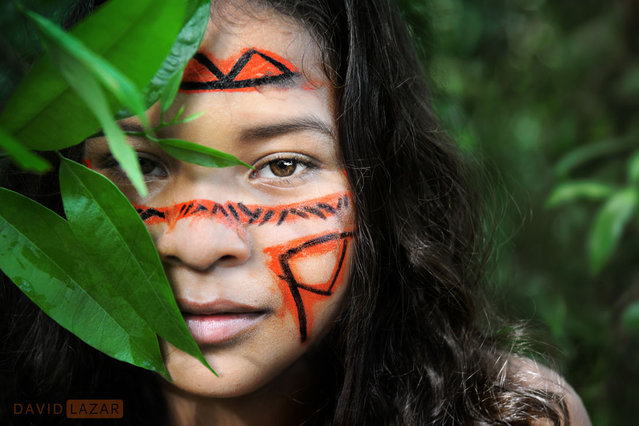
Amazon Tribe By David Lazar (Video)

Photographer David Lazar captured photos of native Dessana tribe, nearly 3,000 miles away from Brazil's capital. Tribe is only accessible by boat from city of Manaus. Surrounded by trees, waterfalls and tropical wildlife, this Amazon tribe is a world away from the beaches of Rio.
Details
27 Oct 2016 21:46:00
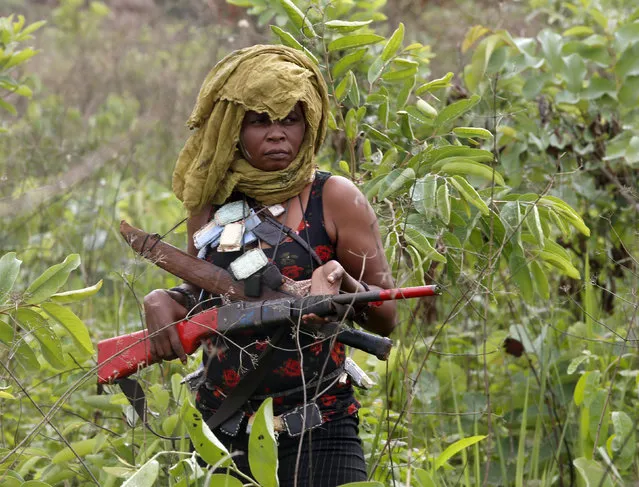
A female member of the anti-balaka, a Christian militia, patrols with other militiamen outside village of Zawa April 8, 2014. (Photo by Goran Tomasevic/Reuters)

Anti-balaka militia originally sprang up to protect the Christian population of the Central African Republic, but now stand accused of human rights abuses themselves. Last month, the African Union branded militia targeting Muslims in Central African Republic as “terrorists” and said they would be treated as enemy combatants, a day after killing a Congolese peacekeeper and amid deepening international frustration at continuing violence in the impoverished and landlocked country. Photo: A female member of the anti-balaka, a Christian militia, patrols with other militiamen outside village of Zawa April 8, 2014. (Photo by Goran Tomasevic/Reuters)
Details
10 Apr 2014 10:26:00
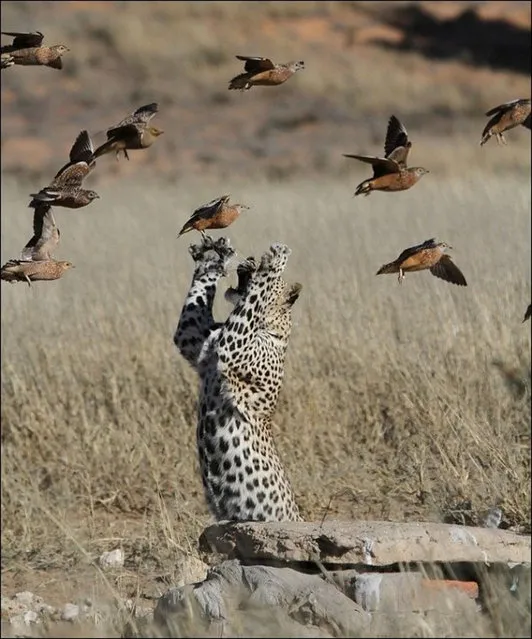
South African Leopard Catches Sandgrouse

Deftly he finished with a birdie that they fly so low?
Details
24 Sep 2012 15:41:00
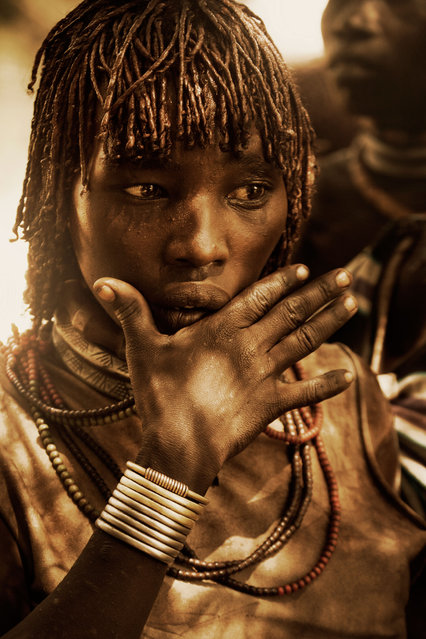
The Hamar people traditionally use red ocher clay to braid the hair of their women. (Photo by Diego Arroyo)

During his time in Ethiopia, New York-based art director and photographer Diego Arroyo spent time with the Hamar, Mursi, Dassanech, and Arbore Tribes. They, along with several others tribes, make up the 200,000 people situated in Africa’s Great Rift Valley. The people of the Omo Valley are still primarily herders and farmers, living an isolated and simple life. While they have yet to be truly touched by globalization, they could soon disappear. Their way of life is being threatened by a massive hydroelectric dam. (Photo by Diego Arroyo)
Details
13 Aug 2014 10:00:00
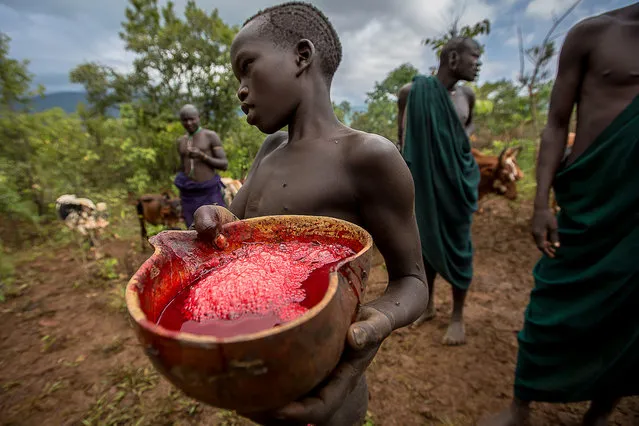
Surma tribe at a blood drinking ritual

“Suri tribes boys are collecting the blood of a cow in a calabash the vein of the animal was opened with a bow and an arrow. Like most pastoralists the Surma people are drinking fresh blood which is from the cow vein. Only some minutes after the wound at the vein is closed again the animals are back with their herd”. (Photo and caption by Anthony Pappone)
Details
17 Nov 2013 11:12:00
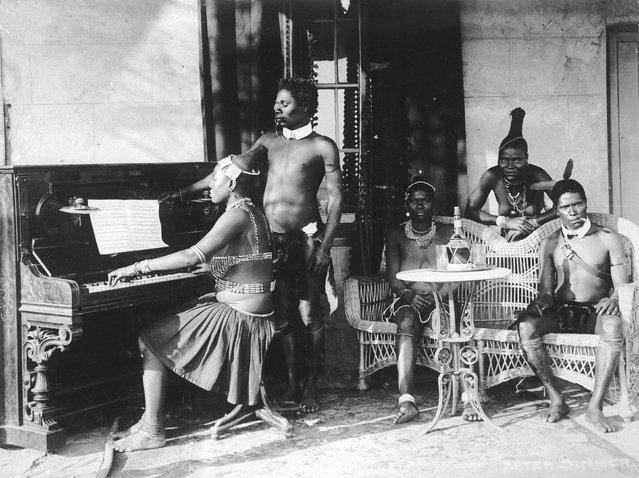
circa 1925:  A Zulu woman playing the piano while a group of others sit and listen.  (Photo by General Photographic Agency/Getty Images)

“The Zulu are the largest South African ethnic group, with an estimated 10–11 million people living mainly in the province of KwaZulu-Natal. Small numbers also live in Zimbabwe, Zambia, and Mozambique. Their language, Zulu, is a Bantu language; more specifically, part of the Nguni subgroup. The Zulu Kingdom played a major role in South African history during the 19th and 20th centuries. Under apartheid, Zulu people were classed as third-class citizens and suffered from state-sanctioned discrimination. They remain today the most numerous ethnic group in South Africa, and now have equal rights along with all other citizens”. – Wikipedia.

Photo: A Zulu woman playing the piano while a group of others sit and listen (to put it briefly, Englishmen scoff over Zulu). South Africa, circa 1925. (Photo by General Photographic Agency)

Details
03 Feb 2014 09:40:00