Loading...
Done
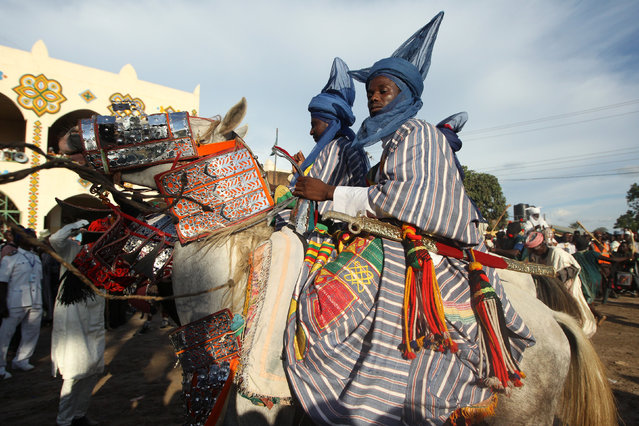
Horsemen take part in the Durbar festival parade in Zaria, Nigeria September 14, 2016. (Photo by Afolabi Sotunde/Reuters)

Horsemen take part in the Durbar festival parade in Zaria, Nigeria September 14, 2016. It is celebrated at the culmination of Muslim festivals Eid al-Fitr and Eid al-Adha. It begins with prayers, followed by a parade of the Emir and his entourage on horses, accompanied by music players, and ending at the Emir's palace. (Photo by Afolabi Sotunde/Reuters)
Details
22 Sep 2016 09:14:00
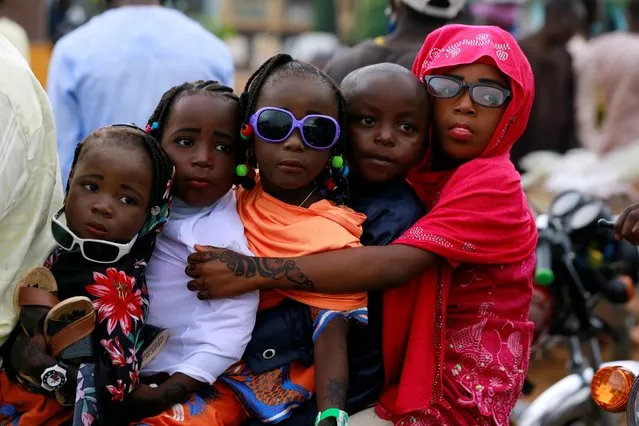
Children are seen on a bike after Muslims in Nigeria perform Eid prayer following the global outbreak of coronavirus disease (COVID-19) in Nasarawa on May 24, 2020. (Photo by Afolabi Sotunde/Reuters)

Children are seen on a bike after Muslims in Nigeria perform Eid prayer following the global outbreak of coronavirus disease (COVID-19) in Nasarawa on May 24, 2020. (Photo by Afolabi Sotunde/Reuters)
Details
01 Jul 2020 00:03:00
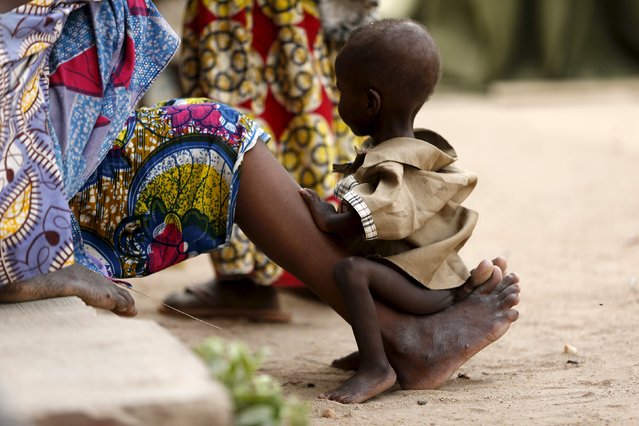
A child rescued from Boko Haram in Sambisa forest is seen at the Internally Displaced People's camp in Yola, Nigeria May 3, 2015. (Photo by Afolabi Sotunde/Reuters)

A child rescued from Boko Haram in Sambisa forest is seen at the Internally Displaced People's camp in Yola, Nigeria May 3, 2015. Hundreds of traumatised Nigerian women and children rescued from Boko Haram Islamists have been released into the care of authorities at a refugee camp in the eastern town of Yola, an army spokesman said. (Photo by Afolabi Sotunde/Reuters)
Details
04 May 2015 09:11:00
Labourers walk near trucks loaded with logs, which are trapped on a muddy road, near an unreserved forest in the village of Igbatoro, southwest Nigeria, August 28, 2014. (Photo by Akintunde Akinleye/Reuters)

Labourers walk near trucks loaded with logs, which are trapped on a muddy road, near an unreserved forest in the village of Igbatoro, southwest Nigeria, August 28, 2014. Wood, a form of biomass, is the sole source of energy for hundreds of millions of Africans who lack access to modern sources of power, and logging, both legal and illegal, remains a lucrative business that has contributed to the rapid shrinking of Africa's rainforests and woodlands. (Photo by Akintunde Akinleye/Reuters)
Details
21 Nov 2014 12:50:00
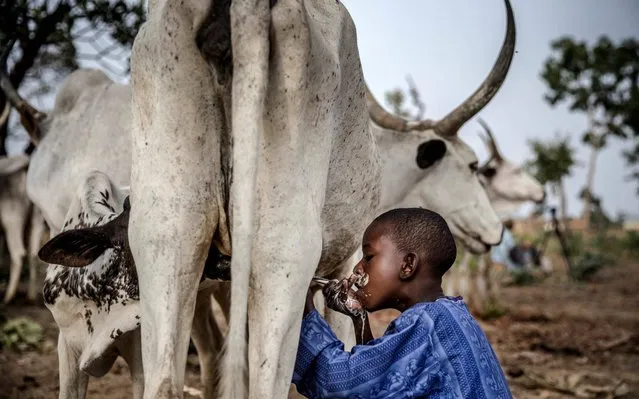
A tribal Fulani man milks a cow at a local milk collecting centre in Dangwala Karfi village on the outskirts of Nigeria's northern city of Kano January 19, 2016. (Photo by Akintunde Akinleye/Reuters)

A tribal Fulani man milks a cow at a local milk collecting centre in Dangwala Karfi village on the outskirts of Nigeria's northern city of Kano January 19, 2016. (Photo by Akintunde Akinleye/Reuters)
Details
21 Jan 2016 08:00:00
A man carrying an axe walks past a house marked with bullet holes in Gyallesu district after recent clashes between Shi'ites and the army in Zaria, Kaduna state, Nigeria, February 3, 2016. (Photo by Afolabi Sotunde/Reuters)

A man carrying an axe walks past a house marked with bullet holes in Gyallesu district after recent clashes between Shi'ites and the army in Zaria, Kaduna state, Nigeria, February 3, 2016. Sectarian tensions are rising in Nigeria's Muslim north, where hundreds of Shi'ites were killed in clashes with the army in the town of Zaria in December, according to Shi'ites and rights groups. Following the clashes, bulldozers sent by the state levelled Shi'ite shrines, a cemetery and offices in the deeply divided town. The region is already grappling with an insurgency waged by the jihadist Boko Haram group. (Photo by Afolabi Sotunde/Reuters)
Details
12 Feb 2016 12:52:00
Ebiowei, 48, carries an empty oil container on his head to a place where it would be filled with refined fuel at an illegal refinery site near river Nun in Nigeria's oil state of Bayelsa November 27, 2012. (Photo by Akintunde Akinleye/Reuters)

Ebiowei, 48, carries an empty oil container on his head to a place where it would be filled with refined fuel at an illegal refinery site near river Nun in Nigeria's oil state of Bayelsa November 27, 2012. Locals in the industry say workers can earn $50 to $60 a day. Thousands of people in Nigeria engage in a practice known locally as “oil bunkering” – hacking into pipelines to steal crude then refining it or selling it abroad. The practice, which leaves oil spewing from pipelines for miles around, managed to lift around a fifth of Nigeria's two million barrel a day production last year according to the finance ministry. (Photo by Akintunde Akinleye/Reuters)
Details
18 Jan 2013 14:29:00
Men hang at the back of a truck loaded with farm produce along a road in Ikeja district in the commercial capital Lagos, Nigeria December 19, 2016. (Photo by Akintunde Akinleye/Reuters)

Men hang at the back of a truck loaded with farm produce along a road in Ikeja district in the commercial capital Lagos, Nigeria December 19, 2016. (Photo by Akintunde Akinleye/Reuters)
Details
28 Jan 2017 06:47:00