Loading...
Done
A girl looks at other children practicing on a boxing ring during an exercise session at a boxing school, in the Mare favela of Rio de Janeiro, Brazil, June 2, 2016. (Photo by Nacho Doce/Reuters)

A girl looks at other children practicing on a boxing ring during an exercise session at a boxing school, in the Mare favela of Rio de Janeiro, Brazil, June 2, 2016. For many young residents the Luta Pela Paz (Fight For Peace) academy offers a glimpse of an alternative: a chance to build discipline and self-esteem through boxing and martial arts. (Photo by Nacho Doce/Reuters)
Details
19 Jun 2016 10:00:00
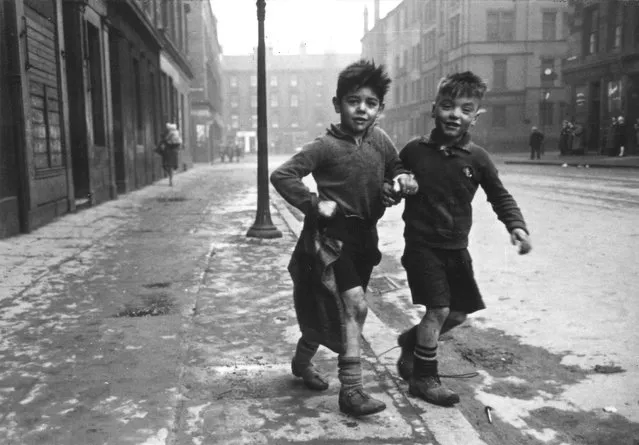
Two boys in the Gorbals area of Glasgow, UK on January 31, 1948. The Gorbals tenements were built quickly and cheaply in the 1840s, providing housing for Glasgow's burgeoning population of industrial workers. Conditions were appalling; overcrowding was standard and sewage and water facilities inadequate. The tenements housed about 40,000 people with up to eight family members sharing a single room, 30 residents sharing a toilet and 40 sharing a tap. By the time this photograph was taken 850 tenements had been demolished since 1920. Redevelopment of the area began in the late 1950s and the tenements were replaced with a modern tower block complex in the sixties. (Photo by Bert Hardy/Getty Images)

Two boys in the Gorbals area of Glasgow, UK on January 31, 1948. The Gorbals tenements were built quickly and cheaply in the 1840s, providing housing for Glasgow's burgeoning population of industrial workers. Conditions were appalling; overcrowding was standard and sewage and water facilities inadequate. The tenements housed about 40,000 people with up to eight family members sharing a single room, 30 residents sharing a toilet and 40 sharing a tap. By the time this photograph was taken 850 tenements had been demolished since 1920. Redevelopment of the area began in the late 1950s and the tenements were replaced with a modern tower block complex in the sixties. (Photo by Bert Hardy/Getty Images)
Details
09 Mar 2017 00:03:00
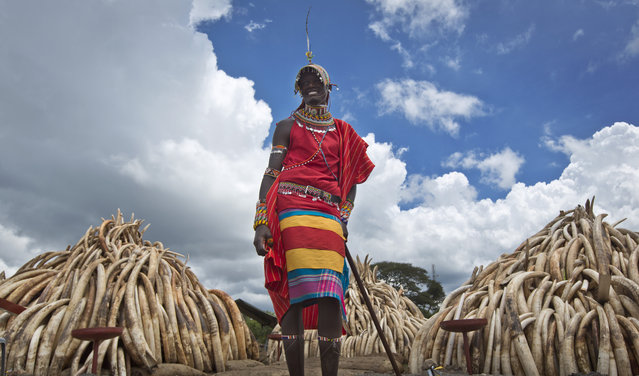
A Maasai man in ceremonial dress poses for visitors to take photographs of him in front of one of around a dozen pyres of ivory, in Nairobi National Park, Kenya Thursday, April 28, 2016. The Kenya Wildlife Service (KWS) has stacked 105 tons of ivory consisting of 16,000 tusks, and 1 ton of rhino horn, from stockpiles around the country, in preparation for it to be torched on Saturday to encourage global efforts to help stop the poaching of elephants and rhinos. (Photo by Ben Curtis/AP Photo)

A Maasai man in ceremonial dress poses for visitors to take photographs of him in front of one of around a dozen pyres of ivory, in Nairobi National Park, Kenya Thursday, April 28, 2016. The Kenya Wildlife Service (KWS) has stacked 105 tons of ivory consisting of 16,000 tusks, and 1 ton of rhino horn, from stockpiles around the country, in preparation for it to be torched on Saturday to encourage global efforts to help stop the poaching of elephants and rhinos. (Photo by Ben Curtis/AP Photo)
Details
29 Apr 2016 11:58:00
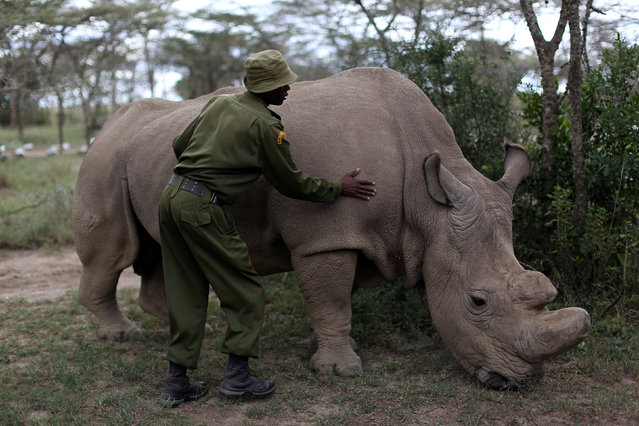
A wildlife ranger strokes a northern white rhino, only three of its kind left in the world, ahead of the Giant Club Summit of African leaders and others on tackling poaching of elephants and rhinos, Ol Pejeta conservancy near the town of Nanyuki, Laikipia County, Kenya, April 28, 2016. (Photo by Siegfried Modola/Reuters)

A wildlife ranger strokes a northern white rhino, only three of its kind left in the world, ahead of the Giant Club Summit of African leaders and others on tackling poaching of elephants and rhinos, Ol Pejeta conservancy near the town of Nanyuki, Laikipia County, Kenya, April 28, 2016. (Photo by Siegfried Modola/Reuters)
Details
30 Apr 2016 09:03:00
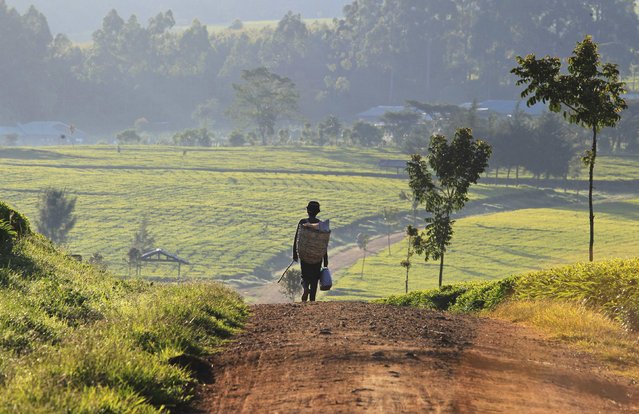
A man walks in the early morning to start his day picking tea leaves at a plantation in Nandi Hills, in Kenya's highlands region west of capital Nairobi, November 5, 2014. Emerald-coloured tea bushes blanketing the rolling hills of Nandi County have long provided a livelihood for small-scale farmers, helping make Kenya one of the world's biggest tea exporters. But ideal weather and bigger harvests, instead of producing bumper earnings, have led to a glut of Kenya's speciality black tea. (Photo by Noor Khamis/Reuters)

A man walks in the early morning to start his day picking tea leaves at a plantation in Nandi Hills, in Kenya's highlands region west of capital Nairobi, November 5, 2014. Emerald-coloured tea bushes blanketing the rolling hills of Nandi County have long provided a livelihood for small-scale farmers, helping make Kenya one of the world's biggest tea exporters. But ideal weather and bigger harvests, instead of producing bumper earnings, have led to a glut of Kenya's speciality black tea. (Photo by Noor Khamis/Reuters)

Details
17 Nov 2014 12:44:00
A passenger (L) gets inside a decorated matatu as other passengers wait for it to fill at night in the streets of Nairobi, Kenya, 24 March 2018. (Photo by Daniel Irungu/EPA/EFE)

A passenger (L) gets inside a decorated matatu as other passengers wait for it to fill at night in the streets of Nairobi, Kenya, 24 March 2018. The Matatu culture is very big in Kenya, the minibuses are decorated with colorful graffiti inside and outside and most of them are equipped with TV screens, high-speed internet, and power sockets. (Photo by Daniel Irungu/EPA/EFE)
Details
02 May 2018 00:05:00
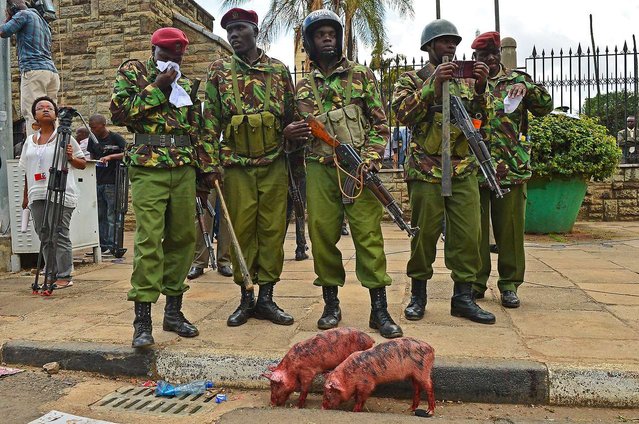
Riot police stood by the gates of parliament in Nairobi, Kenya, Tuesday, May 14, 2013, during a demonstration against members of parliament who demanded higher wages. Demonstrators released two dozen piglets and poured blood on the pavement to protest the demands for a wage hike. (Photo by Carl de Souza/AFP Photo)

Riot police stood by the gates of parliament in Nairobi, Kenya, Tuesday, May 14, 2013, during a demonstration against members of parliament who demanded higher wages. Demonstrators released two dozen piglets and poured blood on the pavement to protest the demands for a wage hike. (Photo by Carl de Souza/AFP Photo)
Details
15 May 2013 10:27:00
A man from the Ogiek community harvests honey in Mount Elgon game reserve, where they have reached an agreement with the government allowing them to remain in their ancestral lands in western Kenya, April 26, 2016. (Photo by Katy Migiro/Reuters)

A man from the Ogiek community harvests honey in Mount Elgon game reserve, where they have reached an agreement with the government allowing them to remain in their ancestral lands in western Kenya, April 26, 2016. (Photo by Katy Migiro/Reuters)
Details
20 May 2016 12:51:00