A Palestinian man demonstrates his parkour skills on a beach as the coronavirus disease (COVID-19) restrictions ease in Gaza City on July 10, 2020. (Photo by Mohammed Salem/Reuters)
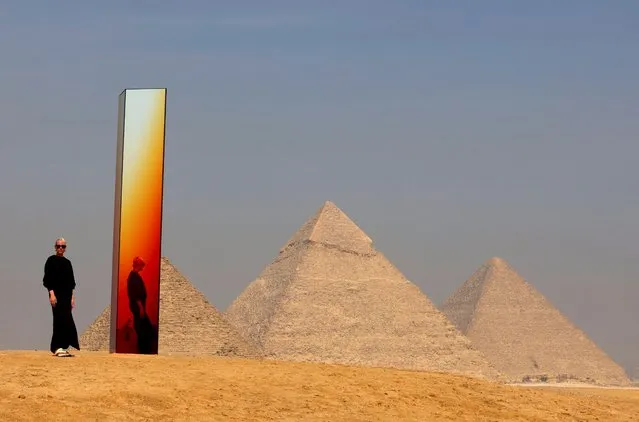
Sabine Marcelis stands beside her project “RA” during The Edition III at Pyramids of Giza, in front of the Great Pyramids of Giza, on the outskirts of Cairo, Egypt on October 26, 2023. (Photo by Mohamed Abd El Ghany/Reuters)
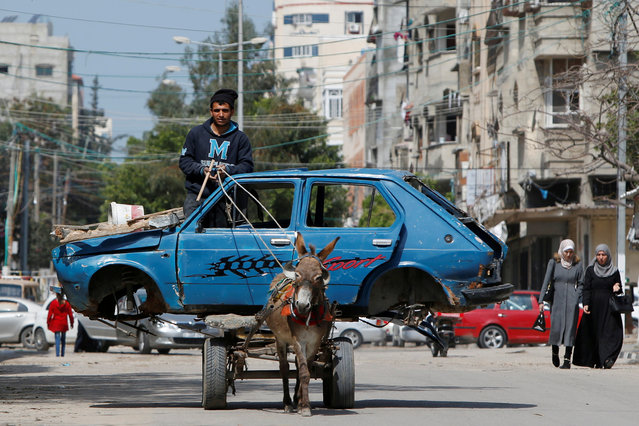
Palestinians fleeing Khan Yunis arrive in Rafah with their belongings in a damaged car on February 15, 2024, as battles raged in the sourthern Gaza Strip between Israel and the Palestinian militant group Hamas. (Photo by Mohammed Abed/AFP Photo)
A woman athlete aims an air rifle while competing in a local shooting championship in Yemen's Huthi rebel-held capital Sanaa on January 3, 2023. (Photo by Mohammed Huwais/AFP Photo)
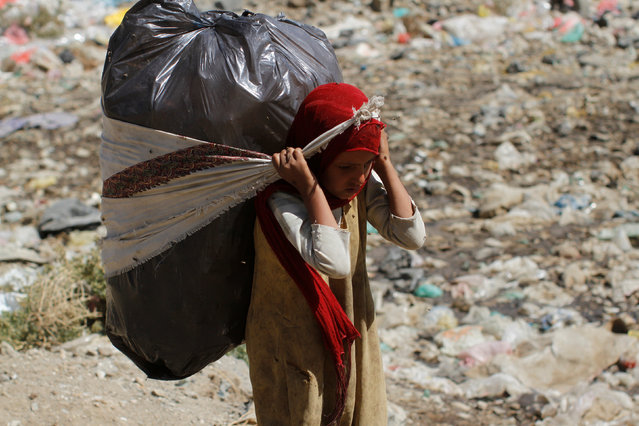
A girl carries a bag of recyclable items she collected from a landfill on the outskirts of Sanaa, Yemen November 16, 2016. (Photo by Mohamed al-Sayaghi/Reuters)
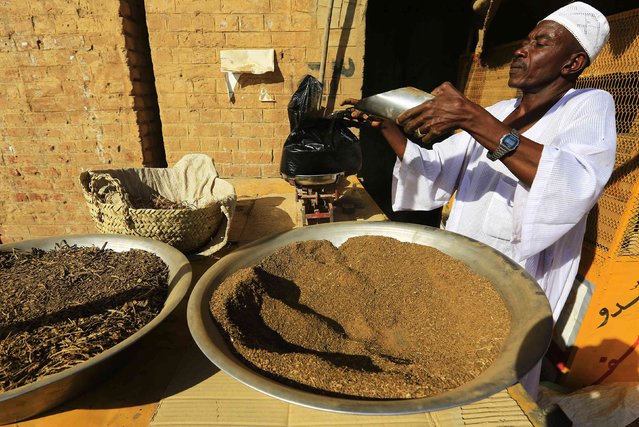
A trader weighs tobacco at a market in el-Fasher, in North Darfur February 5, 2015. Tobacco is one of the North Darfur war zone's main cash crops. (Photo by Mohamed Nureldin Abdallah/Reuters)
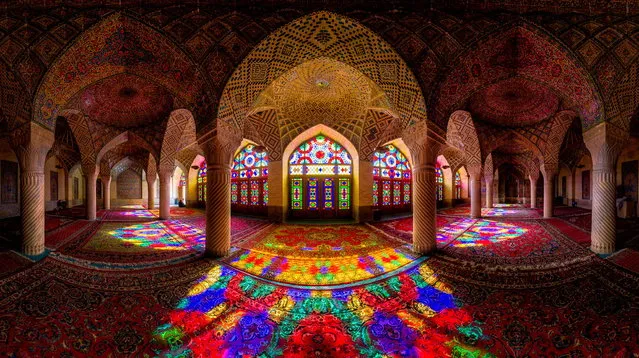
The Nasīr al-Mulk Mosque or Pink Mosque is a traditional mosque in Shiraz, Iran, located in Goade-e-Araban place (near the famous Shah Cheragh mosque). The mosque was built during the Qājār era, and is still in use under protection by Nasir al Mulk's Endowment Foundation. It was built by the order of Mirza Hasan Ali Nasir al Molk, one of the lords of the Qajar Dynasty, in 1876 and was finished in 1888. The designers were Muhammad Hasan-e-Memar and Muhammad Reza Kashi Paz-e-Shirazi. The mosque extensively uses colored glass in its facade, and displays other traditional elements such as panj kāseh-i (five concaves) in its design, it is also named in popular culture as Pink Mosque due to the usage of beautiful pink color tiles for its interior design.