Loading...
Done
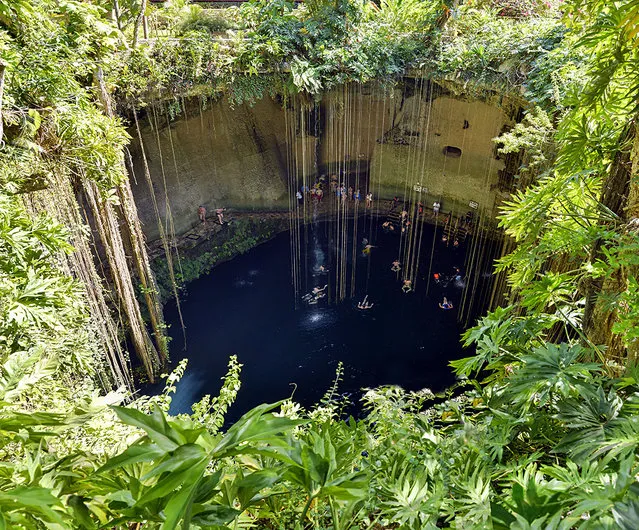
Cenote In Mexico

A cenote is a natural phenomenon, a sinkhole in the Earth’s surface. The Yucatan Peninsula in Mexico has an estimated 7,000 cenotes because it is primarily made up of porous limestone. For millions of years, rainfall slowly ate away at the limestone and a huge system of underground caves and caverns was formed. Many filled with water from rain or from the underground water table. When the roof of a water filled cave collapses, a cenote is born. The water found in a cenote may be fresh water, salt water, or both. Structurally it may be completely open, like a lake, almost completely closed with just a small opening at the top, or somewhere in between.
Details
06 Oct 2013 09:45:00
A reveller from Tom Maior Samba School takes part in a carnival at Anhembi Sambadrome in Sao Paulo February 14, 2015. (Photo by Nacho Doce/Reuters)

A reveller from Tom Maior Samba School takes part in a carnival at Anhembi Sambadrome in Sao Paulo February 14, 2015. (Photo by Nacho Doce/Reuters)
Details
15 Feb 2015 14:02:00
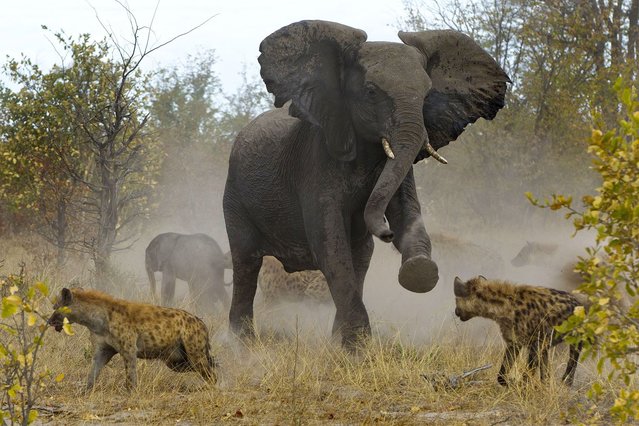
The elephant is seen charging at the hyenas to ward them off its offspring. (Photo by Jayesh Mehta/Caters News)

Elephant fights off hyenas to save baby. “This is the incredible moment an elephant came to the rescue of one of its babies being attacked by a pack of hyenas. The elephant is seen charging at the hyenas to ward them off its offspring. The photos were captured by American photographer Jayesh Mehta, 47, in the Savuti region of the Chobe National Park in Botswana”. Photo: The elephant is seen charging at the hyenas to ward them off its offspring. (Photo by Jayesh Mehta/Caters News)
Details
29 May 2015 16:05:00
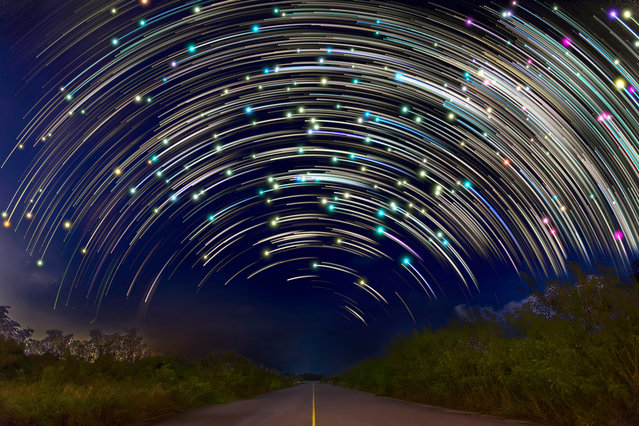
Star trails are pictured from a road in Singapore. These astonishing images of night sky are captured by Singapore based photographer Justin Ng. The pictures were taken between November 2013 to January 2014. It show's star trail caused by the earth's rotation and also can be achieved by zooming the DSLR lens inward or outward in small steps using a dedicated motorized zooming device. (Photo by  Justin Ng/Barcroft Media)

Star trails are pictured from a road in Singapore. These astonishing images of night sky are captured by Singapore based photographer Justin Ng. The pictures were taken between November 2013 to January 2014. It show's star trail caused by the earth's rotation and also can be achieved by zooming the DSLR lens inward or outward in small steps using a dedicated motorized zooming device. (Photo by Justin Ng/Barcroft Media)
Details
16 May 2014 07:41:00
Bears Fighting on Road by Shogo Asao

A photographer has captured the moment two 2.4m tall grizzly or brown bears went claw to claw after one tried to steal a salmon the other had caught for his lunch.
Details
16 Nov 2012 12:58:00
Road Wallah by Photographer Dougie Wallace

“Bombay’s once ubiquitous Premier Padmini taxis were introduced in the 60s and are dwindling at an alarming rate. This follows a decree banning vehicles over 25 years old from the streets to be replaced with “modern alternatives”. In a few years these iconic workhorses will be gone from Bombay’s streets altogether. It is important to capture this before it disappears and I see the road wallah's cabs as the time capsules that allow me to do this”. – Dougie Wallace, Bombay India, March, 2013. (Photo by Dougie Wallace)
Details
27 May 2013 12:01:00
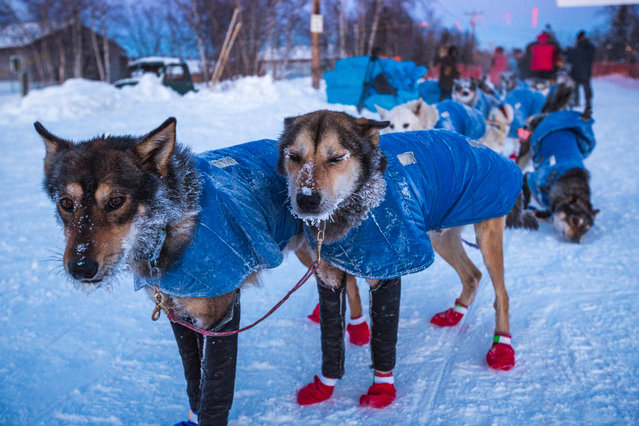
In this Friday, March 13, 2015,  Mitch Seavey's lead dogs with frosty whiskers at the Huslia, Alaska, checkpoint for the Iditarod Trail Sled Dog Race. (Photo by Loren Holmes/AP Photo/Alaska Dispatch News)

In this Friday, March 13, 2015, Mitch Seavey's lead dogs with frosty whiskers at the Huslia, Alaska, checkpoint for the Iditarod Trail Sled Dog Race. (Photo by Loren Holmes/AP Photo/Alaska Dispatch News)
Details
17 Mar 2015 12:00:00
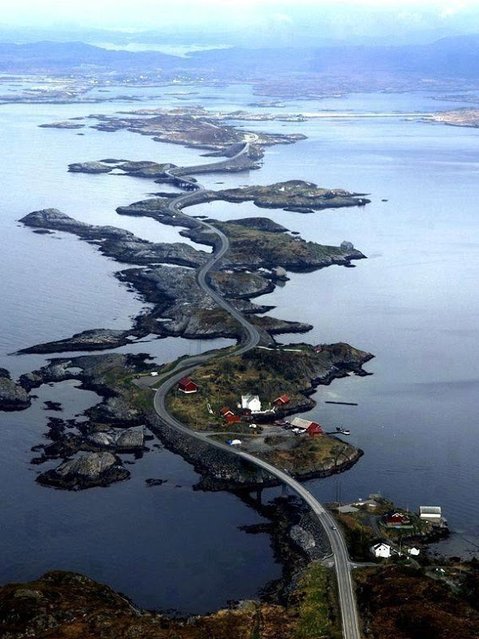
The Atlantic Road, Norway

The Atlantic Ocean Road or the Atlantic Road (Norwegian: Atlanterhavsveien) is a 8.3-kilometer (5.2 mi) long section of County Road 64 that runs through an archipelago in Eide and Averøy in Møre og Romsdal, Norway. It passes by Hustadvika, an unsheltered part of the Norwegian Sea, connecting the island of Averøy with the mainland and Romsdalshalvoya peninsula. It runs between the villages of Karvag on Averoy and Vevang in Eida. It is built on several small islands and skerries, which are connected by several causeways, viaducts and eight bridges – the most prominent being Storseisundet Bridge.
Details
18 Jan 2014 11:42:00