Loading...
Done
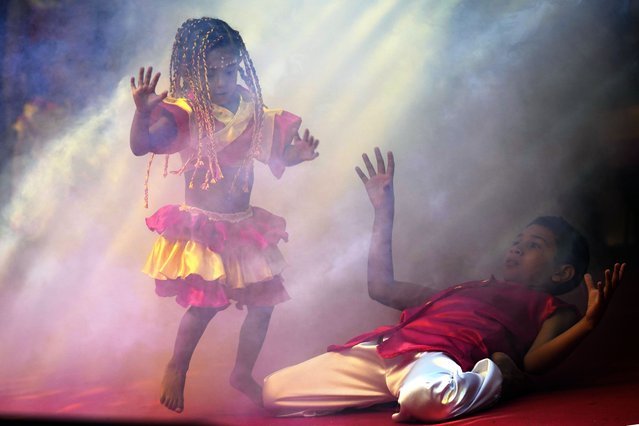
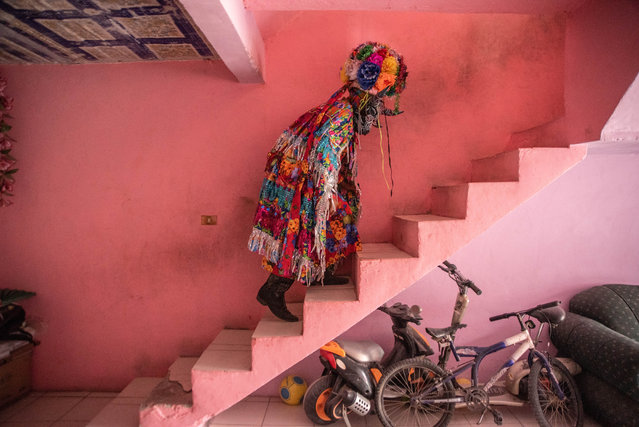
Inhabitants of the community of Coyolillo celebrate their Afro-descendant carnival in Veracruz, Mexico on February 25, 2020. This carnival has more than 100 years of history and is the heritage of the African workers who arrived in that area more than 300 years ago to work in the sugar cane fields. The event is known for the colourful robes, capes and animal masks – of bulls, deer, goats and cows – worn by participants. As such, the carnival is a unique expression of African-Mexican folk art. (Photo by Hector Adolfo Quintanar Perez/ZUMA Wire/Rex Features/Shutterstock)

Inhabitants of the community of Coyolillo celebrate their Afro-descendant carnival in Veracruz, Mexico on February 25, 2020. This carnival has more than 100 years of history and is the heritage of the African workers who arrived in that area more than 300 years ago to work in the sugar cane fields. (Photo by Hector Adolfo Quintanar Perez/ZUMA Wire/Rex Features/Shutterstock)
Details
05 Mar 2020 00:03:00
“River View” – Jacob Jonas & Jill Wilson – Acro Yoga Specialists. (Photo by Jordan Matter)

Jordan Matter showcases their athletic prowess in everyday situations such as a martial artist shaving with a samurai sword, an ice hockey goalie shopping and a gymnast balancing from a street sign. Photo: “River View” – Jacob Jonas & Jill Wilson – Acro Yoga Specialists. (Photo by Jordan Matter)
Details
16 Mar 2014 10:50:00
Members of the Paraguay-African cultural group Kamba Cua dance during celebrations in honor of Saint Balthazar, one of the Three Kings, on Epiphany in Fernando de la Mora, Paraguay, late Saturday, January 8, 2022, just days after the official holiday. The annual procession is a tradition that keeps Paraguay's Afro-descendants connected with their African roots through ancestral dance, drumming and customs. (Photo by Jorge Saenz/AP Photo)

Members of the Paraguay-African cultural group Kamba Cua dance during celebrations in honor of Saint Balthazar, one of the Three Kings, on Epiphany in Fernando de la Mora, Paraguay, late Saturday, January 8, 2022, just days after the official holiday. The annual procession is a tradition that keeps Paraguay's Afro-descendants connected with their African roots through ancestral dance, drumming and customs. (Photo by Jorge Saenz/AP Photo)
Details
29 Jan 2022 07:01:00
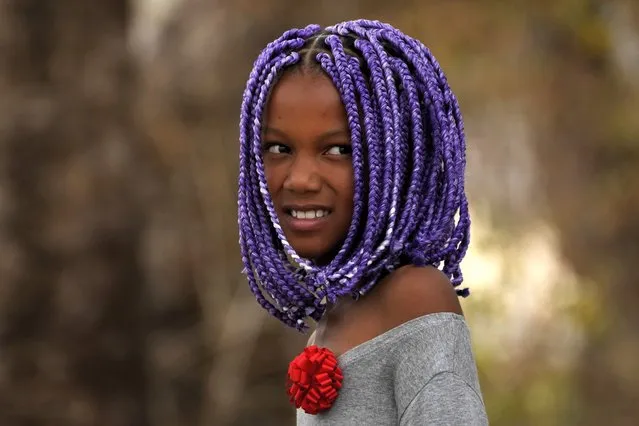
Sophia Fernandes, a member of the Kalunga quilombo, the descendants of runaway slaves, dons traditional afro braids, during the culmination of the week-long pilgrimage and celebration for the patron saint “Nossa Senhora da Abadia” or Our Lady of Abadia, in the rural area of Cavalcante in Goias state, Brazil, Saturday, August 13, 2022.  Devotees celebrate Our Lady of Abadia at this time of the year with weddings, baptisms and by crowning distinguished community members, as they maintain cultural practices originating from Africa that mix with Catholic traditions. (Photo by Eraldo Peres/AP Photo)

Sophia Fernandes, a member of the Kalunga quilombo, the descendants of runaway slaves, dons traditional afro braids, during the culmination of the week-long pilgrimage and celebration for the patron saint “Nossa Senhora da Abadia” or Our Lady of Abadia, in the rural area of Cavalcante in Goias state, Brazil, Saturday, August 13, 2022. Devotees celebrate Our Lady of Abadia at this time of the year with weddings, baptisms and by crowning distinguished community members, as they maintain cultural practices originating from Africa that mix with Catholic traditions. (Photo by Eraldo Peres/AP Photo)
Details
21 Aug 2022 03:48:00
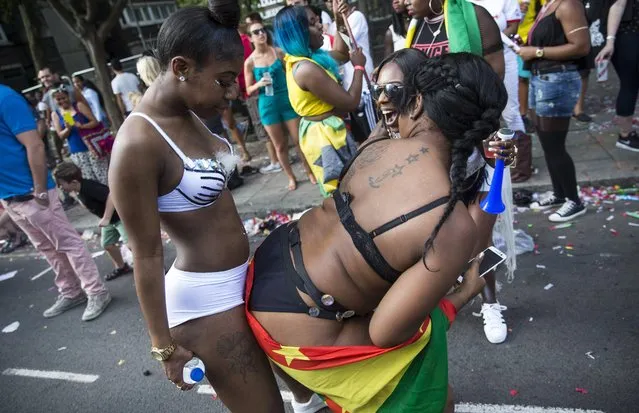
Revellers dance at Notting Hill Carnival on August 29, 2016 in London, England. The Notting Hill Carnival, which has taken place annually since 1964, is expected to attract over a million people. The two-day event, started by members of the Afro-Caribbean community, sees costumed performers take to the streets in a parade and dozens of sound systems set up around the Notting Hill streets. (Photo by Jack Taylor/Getty Images)

Revellers dance at Notting Hill Carnival on August 29, 2016 in London, England. The Notting Hill Carnival, which has taken place annually since 1964, is expected to attract over a million people. The two-day event, started by members of the Afro-Caribbean community, sees costumed performers take to the streets in a parade and dozens of sound systems set up around the Notting Hill streets. (Photo by Jack Taylor/Getty Images)
Details
30 Aug 2016 12:08:00
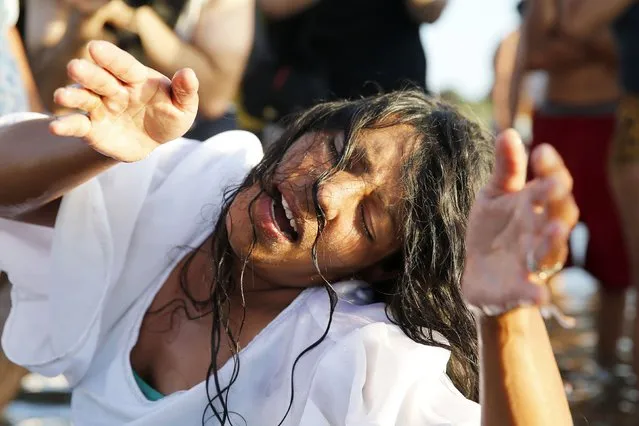
A devotee of the Afro-Brazilian goddess of the sea Lemanja pays tribute on Lemanja's Day at Ramirez beach in Montevideo February 2, 2015. On this day every year, worshippers light candles at a shrine and throw sweets, alcoholic drinks, fruits and cheap jewellery into the sea as offerings to ask for good health and luck in love and work. (Photo by Andres Stapff/Reuters)

A devotee of the Afro-Brazilian goddess of the sea Lemanja pays tribute on Lemanja's Day at Ramirez beach in Montevideo February 2, 2015. On this day every year, worshippers light candles at a shrine and throw sweets, alcoholic drinks, fruits and cheap jewellery into the sea as offerings to ask for good health and luck in love and work. (Photo by Andres Stapff/Reuters)
Details
04 Feb 2015 12:14:00
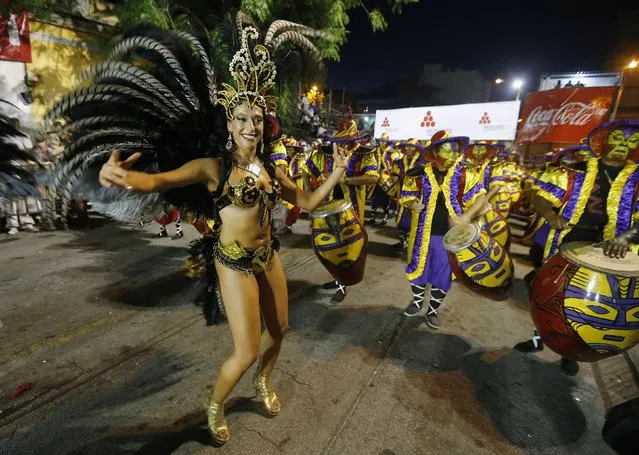
A member of a comparsa, a Uruguayan carnival group, dances during the Llamadas parade in Montevideo February 5, 2015. Thousands of people crowd the capital's Barrio Sur as costumed drummers and dancers kick off the street fiesta known as Llamadas which has traditional Afro-Uruguayan roots. The fiesta, also known in Spanish as “The Calls”, started during the colonial period as a slave parade on the city streets. (Photo by Andres Stapff/Reuters)

A member of a comparsa, a Uruguayan carnival group, dances during the Llamadas parade in Montevideo February 5, 2015. Thousands of people crowd the capital's Barrio Sur as costumed drummers and dancers kick off the street fiesta known as Llamadas which has traditional Afro-Uruguayan roots. The fiesta, also known in Spanish as “The Calls”, started during the colonial period as a slave parade on the city streets. (Photo by Andres Stapff/Reuters)
Details
08 Feb 2015 11:44:00
Fruit Ninja In Real Life

The parody of the video game uploaded last week is, of course, going viral as we speak reaching upwards of a million views in a little as six days. It's not even the first Fruit Ninja parody, but somehow this one resonates with it's simple formula: take a guy with a samurai sword, throw fruit at him and watch him slice them in half in slow motion. When he misses, make sure some fruit hits him right in the kisser. Gallagher ain't got nothing on this.
Details
26 Dec 2012 13:35:00