Loading...
Done
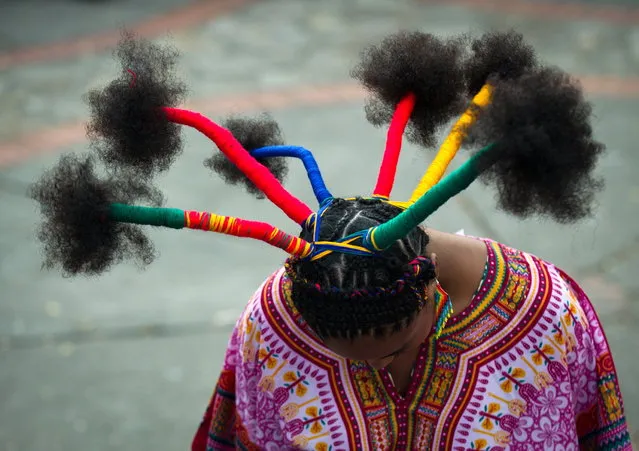
A woman presents an Afro-Colombian hairstyle during the 9th contest of Afro-hairdressers, in Cali, Valle del Cauca departament, Colombia, on May 12, 2013. The Afro hairstyles have their origins in the time of slavery, when women sat to comb their children hair after work. (Photo by Luis Robayo/AFP Photo)

A woman presents an Afro-Colombian hairstyle during the 9th contest of Afro-hairdressers, in Cali, Valle del Cauca departament, Colombia, on May 12, 2013. The Afro hairstyles have their origins in the time of slavery, when women sat to comb their children hair after work. (Photo by Luis Robayo/AFP Photo)
Details
13 May 2013 11:01:00
Spain's Lucia Corrales, left and Canada's Florianne Jourde fight for the ball during a U-20 Women's World Cup round of sixteen soccer match in Cali, Colombia, Wednesday, September 11, 2024. (Photo by Dolores Ochoa/AP Photo)

Spain's Lucia Corrales, left and Canada's Florianne Jourde fight for the ball during a U-20 Women's World Cup round of sixteen soccer match in Cali, Colombia, Wednesday, September 11, 2024. (Photo by Dolores Ochoa/AP Photo)
Details
23 Sep 2024 02:41:00
A picture taken with slow shutter speed shows Emily Vaca performing in the finals of the Tenth World Salsa Festival in Cali, Colombia, 04 October 2015. (Photo by Christian Escobar Mora/EPA)

A picture taken with slow shutter speed shows Emily Vaca performing in the finals of the Tenth World Salsa Festival in Cali, Colombia, 04 October 2015. (Photo by Christian Escobar Mora/EPA)
Details
08 Oct 2015 08:05:00
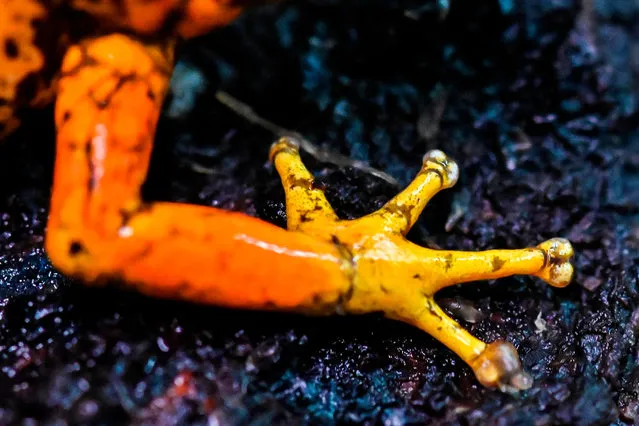
A leg of a “diablito” frog (Oophaga sylvatica) is photographed in a laboratory at a laboratory in the zoo of Cali, Colombia, on July 19, 2019. Colombia is the second country with the largest number of amphibians in the world after Brazil. More than 40% of amphibian species worldwide are in danger of extinction. (Photo by Luis Robayo/AFP Photo)

A leg of a “diablito” frog (Oophaga sylvatica) is photographed in a laboratory at a laboratory in the zoo of Cali, Colombia, on July 19, 2019. Colombia is the second country with the largest number of amphibians in the world after Brazil. More than 40% of amphibian species worldwide are in danger of extinction. (Photo by Luis Robayo/AFP Photo)
Details
28 Nov 2020 00:03:00
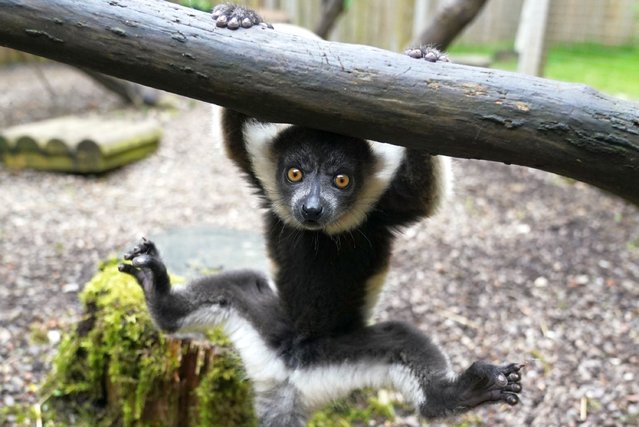
One of two black-and-white ruffed lemur pups born at Blair Drummond Safari and Adventure Park, near Stirling, UK on Friday, May 24, 2024.The critically endangered lemur pups, both female were born on April 14 and have been named Nova, meaning “new” and Evie meaning “life”. (Photo by Andrew Milligan/PA Images via Getty Images)

One of two black-and-white ruffed lemur pups born at Blair Drummond Safari and Adventure Park, near Stirling, UK on Friday, May 24, 2024.The critically endangered lemur pups, both female were born on April 14 and have been named Nova, meaning “new” and Evie meaning “life”. (Photo by Andrew Milligan/PA Images via Getty Images)
Details
04 Oct 2025 04:29:00
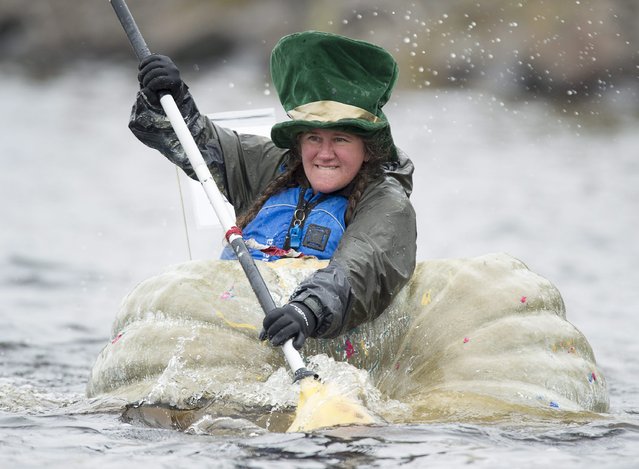
A paddler races in a giant pumpkin during the annual regatta on Lake Pisiquid in Windsor, Nova Scotia, Sunday, October 11, 2015. (Photo by Andrew Vaughan/The Canadian Press via AP Photo)

A paddler races in a giant pumpkin during the annual regatta on Lake Pisiquid in Windsor, Nova Scotia, Sunday, October 11, 2015. Participants hollow out the massive gourds and pilot them across the 500 meter course. (Photo by Andrew Vaughan/The Canadian Press via AP Photo)
Details
14 Oct 2015 08:07:00
Surfers and others spend a day at Rockaway Beach as impact from Hurricane Lee delvers large surf and rip tides to much of the Northeast on September 14, 2023 in New York City. Hurricane Lee is predicted to make landfall from Nova Scotia to New Brunswick and also parts Maine this weekend. (Photo by Spencer Platt/Getty Images)

Surfers and others spend a day at Rockaway Beach as impact from Hurricane Lee delvers large surf and rip tides to much of the Northeast on September 14, 2023 in New York City. Hurricane Lee is predicted to make landfall from Nova Scotia to New Brunswick and also parts Maine this weekend. (Photo by Spencer Platt/Getty Images)
Details
26 Sep 2023 03:17:00
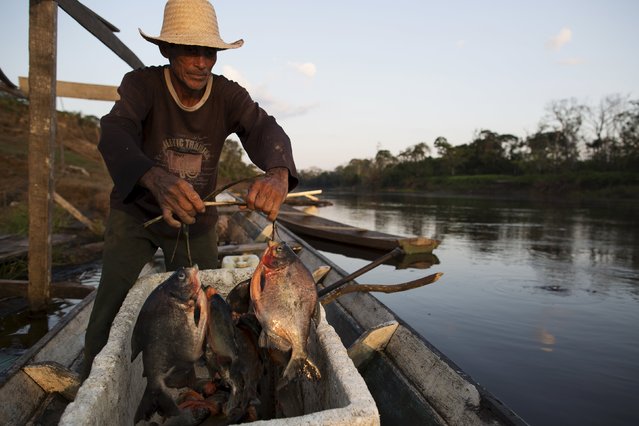
Francisco da Silva Vale, 61, cools off fish with ice produced on solar-powered ice machines at Vila Nova do Amana community in the Sustainable Development Reserve, in Amazonas state, Brazil, September 23, 2015. Three solar-powered machines, are producing about ninety kilos of ice per day, in a region with poor access to electric energy, which used to be produced only with diesel oil, in the Amazon rain forest. (Photo by Bruno Kelly/Reuters)

Francisco da Silva Vale, 61, cools off fish with ice produced on solar-powered ice machines at Vila Nova do Amana community in the Sustainable Development Reserve, in Amazonas state, Brazil, September 23, 2015. Three solar-powered machines, are producing about ninety kilos of ice per day, in a region with poor access to electric energy, which used to be produced only with diesel oil, in the Amazon rain forest. (Photo by Bruno Kelly/Reuters)
Details
10 Oct 2015 08:03:00