Loading...
Done
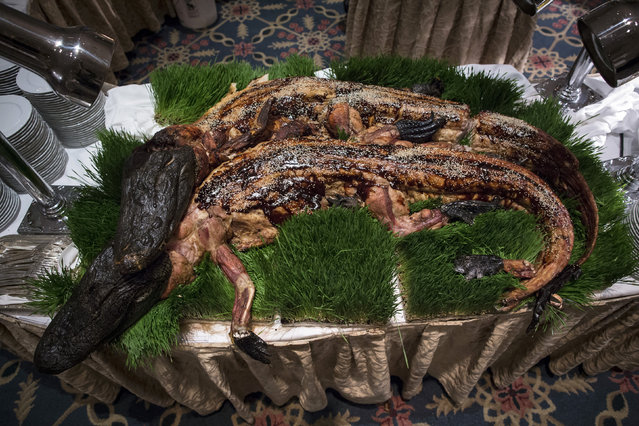
Whole cooked alligators are displayed before being served at the 110th Explorers Club Annual Dinner at the Waldorf Astoria in New York March 15, 2014. The club, which promotes the scientific exploration of land, sea, air and space featured catering by chef and exotic creator Gene Rurka. Chef Rurka prepared a variety of dishes featuring an array of insects, wildlife, animal body parts and invasive species. (Photo by Andrew Kelly/Reuters)

Whole cooked alligators are displayed before being served at the 110th Explorers Club Annual Dinner at the Waldorf Astoria in New York March 15, 2014. The club, which promotes the scientific exploration of land, sea, air and space featured catering by chef and exotic creator Gene Rurka. Chef Rurka prepared a variety of dishes featuring an array of insects, wildlife, animal body parts and invasive species. (Photo by Andrew Kelly/Reuters)
Details
20 Mar 2014 10:03:00
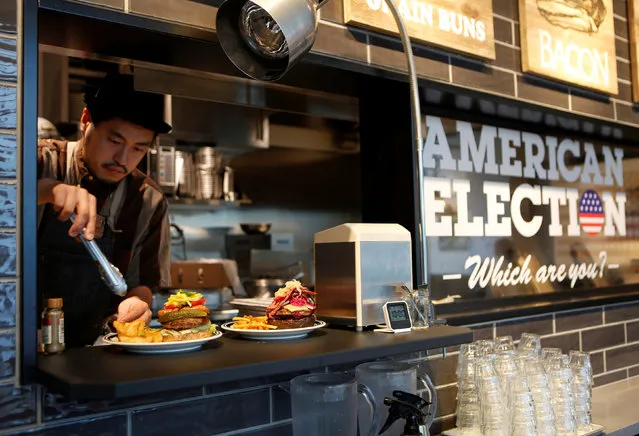
J.S. Burgers Cafe chef Yasuhito Fukui prepares Mr. and Mrs. Burger featuring the U.S. presidential candidates Hillary Clinton and Donald Trump at the hamburger joint in Tokyo, Japan October 7, 2016. (Photo by Megumi Lim/Reuters)

J.S. Burgers Cafe chef Yasuhito Fukui prepares Mr. and Mrs. Burger featuring the U.S. presidential candidates Hillary Clinton and Donald Trump at the hamburger joint in Tokyo, Japan October 7, 2016. (Photo by Megumi Lim/Reuters)
Details
08 Oct 2016 11:42:00
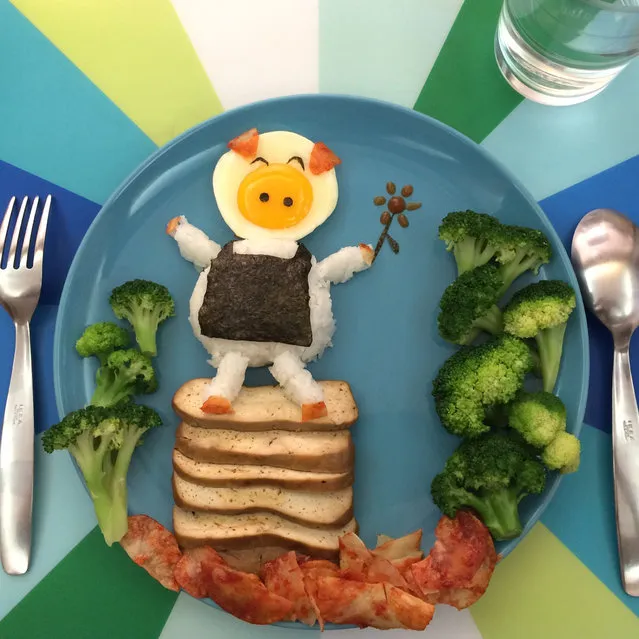
Annes egg art a smiling pig standing on a tower of toast with a sushi roll apron. (Photo by Anne Widya/Caters News)

A creative mother has come up with a novel way of making sure her children eat their breakfasts – by using eggs to make works of art. Sculpted into a variety of extraordinary designs, culinary genius, Anne Widya, uses sunny side up eggs to make sure her children's plates are always cleared. Here: Annes egg art a smiling pig standing on a tower of toast with a sushi roll apron. (Photo by Anne Widya/Caters News)
Details
23 Nov 2014 12:39:00
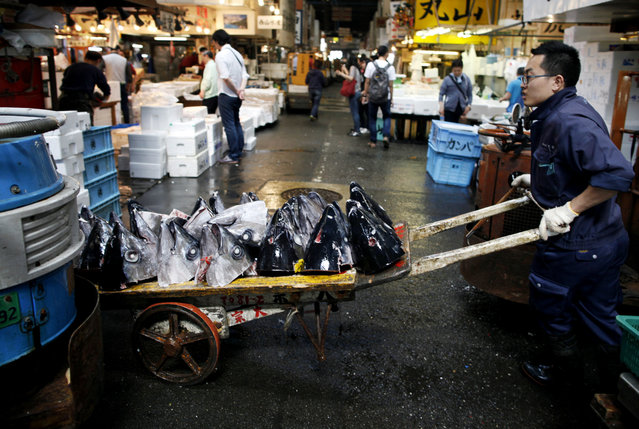
In this April 28, 2015 file photo, heads of tuna on a cart are carried by a fish dealer after the day's auction at Tsukiji Wholesale Market in Tokyo. In one of the biggest of Japan's many New Year holiday rituals, early on Tuesday, January 5, 2016, Tokyo's Tsukiji market will auction off with much fanfare a huge, glistening tuna, likely destined for one of the big sushi chains. If all goes as planned, it will be the last such auction at 80-year-old Tsukiji. (Photo by Shuji Kajiyama/AP Photo)

In this April 28, 2015 file photo, heads of tuna on a cart are carried by a fish dealer after the day's auction at Tsukiji Wholesale Market in Tokyo. In one of the biggest of Japan's many New Year holiday rituals, early on Tuesday, January 5, 2016, Tokyo's Tsukiji market will auction off with much fanfare a huge, glistening tuna, likely destined for one of the big sushi chains. If all goes as planned, it will be the last such auction at 80-year-old Tsukiji. (Photo by Shuji Kajiyama/AP Photo)
Details
06 Jan 2016 08:03:00
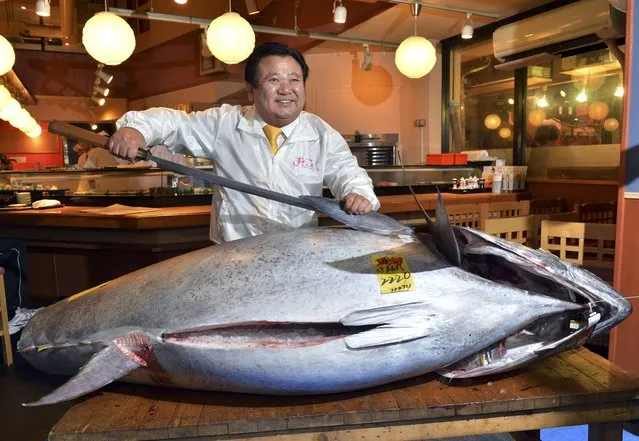
President of sushi restaurant chain Sushi-Zanmai, Kiyoshi Kimura, displays a 222kg bluefin tuna at his main restaurant near Tokyo's Tsukiji fish market on January 5, 2013. The bluefin tuna was traded at 155.4 million yen (1.77 million USD) at the wholesale market, smashing a previous record. (Photo by Yoshikazu Tsuno/AFP Photo)

Japanese businessman Kiyoshi Kimura has paid 1.38 million euros ($1.76 million, or 155.4 million yen) for a blue fin tuna – more than three times the previous high – which he also set one year ago. The 222-kilogram fish will be served to Kimura’s customers. Blue fin tuna is annually sold in a traditional New Year’s auction. Japan consumes 80 percent blue fin tuna caught worldwide.

Photo: President of sushi restaurant chain Sushi-Zanmai, Kiyoshi Kimura, displays a 222kg bluefin tuna at his main restaurant near Tokyo's Tsukiji fish market on January 5, 2013. The bluefin tuna was traded at 155.4 million yen (1.77 million USD) at the wholesale market, smashing a previous record. (Photo by Yoshikazu Tsuno/AFP Photo)
Details
06 Jan 2013 13:26:00
In this Thursday, February 19, 2015 photo, participants at a seminar on edible insects taste a Cricket Consomme at Le Cordon Bleu cooking school in Bangkok, Thailand. A group of chefs and food scientists at the esteemed French school's branch in Bangkok spent the week simmering, sautéing and grilling insects to extract innovative flavors they say could open a new frontier for the world of gastronomy. (Photo by Sakchai Lalit/AP Photo)

In this Thursday, February 19, 2015 photo, participants at a seminar on edible insects taste a Cricket Consomme at Le Cordon Bleu cooking school in Bangkok, Thailand. A group of chefs and food scientists at the esteemed French school's branch in Bangkok spent the week simmering, sautéing and grilling insects to extract innovative flavors they say could open a new frontier for the world of gastronomy. (Photo by Sakchai Lalit/AP Photo)
Details
22 Feb 2015 11:15:00
The second annual Salon du Chocolat exhibition and fashion show at LeGourmet in Galeries Lafayette, Dubai Mall on May 18, 2023. Dress “Madonna” created by Chef Christiane S. Trilck designed by Julian Knips. (Photo by Antonie Robertson/The National)

The second annual Salon du Chocolat exhibition and fashion show at LeGourmet in Galeries Lafayette, Dubai Mall on May 18, 2023. Dress “Madonna” created by Chef Christiane S. Trilck designed by Julian Knips. (Photo by Antonie Robertson/The National)
Details
09 Sep 2024 03:10:00


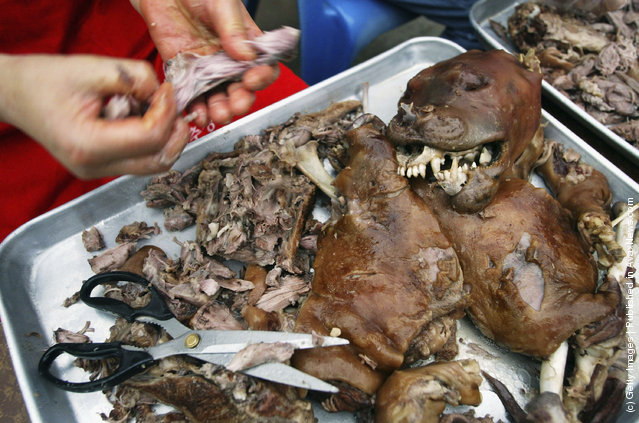
“Dog meat refers to edible parts and the flesh derived from (predominantly domestic) dogs. Human consumption of dog meat has been recorded in many parts of the world, including ancient China, ancient Mexico, and ancient Rome. According to contemporary reports, dog meat is consumed in a variety of countries such as Switzerland, China, Vietnam, the Philippines, and Korea. In addition, dog meat has also been used as survival food in times of war and/or other hardships”. – Wikipedia

Photo: A chef prepares dog meat at a restaurant on July 4, 2005 in Gwacheon, South Korea. Dog meat is a traditional dish in Korea dating back to the Samkuk period (period of the three kingdoms BC 57 – AD 668). Although many recipes existed historically for dog meat, now chefs only make soups, or dishes using boiled or roasted meat. Koreans traditionally eat dog meat on the hottest day of the summer, for it's reputed benefits of virility, invigoration and health. (Photo by Chung Sung-Jun/Getty Images)

Details
24 Jul 2011 13:21:00