Loading...
Done
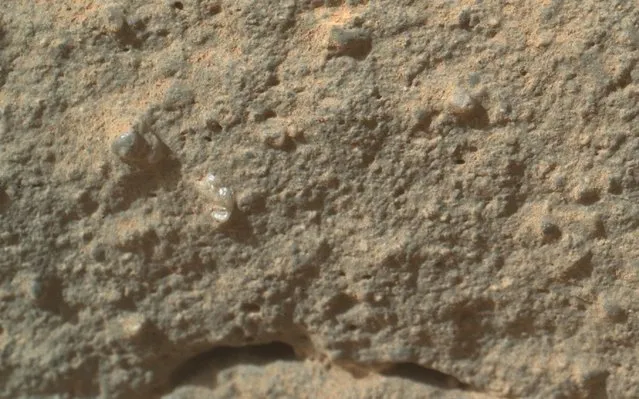
Scientists say that a “Martian flower”, seen here in an image from the Curiosity rover's Mars Hand Lens Imager, is a 2-millimeter-wide grain or pebble that's embedded in the surrounding rock. Another, darker-colored mineral grain can be seen above and to the left. (Photo by NASA)

“The scientists behind NASA's $2.5 billion Curiosity rover mission on Mars on Tuesday explained the nature of a tiny, gleaming "flower" embedded in Red Planet rock, and revealed where they'll be using the SUV-sized robot's drill for the first time”. – Alan Boyle via NBCNews.com

Photo: Scientists say that a “Martian flower”, seen here in an image from the Curiosity rover's Mars Hand Lens Imager, is a 2-millimeter-wide grain or pebble that's embedded in the surrounding rock. Another, darker-colored mineral grain can be seen above and to the left. (Photo by NASA)
Details
16 Jan 2013 11:12:00
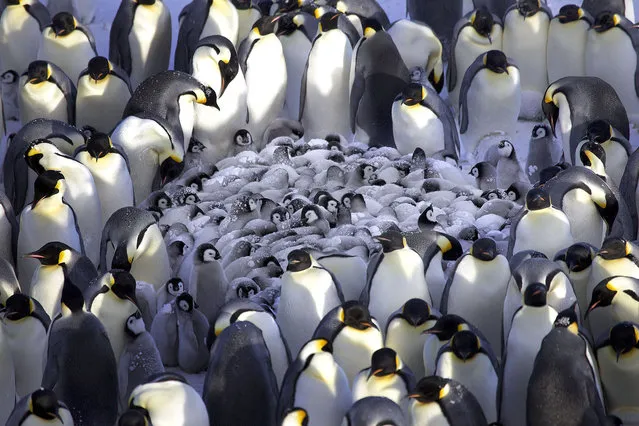
Emperor penguins gathered together to keep their chicks warm in these pictures. Marine scientist Frederique Oliver snapped the protective parents in Antarctica as they huddled against the huge winds.The adorable birds have to battle temperatures on -20 degrees Celsius as well as winds of up to 40 knots on the ice. (Photo by Frederique Oliver/Caters News)

Emperor penguins gathered together to keep their chicks warm in these pictures. Marine scientist Frederique Oliver snapped the protective parents in Antarctica as they huddled against the huge winds.The adorable birds have to battle temperatures on -20 degrees Celsius as well as winds of up to 40 knots on the ice. (Photo by Frederique Oliver/Caters News)
Details
18 Feb 2015 13:24:00
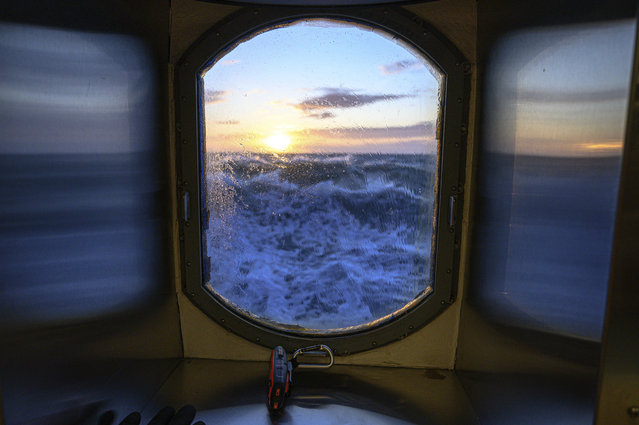
This November 8, 2019, photo provided by John Guillote shows a view from the main lab of the Sikuliaq in the Chukchi Sea. University of Washington scientists onboard the research vessel are studying the changes and how less sea ice will affect coastlines, which already are vulnerable to erosion because increased waves delivered by storms. More erosion would increase the chance of winter flooding in villages and danger to hunters in small boats. (Photo by John Guillote via AP Photo)

This November 8, 2019, photo provided by John Guillote shows a view from the main lab of the Sikuliaq in the Chukchi Sea. University of Washington scientists onboard the research vessel are studying the changes and how less sea ice will affect coastlines, which already are vulnerable to erosion because increased waves delivered by storms. More erosion would increase the chance of winter flooding in villages and danger to hunters in small boats. (Photo by John Guillote via AP Photo)
Details
26 Aug 2021 08:22:00
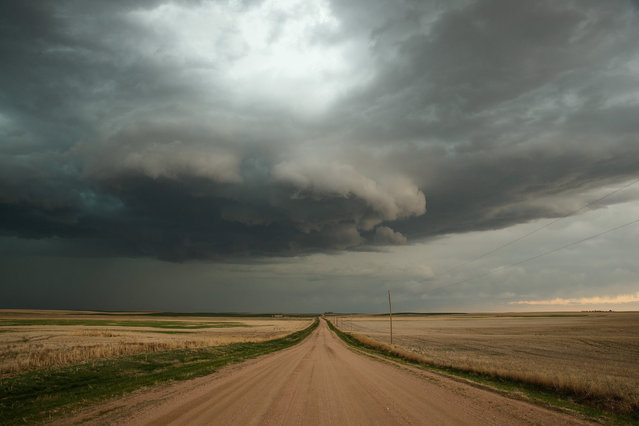
A supercell thunderstorm develops, May 8, 2017 in Elbert County outside of Limon, Colorado. With funding from the National Science Foundation and other government grants, scientists and meteorologists from the Center for Severe Weather Research try to get close to supercell storms and tornadoes trying to better understand tornado structure and strength, how low-level winds affect and damage buildings, and to learn more about tornado formation and prediction. (Photo by Drew Angerer/Getty Images)

A supercell thunderstorm develops, May 8, 2017 in Elbert County outside of Limon, Colorado. With funding from the National Science Foundation and other government grants, scientists and meteorologists from the Center for Severe Weather Research try to get close to supercell storms and tornadoes trying to better understand tornado structure and strength, how low-level winds affect and damage buildings, and to learn more about tornado formation and prediction. (Photo by Drew Angerer/Getty Images)
Details
16 Jun 2017 06:20:00
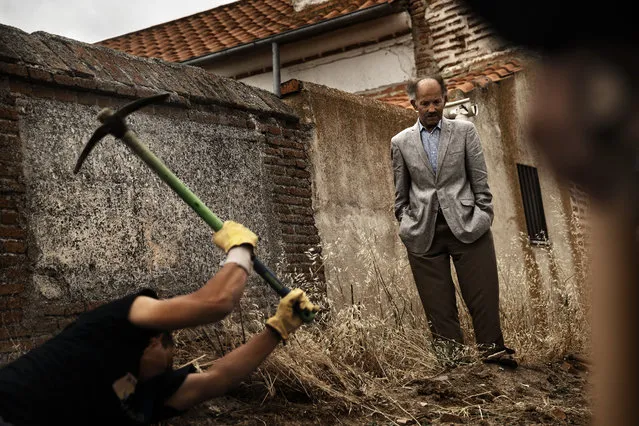
In this photo taken on July 19, 2014, a man looks at an excavation as an A.R.M.H., Association for the Recovery of Historical Memory, volunteer digs on the search for the body of Perfecto de Dios, in a hidden grave in Chaherrero, Spain. Across Spain, volunteer teams of archeologists, anthropologists and forensic scientists head out every year on expeditions to dig for suspected mass graves – a legacy of Spain's fascist past during the time of General Francisco Franco. (Photo by Daniel Ochoa de Olza/AP Photo)

In this photo taken on July 19, 2014, a man looks at an excavation as an A.R.M.H., Association for the Recovery of Historical Memory, volunteer digs on the search for the body of Perfecto de Dios, in a hidden grave in Chaherrero, Spain. Across Spain, volunteer teams of archeologists, anthropologists and forensic scientists head out every year on expeditions to dig for suspected mass graves – a legacy of Spain's fascist past during the time of General Francisco Franco. (Photo by Daniel Ochoa de Olza/AP Photo)
Details
26 Dec 2014 14:54:00
In this Thursday, February 19, 2015 photo, participants at a seminar on edible insects taste a Cricket Consomme at Le Cordon Bleu cooking school in Bangkok, Thailand. A group of chefs and food scientists at the esteemed French school's branch in Bangkok spent the week simmering, sautéing and grilling insects to extract innovative flavors they say could open a new frontier for the world of gastronomy. (Photo by Sakchai Lalit/AP Photo)

In this Thursday, February 19, 2015 photo, participants at a seminar on edible insects taste a Cricket Consomme at Le Cordon Bleu cooking school in Bangkok, Thailand. A group of chefs and food scientists at the esteemed French school's branch in Bangkok spent the week simmering, sautéing and grilling insects to extract innovative flavors they say could open a new frontier for the world of gastronomy. (Photo by Sakchai Lalit/AP Photo)
Details
22 Feb 2015 11:15:00
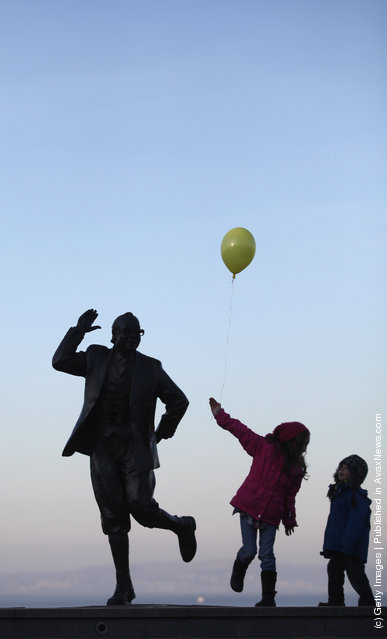
Children with balloons play beside the statue of British comedy legend Eric Morecambe

Children with balloons play beside the statue of British comedy legend Eric Morecambe on January 16, 2012 in Morecambe, England. According to scientists January 16, 2012 was “Blue Monday”, the most depressing day of the year. (Photo by Christopher Furlong/Getty Images)
Details
22 Jan 2012 12:10:00
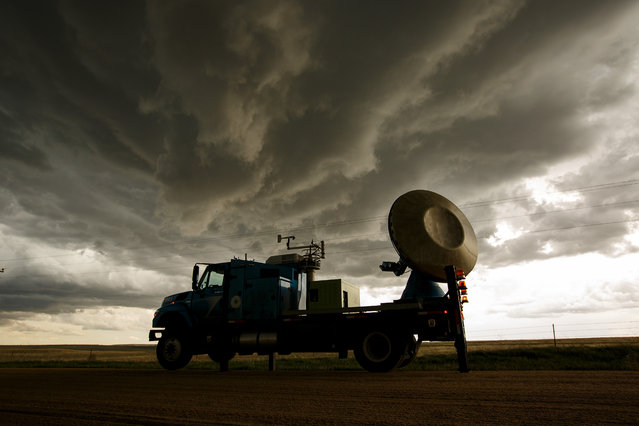
The Doppler on Wheels (DOW) vehicle scans a supercell thunderstorm during a tornado research mission, May 8, 2017 in Elbert County near Agate, Colorado. Doppler on Wheels (DOW) is a mobile doppler radar mounted on a truck that brings instruments directly into storms, allowing scientists to scan storms and tornadoes and make 3-D maps of wind and debris. (Photo by Drew Angerer/Getty Images)

The Doppler on Wheels (DOW) vehicle scans a supercell thunderstorm during a tornado research mission, May 8, 2017 in Elbert County near Agate, Colorado. Doppler on Wheels (DOW) is a mobile doppler radar mounted on a truck that brings instruments directly into storms, allowing scientists to scan storms and tornadoes and make 3-D maps of wind and debris. (Photo by Drew Angerer/Getty Images)
Details
18 May 2017 08:54:00