Loading...
Done
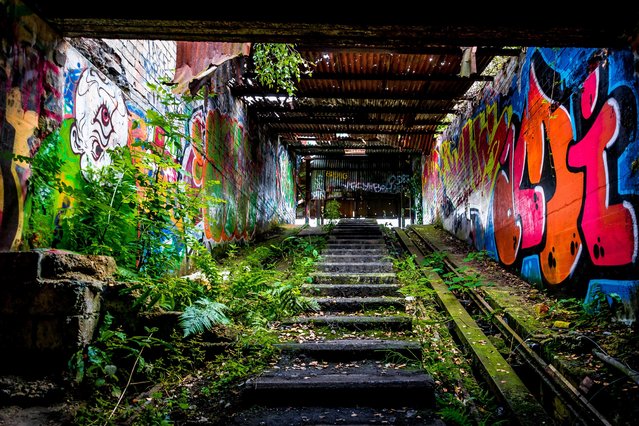
A railway siding in Wiltshire, UK where ammunition was transferred by tunnel to an underground storage facility. (Photo by MediaDrumWorld.com)

The series of shots show the bare steel infrastructure of the Bushfield army training camp near Winchester which was in operation during World War Two and was used to train Royal Green Jackets recruits in the sixties. The spectacular images were taken by an urban explorer who wished to remain anonymous. Here: A railway siding in Wiltshire, UK where ammunition was transferred by tunnel to an underground storage facility. (Photo by MediaDrumWorld.com)
Details
11 Jan 2017 14:18:00
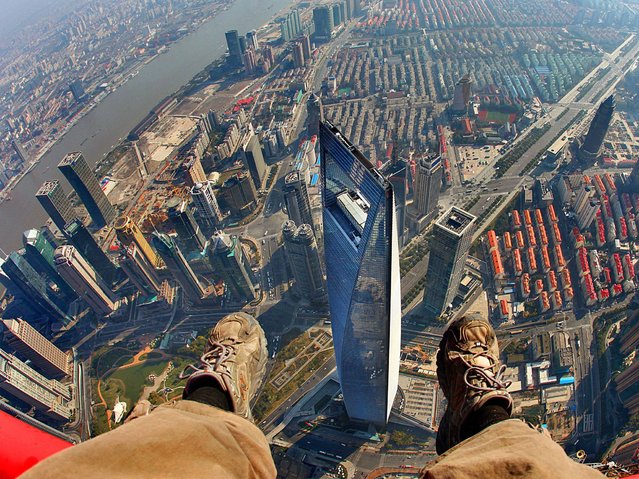
Construction work on the tower began in November 2008. Upon its completion this year the building will stand approximately 632 meters (2,073 ft.) high and will have 121 stories. It is expected to open to the public in 2015. (Photo by Rex Features)

Construction work on the tower began in November 2008. Upon its completion this year the building will stand approximately 632 meters (2,073 ft.) high and will have 121 stories. It is expected to open to the public in 2015. (Photo by Rex Features)
Details
23 Mar 2014 07:33:00
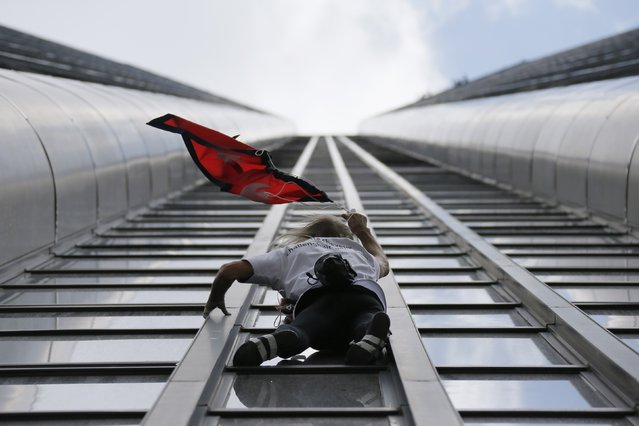
French climber Alain Robert, also known as “Spiderman”, holds the flag of Nepal as he scales the Tour Montparnasse, a 210-metre (689 ft) building in central Paris, France April 28, 2015, to show support for the victims after the earthquake in Nepal. (Photo by Gonzalo Fuentes/Reuters)

French climber Alain Robert, also known as “Spiderman”, holds the flag of Nepal as he scales the Tour Montparnasse, a 210-metre (689 ft) building in central Paris, France April 28, 2015, to show support for the victims after the earthquake in Nepal. (Photo by Gonzalo Fuentes/Reuters)
Details
29 Apr 2015 06:35:00
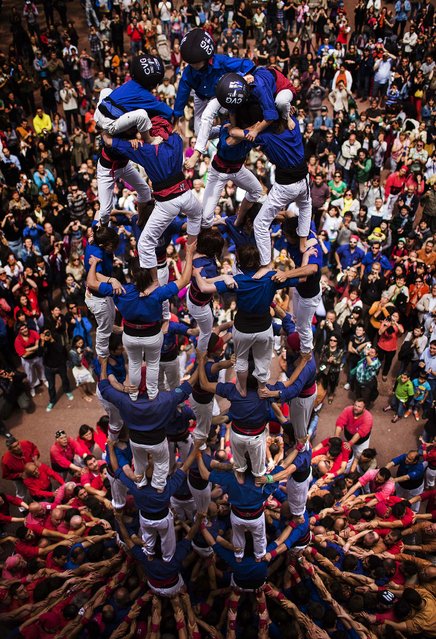
Members of the Castellers “Vila de Gracia” form their human tower. (Photo by Emilio Morenatti/Associated Press)

Members of the Castellers “Vila de Gracia” start forming their famous human tower called “castell” in the Barcelona neighborhood of Gracia, Catalonia, Spain on Sunday May 19 2013. A “castell” is a human tower traditionally built during festivals in many places in Catalonia. At these festivals, several "colles" or teams compete to build the most impressive towers they can. (Photo by Emilio Morenatti/Associated Press)
Details
22 May 2013 12:37:00
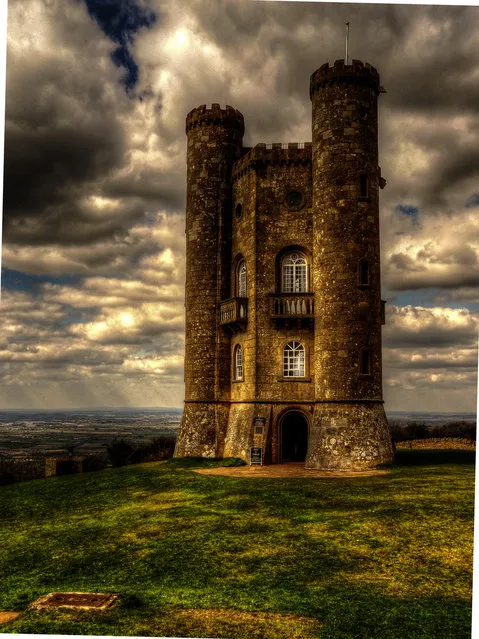
Broadway Tower In English

Broadway Tower is a folly located on Broadway Hill, near the village of Broadway, in the English county of Worcestershire, at the second highest point of the Cotswolds after Cleeve Hill. Broadway Tower's base is 1,024 feet (312 metres) above sea level. The tower itself stands 55 feet (17 metres) high. The “Saxon” tower was designed by James Wyatt in 1794 in the form of a castle, and built for Lady Coventry in 1799. The tower was built on a “beacon” hill, where beacons were lit on special occasions. Lady Coventry wondered if a beacon on this hill could be seen from her house in Worcester – approximately 22 miles (35 km) away – and sponsored the construction of the folly to find out. The beacon could be seen clearly.
Details
19 Dec 2013 10:06:00
Capgrossos de Mataro team members fall during the 25th Castells' contest at the Tarraco Arena in Tarragona, Catalonia, northeastern Spain, 02 October 2016. The “Castells” is a popular event in which people create human towers up to a height of between six and ten levels. (Photo by Jaume Sellart/EPA)

Capgrossos de Mataro team members fall during the 25th Castells' contest at the Tarraco Arena in Tarragona, Catalonia, northeastern Spain, 02 October 2016. The “Castells” is a popular event in which people create human towers up to a height of between six and ten levels. (Photo by Jaume Sellart/EPA)
Details
03 Oct 2016 09:55:00
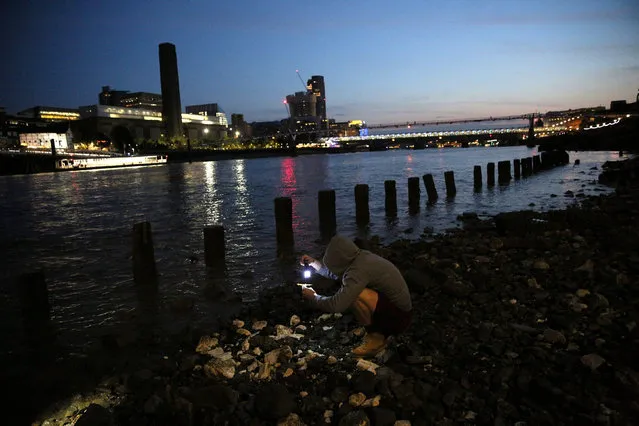
A mudlark uses a torch to look for items on the bank of the River Thames in London, Britain June 06, 2016. Mudlarking is believed to trace its origins to the 18th and 19th century, when scavengers searched the Thames' shores for items to sell. These days, history and archaeology fans are the ones hoping to find old relics such as coins, ceramics, artifacts or everyday items from across centuries. They wait for the low tide and then scour specific areas of exposed shores. "If you're in a field you could be out all day long, with the river you're restricted to about two or three hours," mudlark Nick Stevens said. While many just use the naked eye for their searches, others rely on metal detectors for which a permit from the Port of London Authority is needed. Digging also requires consent. (Photo by Neil Hall/Reuters)

A mudlark uses a torch to look for items on the bank of the River Thames in London, Britain June 06, 2016. Mudlarking is believed to trace its origins to the 18th and 19th century, when scavengers searched the Thames' shores for items to sell. These days, history and archaeology fans are the ones hoping to find old relics such as coins, ceramics, artifacts or everyday items from across centuries. their finds with the Portable Antiquities Scheme. Any item over 300 years old must be recorded. (Photo by Neil Hall/Reuters)
Details
27 Aug 2016 10:43:00
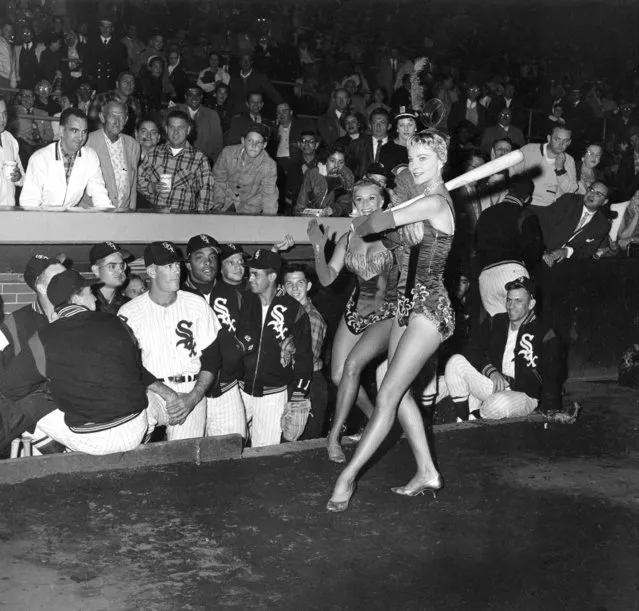
Dancers Marion Krebs and Judy Ness, right, pose as batter and catcher in front of the  Chicago White Sox dugout before start of game with Detroit at Comiskey Park, Chicago, Ill., September 18, 1959. White Sox won, 1-0, to move within two games of clinching the American League pennant. (Photo by AP Photo)

Dancers Marion Krebs and Judy Ness, right, pose as batter and catcher in front of the Chicago White Sox dugout before start of game with Detroit at Comiskey Park, Chicago, Ill., September 18, 1959. White Sox won, 1-0, to move within two games of clinching the American League pennant. (Photo by AP Photo)
Details
19 Sep 2015 12:46:00