Loading...
Done
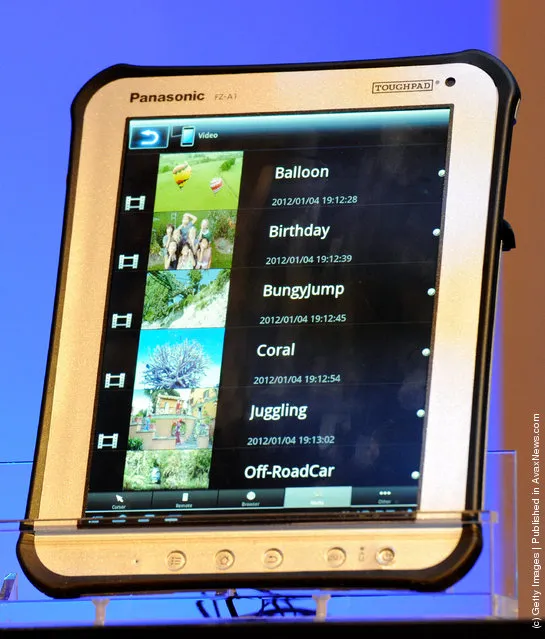
A Panasonic Toughpad is displayed during a press event at The Venetian for the 2012 International Consumer Electronics Show

A Panasonic Toughpad is displayed during a press event at The Venetian for the 2012 International Consumer Electronics Show (CES) January 9, 2012 in Las Vegas, Nevada. CES, the world's largest annual consumer technology trade show, runs from January 10-13 and is expected to feature 2,700 exhibitors showing off their latest products and services to about 140,000 attendees. (Photo by Ethan Miller/Getty Images)
Details
10 Jan 2012 13:12:00
People pour wine at each other during the traditional “Battle of Wine” held as part of the Haro Wine Festival in the La Rioja region in Haro, Spain, 29 June 2016. Every year on 29 June inhabitants and tourists celebrate San Pedro's day by trowing at each other thousands of liters of Riojan wine. (Photo by Abel Alonso/EPA)

People pour wine at each other during the traditional “Battle of Wine” held as part of the Haro Wine Festival in the La Rioja region in Haro, Spain, 29 June 2016. Every year on 29 June inhabitants and tourists celebrate San Pedro's day by trowing at each other thousands of liters of Riojan wine. (Photo by Abel Alonso/EPA)
Details
30 Jun 2016 11:51:00
South Korean youths dance to electronic music during the Ultra Music Festival Korea at Olympic Stadium on June 10, 2016 in Seoul, South Korea. (Photo by Jean Chung/Getty Images)

South Korean youths dance to electronic music during the Ultra Music Festival Korea at Olympic Stadium on June 10, 2016 in Seoul, South Korea. (Photo by Jean Chung/Getty Images)
Details
11 Jun 2016 12:20:00
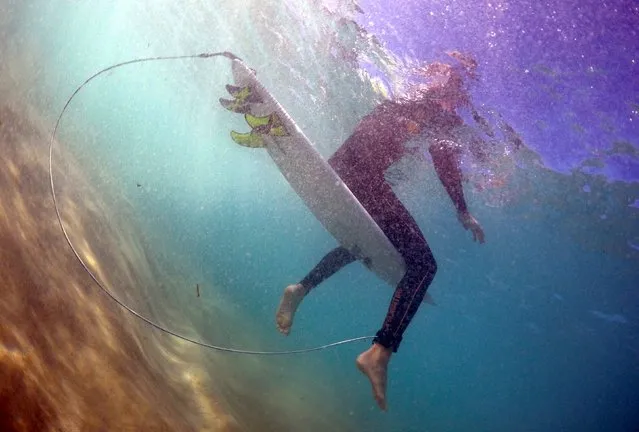
Surfer Arlen Macpherson sits on his board, which has an electronic shark repellent device installed, at Sydney's Bondi Beach in Australia, August 18, 2015. A spate of shark attacks in Australia has left some of world's top surfing beaches deserted and many people having second thoughts about taking a swim as the summer approaches. Macpherson paid A$390 for a device embedded in his surf board to repel sharks by emitting an electronic force field that overpowers its sensing organs. (Photo by David Gray/Reuters)

Surfer Arlen Macpherson sits on his board, which has an electronic shark repellent device installed, at Sydney's Bondi Beach in Australia, August 18, 2015. A spate of shark attacks in Australia has left some of world's top surfing beaches deserted and many people having second thoughts about taking a swim as the summer approaches. Macpherson paid A$390 for a device embedded in his surf board to repel sharks by emitting an electronic force field that overpowers its sensing organs. (Photo by David Gray/Reuters)
Details
19 Aug 2015 12:47:00
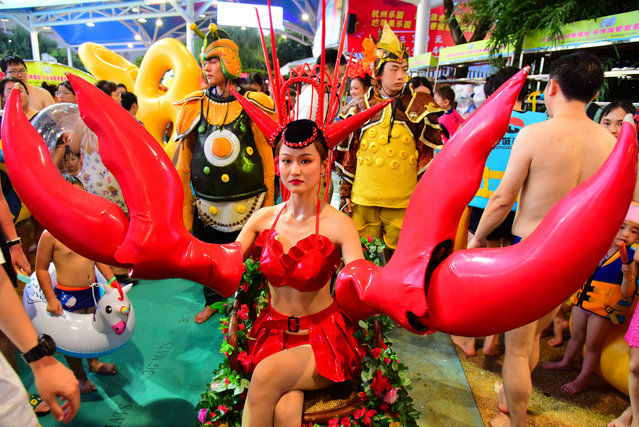
A performer dressed as a lobster is seen during a lobster-themed electronic music party at a water park on August 01, 2020 in Hangzhou, Zhejiang Province of China. (Photo by Lian Guoqing/VCG via Getty Images)

A performer dressed as a lobster is seen during a lobster-themed electronic music party at a water park on August 01, 2020 in Hangzhou, Zhejiang Province of China. (Photo by Lian Guoqing/VCG via Getty Images)
Details
12 Aug 2020 00:03:00
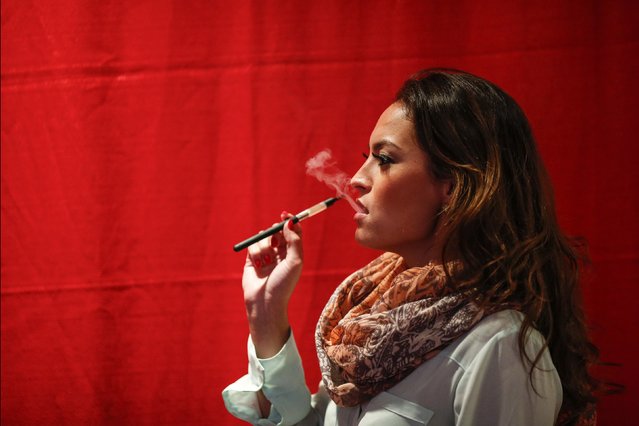
A woman uses a electronic vaporizers with cannabidiol (CBD)-rich hemp oil while attending the International Cannabis Association Convention in New York, October 12, 2014. (Photo by Eduardo Munoz/Reuters)

A woman uses a electronic vaporizers with cannabidiol (CBD)-rich hemp oil while attending the International Cannabis Association Convention in New York, October 12, 2014. (Photo by Eduardo Munoz/Reuters)
Details
13 Oct 2014 11:01:00
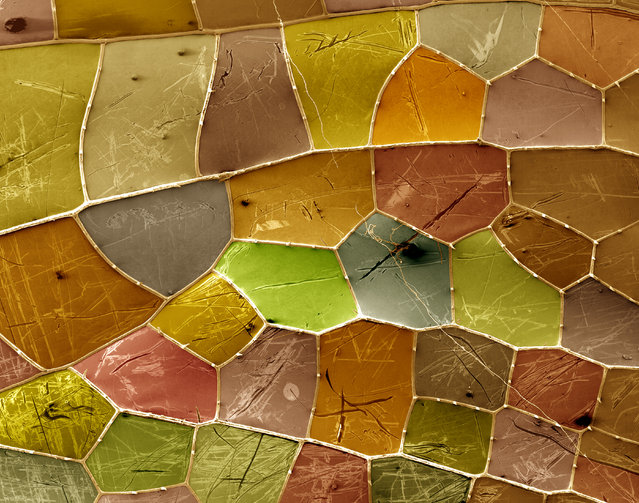
Micro or Macro? It's micro: this is an electron microscope image of the wing of a Green Darner dragonfly. (Photo by P. Kelly)

Macro or Micro? Scientists’ pictures baffle our sense of scale. It began when Stephen Young, a geography professor at Salem State University in Massachusetts, tricked his biologist colleague Paul Kelly into thinking a satellite image was one of his electron microscope scans. Can you guess whether they are close-up or very far away? (Photo by Paul Kelly)
Details
21 Apr 2014 10:24:00
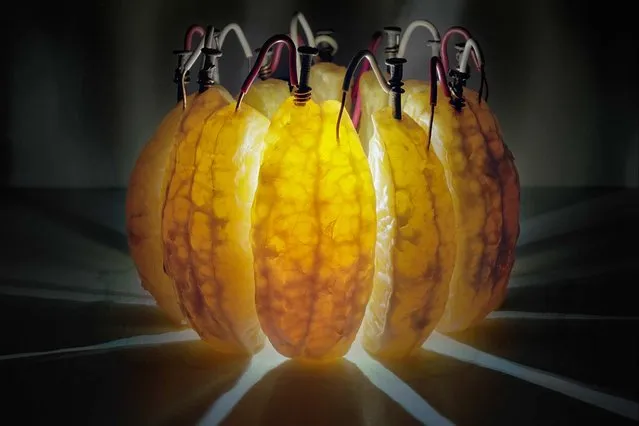
Wedges of an orange generate enough current and electrical juice – 3.5 volts – to power an LED. The fruit’s citric acid helps electrons flow from galvanized nails to copper wire in this 14-hour exposure. This image was published in September’s Visions of Earth, a trio of photos that appear in each issue of National Geographic. (Photo by Caleb Charland/National Geographic)

Wedges of an orange generate enough current and electrical juice – 3.5 volts – to power an LED. The fruit’s citric acid helps electrons flow from galvanized nails to copper wire in this 14-hour exposure. This image was published in September’s Visions of Earth, a trio of photos that appear in each issue of National Geographic. (Photo by Caleb Charland/National Geographic)
Details
06 Jan 2014 12:09:00