Loading...
Done
An inmate with a tattoo of Santa Muerte (The Saint of Death) reacts in the Topo Chico prison, during a media tour, in Monterrey, Mexico, February 17, 2016. (Photo by Daniel Becerril/Reuters)

An inmate with a tattoo of Santa Muerte (The Saint of Death) reacts in the Topo Chico prison, during a media tour, in Monterrey, Mexico, February 17, 2016. The director of a prison in northeast Mexico where 49 people died in a riot this week was accused of murder and detained, along with two others, a state prosecutor said on Saturday. (Photo by Daniel Becerril/Reuters)
Details
19 Feb 2016 12:20:00
A woman performs a pole dancing routine on a pedestrian bridge during the national day celebration of “Urban Pole” dance in Monterrey June 8, 2014. (Photo by Tomas Bravo/Reuters)

Pole dancers in Mexico have taken to the streets to celebrate their sport and show others the skills involved. The Pole Dance National Day celebration saw pole dancers gather in parks, outdoor gyms and on streets, using street lamps, sign posts and other objects to put on displays across Mexico City. Photo: A woman performs a pole dancing routine on a pedestrian bridge during the national day celebration of “Urban Pole” dance in Monterrey June 8, 2014. (Photo by Tomas Bravo/Reuters)
Details
12 Jun 2014 11:26:00
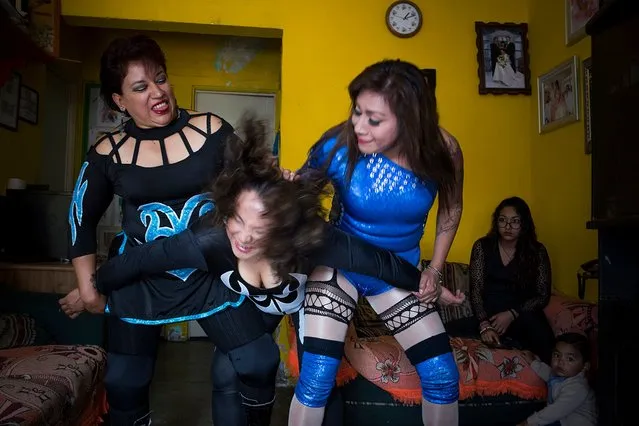
Juliza meets with colleagues at her home. (Photo by Diana Bagnoli/The Washington Post)

Lucha libre is Mexico’s version of what in the United States refer to as pro wrestling. Its dates to 1863, when a Mexican wrestler named Enrique Ugartechea developed a form of “freestyle” wrestling that was based on Greco-Roman wrestling. Lucha libre began to soar in popularity in Mexico after two Italian businessmen started promoting fights in the early 1900s. It has since become popular around the globe. Here: Juliza meets with colleagues at her home. (Photo by Diana Bagnoli/The Washington Post)
Details
15 Jun 2018 00:05:00
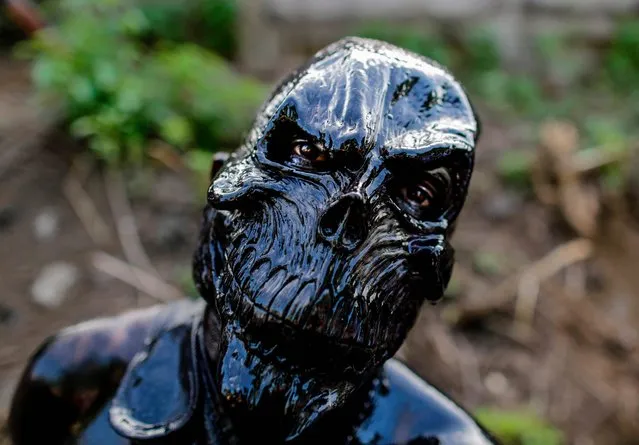
A catholic faithful smeared in burnt oil, takes part in the opening of the ten-day celebration of the Santo Domingo de Guzman festival in Managua, on August 1, 2019. (Photo by Inti Ocon/AFP Photo)

A catholic faithful smeared in burnt oil, takes part in the opening of the ten-day celebration of the Santo Domingo de Guzman festival in Managua, on August 1, 2019. In Central America the black devil, or El Cadejo, is an evil dog-like spirit with glowing red eyes that locals believe eats new born puppies. (Photo by Inti Ocon/AFP Photo)
Details
06 Aug 2019 00:01:00
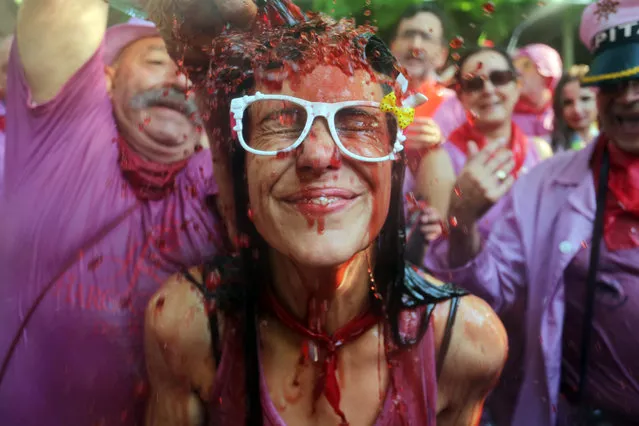
A man pours red wine on a girl's head during the Batalla del Vino (Battle of Wine) in Haro, on June 29, 2015. Every year thousands of locals and tourists climb a mountain in the northern Spanish province of La Rioja to celebrate St. Peter's day covering each other in red wine while tanker trucks filled with wine distribute the alcoholic beverage to water pistols, back mounted spraying devices, buckets which are randomly poured on heads and into any other available container. (Photo by Cesar Manso/AFP Photo)

A man pours red wine on a girl's head during the Batalla del Vino (Battle of Wine) in Haro, on June 29, 2015. Every year thousands of locals and tourists climb a mountain in the northern Spanish province of La Rioja to celebrate St. Peter's day covering each other in red wine while tanker trucks filled with wine distribute the alcoholic beverage to water pistols, back mounted spraying devices, buckets which are randomly poured on heads and into any other available container. More than nine thousand people threw around 130,000 litres of wine during this year's Haro Wine Festival, according to local media. (Photo by Cesar Manso/AFP Photo)
Details
30 Jun 2015 11:56:00
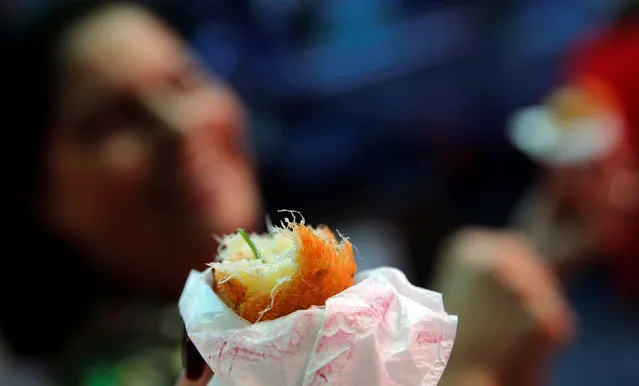
A view of traditional bolinhos de bacalhau (fried codfish balls) in Rio de Janeiro, Brazil, May 7, 2016. (Photo by Sergio Moraes/Reuters)

If the most popular foods of Rio de Janeiro have one thing in common, it is their informality. You can find fine restaurants in the city, but they do not set Rio apart from other places. What does set it apart, and what invariably brings its residents, known as "Cariocas," together is the unpretentious food they eat in bright, loud, crowded bars and restaurants, on busy street corners, or after a day at the beach. Here: A view of traditional bolinhos de bacalhau (fried codfish balls) in Rio de Janeiro, Brazil, May 7, 2016. (Photo by Sergio Moraes/Reuters)
Details
05 Aug 2016 13:20:00
A voodoo priest smokes in the face of a woman as she holds a cup on her head during a voodoo ceremony in honor of Kouzen Zaka, also known as St. Isidro, in Mexico City, May 2, 2015. (Photo by Edgard Garrido/Reuters)

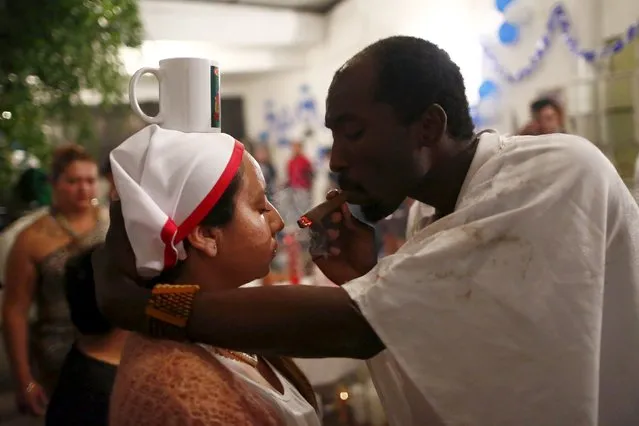
A voodoo priest smokes in the face of a woman as she holds a cup on her head during a voodoo ceremony in honor of Kouzen Zaka, also known as St. Isidro, in Mexico City, May 2, 2015. According to Haitain voodoo, Kouzen Zaka is the patron of work, whose patronage will help with employment and safeguard crops from robbers. (Photo by Edgard Garrido/Reuters)
Details
04 May 2015 09:38:00
Clowns take part in the annual pilgrimage to the Basilica of Our Lady Guadalupe to pay homage to the Virgin of Guadalupe in Mexico City December 16, 2014. Dressed in colourful costumes, hundreds of clowns from all over Mexico walked towards the Basilica to give thanks to the virgin for the work they have received. (Photo by Carlos Jasso/Reuters)

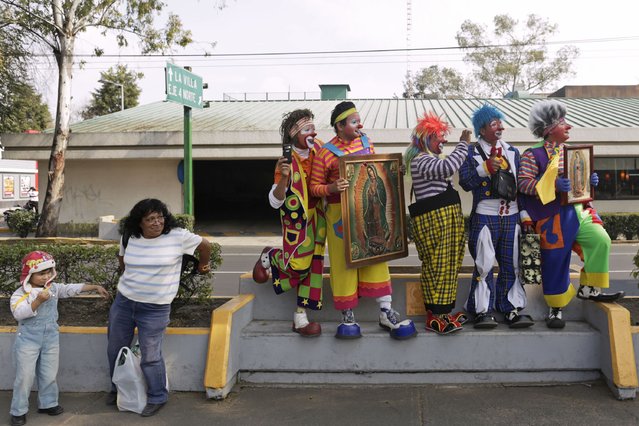
Clowns take part in the annual pilgrimage to the Basilica of Our Lady Guadalupe to pay homage to the Virgin of Guadalupe in Mexico City December 16, 2014. Dressed in colourful costumes, hundreds of clowns from all over Mexico walked towards the Basilica to give thanks to the virgin for the work they have received. (Photo by Carlos Jasso/Reuters)
Details
18 Dec 2014 14:52:00