Loading...
Done
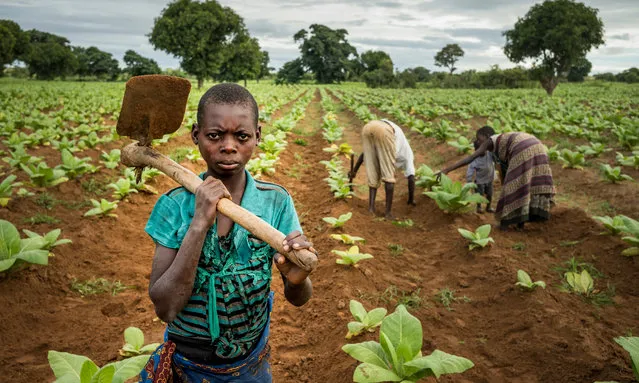
Tiyamike Phiri hopes to become a nurse because she wants to travel the country and help others. (Photo by David Levene/The Guardian)

Life as tenant farmers in Kasungu, northern Malawi, can be a struggle for families trapped in poverty, who feel forced to rely on their children’s help, impacting schooling. Here: A tobacco field at a farm in Kasungu region, Malawi. Tobacco is the country’s most important export crop, with tobacco leaf from Malawi filling cigarettes found all over the world. Here: Tiyamike Phiri hopes to become a nurse because she wants to travel the country and help others. (Photo by David Levene/The Guardian)
Details
27 Jun 2018 00:05:00
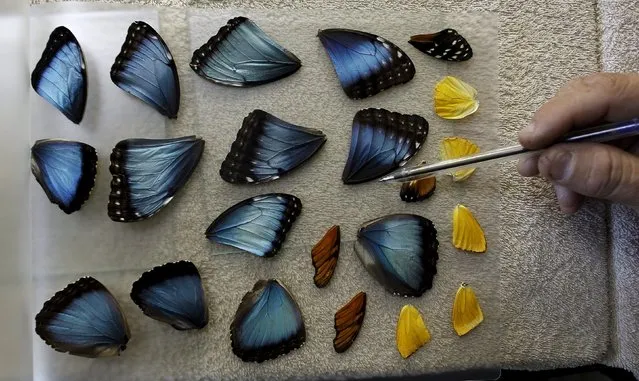
Frander Arroyo, select wings of butterflies at Blue Morpho Butterfly House in Alajuela, Costa Rica, March 10, 2016. According to Arroyo, owner of Blue Morpho Butterfly House, he collects dead butterflies from his garden to mount as handicraft like earrings, necklaces, paintings and rings for export with prices ranging from $12 to $16 a piece. (Photo by Juan Carlos Ulate/Reuters)

Frander Arroyo, select wings of butterflies at Blue Morpho Butterfly House in Alajuela, Costa Rica, March 10, 2016. According to Arroyo, owner of Blue Morpho Butterfly House, he collects dead butterflies from his garden to mount as handicraft like earrings, necklaces, paintings and rings for export with prices ranging from $12 to $16 a piece. (Photo by Juan Carlos Ulate/Reuters)
Details
12 Mar 2016 14:29:00
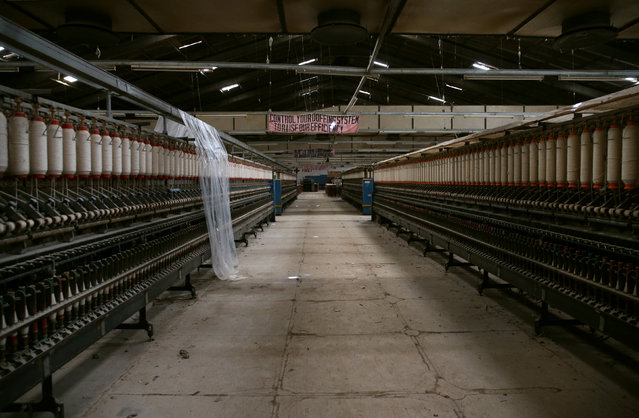
A production department of a textile factory is seen abandoned in Kaduna, Nigeria November 3, 2016. (Photo by Afolabi Sotunde/Reuters)

A production department of a textile factory is seen abandoned in Kaduna, Nigeria November 3, 2016. President Muhammadu Buhari hopes to revive the once flourishing textile and leather industries in northern Nigeria to end the country's dependence on oil exports and diversify Africa's biggest economy. (Photo by Afolabi Sotunde/Reuters)
Details
17 Feb 2017 00:01:00
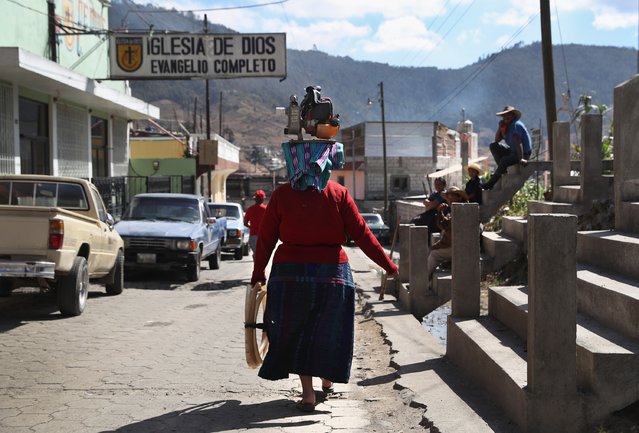
A woman carries a water pump to work on February 11, 2017 in Almolonga, Guatemala. (Photo by John Moore/Getty Images)

A woman carries a water pump to work on February 11, 2017 in Almolonga, Guatemala. The Mayan town in the western highlands district of Quetzaltenango has surged in prosperity in recent years with high-productivity vegetable farming, exporting much of its excess crops to neighborning El Salvador. (Photo by John Moore/Getty Images)
Details
25 Feb 2017 00:00:00
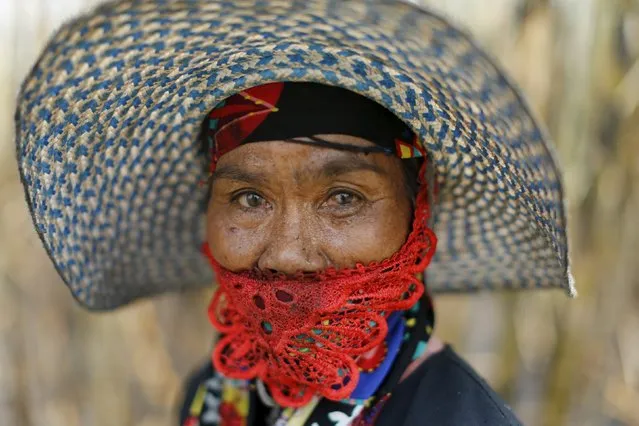
A sugar cane worker poses while working in a field at Pakchong district in Ratchaburi province, Thailand March 22, 2016. (Photo by Jorge Silva/Reuters)

A sugar cane worker poses while working in a field at Pakchong district in Ratchaburi province, Thailand March 22, 2016. The El Nino weather phenomenon has played havoc with crops across Southeast Asia and beyond. Thailand, the world's second-largest sugar exporter, will ship 20 percent less of the sweetener to international markets this year than last, and farmers fear the damage already inflicted on young cane plants could make next year worse. (Photo by Jorge Silva/Reuters)
Details
02 Apr 2016 09:49:00
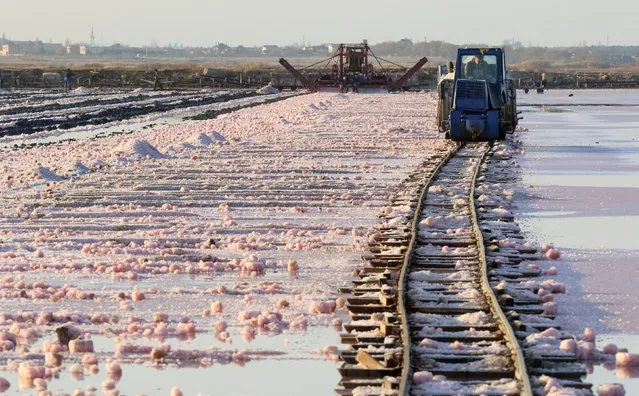
A train drives along a field at a salt production site at the Sasyk-Sivash lake near the city of Yevpatoria, Crimea, November 14, 2017. (Photo by Pavel Rebrov/Reuters)

A train drives along a field at a salt production site at the Sasyk-Sivash lake near the city of Yevpatoria, Crimea, November 14, 2017. A saltwater lagoon known as Lake Sasyk-Sivash on Ukraine's Crimea peninsula is the source of a rare resource: pink salt. The mineral is tinted by tiny algae that produce the pigment beta-carotene. Each autumn, seasonal workers collect thousands of tons of pink salt for processing and export. (Photo by Pavel Rebrov/Reuters)
Details
16 Nov 2017 08:18:00
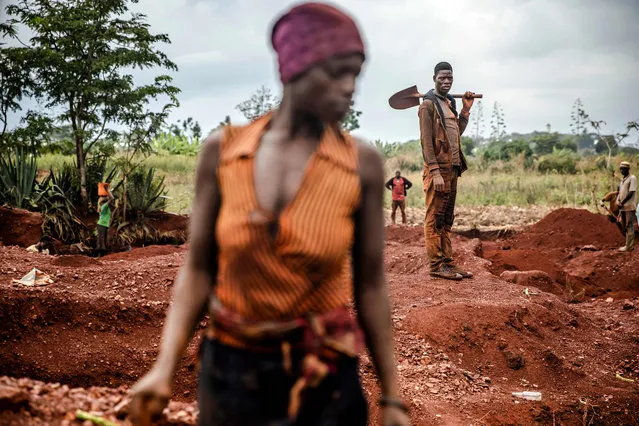
A gold miner observes from the distance how some women miners work at an open-pit gold mine in Nyarugusu, Geita Region, Tanzania on May 27, 2022. Tanzania is a land rich in minerals and one of the main gold producers in Africa, with gold representing more than 90% of the country's mineral exports. Artisanal and small-scale gold mining have culturally and historically relegated women's participation. The extractive sector in Tanzania has historically been a male-dominated industry with high levels of harassment, sеxual abuse, discrimination and misconceptions over women's involvement, and contributions following traditional beliefs. (Photo by Luis Tato/AFP Photo)

A gold miner observes from the distance how some women miners work at an open-pit gold mine in Nyarugusu, Geita Region, Tanzania on May 27, 2022. Tanzania is a land rich in minerals and one of the main gold producers in Africa, with gold representing more than 90% of the country's mineral exports. Artisanal and small-scale gold mining have culturally and historically relegated women's participation. The extractive sector in Tanzania has historically been a male-dominated industry with high levels of harassment, sеxual abuse, discrimination and misconceptions over women's involvement, and contributions following traditional beliefs. (Photo by Luis Tato/AFP Photo)
Details
13 Jun 2022 04:31:00
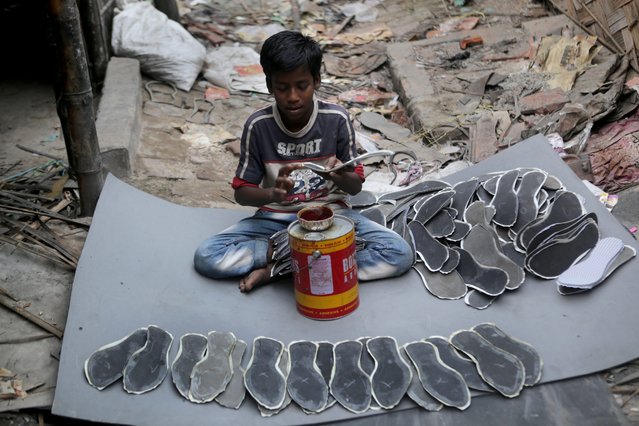
Indian boy Hassan Malik works in a leather shoe factory at Topsia in Calcutta, eastern India, 19 November 2013. (Photo by Piyal Adhikary/EPA)

Indian boy Hassan Malik works in a leather shoe factory at Topsia in Calcutta, eastern India, 19 November 2013. The leather industry occupies an important place in the Indian economy. It is an employment intensive sector with a vast potential for growth and exports but also a pollution intensive industry that relies on cheap labor. One of the major production centers for leather and leather products is located in Calcutta, West Bengal. Hundreds of tanneries are operated in the city’s Tiljala, Topsia and Tangra districts. They are mostly run by local families living and working under poor conditions. (Photo by Piyal Adhikary/EPA)
Details
20 Mar 2014 09:40:00