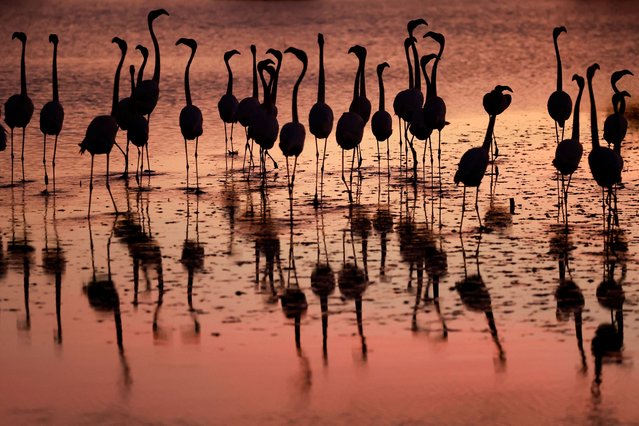
Pink flamingos are silhouetted and reflected in water at sunset in the Camargue regional natural park in Saintes-Maries-de-la-Mer, Southern France, on January 9, 2025. (Photo by Manon Cruz/Reuters)
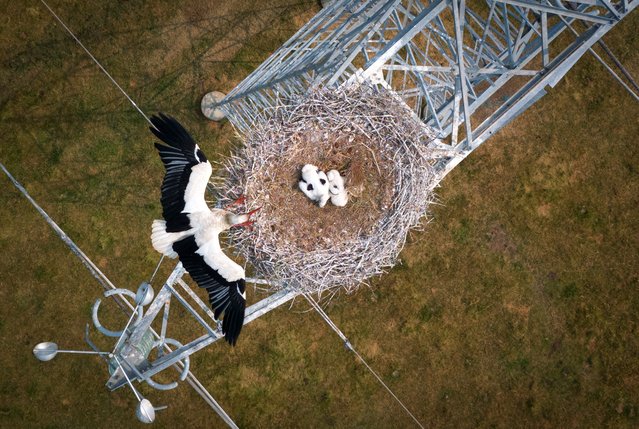
This aerial photograph shows a stork with two chicks on a nest installed on a high voltage line mast in Bouee, western France, on June 3, 2025. (Photo by Loïc Venance/AFP Photo)
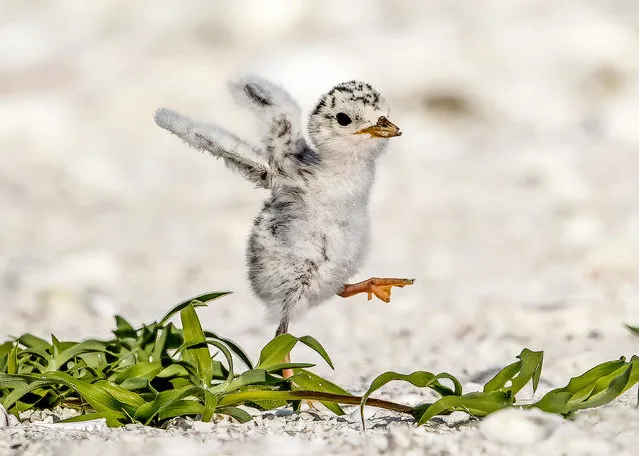
A tern chased away a ghost crab that was threatening its chicks at a beach near Fort Myers, Florida in the last decade of June 2023, before feeding them with freshly caught fish. (Photo by Judy Rogero/Solent News)
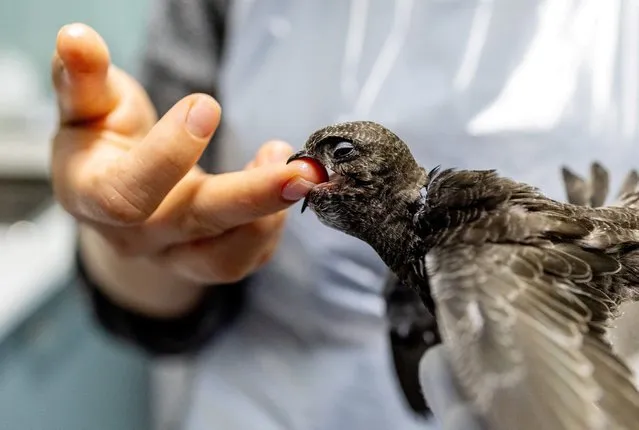
A volunteer feeds a swift chick after it was found on the ground during a heatwave and given to the Centre Ornithologique de Readaptation in Genthod near Geneva, Switzerland on July 25, 2023. (Photo by Denis Balibouse/Reuters)
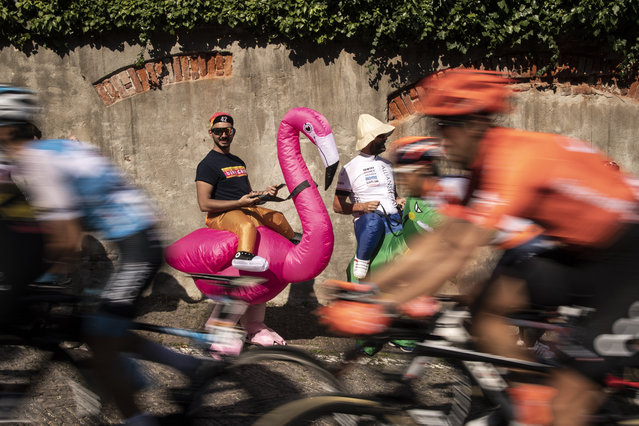
A supporter dressed as flamingo cheers on the riders during the 12th stage of the 102nd Giro d'Italia – Tour of Italy – cycle race, 158kms from Cuneo to Pinerolo on May 23, 2019. (Photo by Marco Bertorello/AFP Photo)
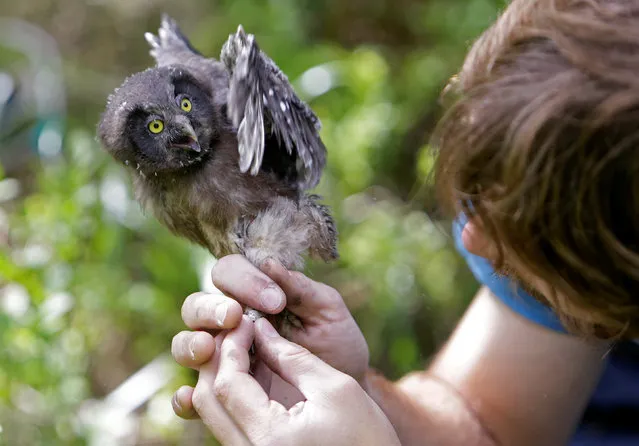
Scientist Jiri Sindelar checks a ring of a Boreal owl chick outside the “Smart Nest Box”, which allows the study of birds by using mounted cameras, in a forest near the village of Mikulov, Czech Republic, June 18, 2016. (Photo by David W. Cerny/Reuters)
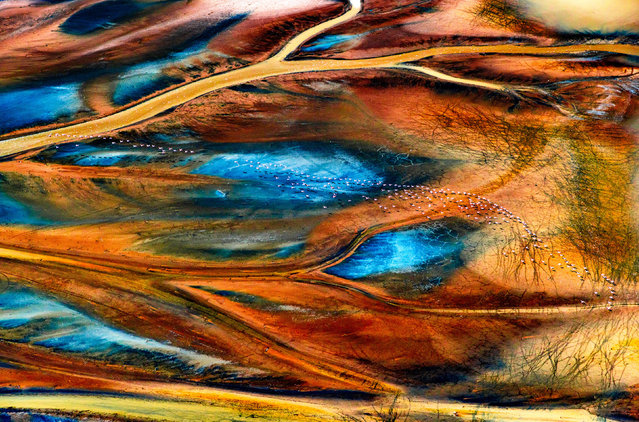
Hundreds of flamingos take flight in the Rift Valley in East Africa early September 2024. The birds gather in the region’s saline lakes to eat the blue-green algae that grows in abundance. The red-orange pigment in the algae is what gives them their distinctive pink plumage. They also use the site to breed. (Photo by Alexandre and Chloe Bes/Naturagency/Solent News)