Loading...
Done
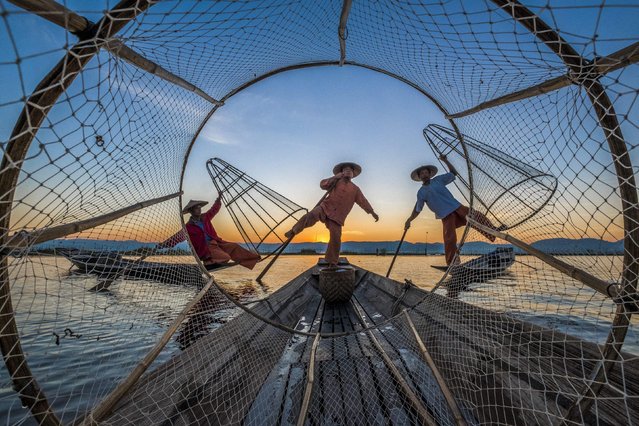
Fishermen use traditional cone-shaped nets on Inle lake in Myanmar in February 2022. The men steer their boats with an oar that they control with their feet. They throw the net into the water and push it down so it sinks to the bottom, then drag it back to the surface with the fish trapped inside. (Photo by Alahattin Kanlioglu/Solent News)

Fishermen use traditional cone-shaped nets on Inle lake in Myanmar in February 2022. The men steer their boats with an oar that they control with their feet. They throw the net into the water and push it down so it sinks to the bottom, then drag it back to the surface with the fish trapped inside. (Photo by Alahattin Kanlioglu/Solent News)
Details
27 Jun 2022 05:35:00
Virgin Galactic's new spaceship N202VG (bottom L) is seen behind the WhiteKnightTwo carrier aircraft mothership (front), which landed safely after splitting from SpaceShipTwo, in a hangar at Mojave Air and Space Port in Mojave, California, November 4, 2014. (Photo by Lucy Nicholson/Reuters)

Virgin Galactic's new spaceship N202VG (bottom L) is seen behind the WhiteKnightTwo carrier aircraft mothership (front), which landed safely after splitting from SpaceShipTwo, in a hangar at Mojave Air and Space Port in Mojave, California, November 4, 2014. (Photo by Lucy Nicholson/Reuters)
Details
05 Nov 2014 12:07:00
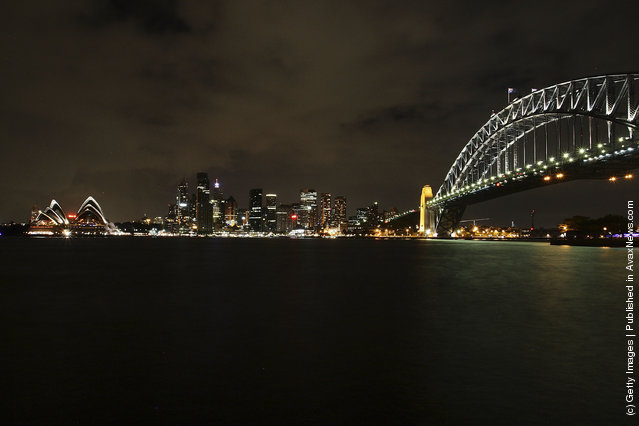
Sydney Dims For Earth Hour

The Sydney Skyline is seen before the lights are switched off for Earth Hour on March 26, 2011 in Sydney, Australia. Earth Hour encourages individuals around the world to turn off their lights for one hour at 20:30 local time on March 26, 2011 to take a stand against climate change. The largest Earth Hour was in 2010 when 128 countries participated.
Details
26 Mar 2011 14:54:00
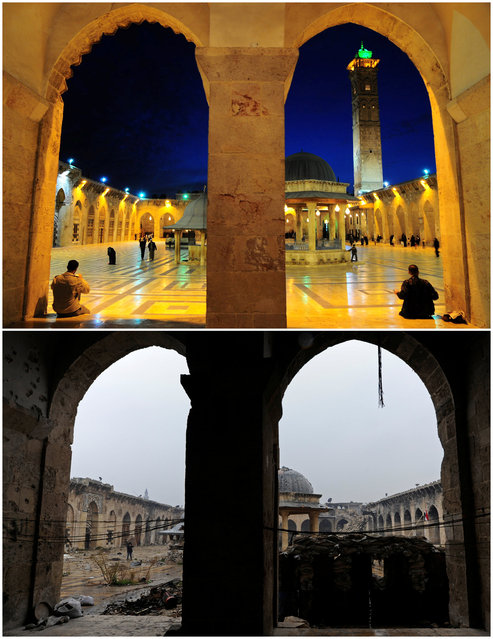
A combination picture shows Aleppo's Umayyad mosque, Syria, before it was damaged on March 12, 2009 (top) and after it was damaged (bottom) December 13, 2016. (Photo by Omar Sanadiki/Reuters)

A combination picture shows Aleppo's Umayyad mosque, Syria, before it was damaged on March 12, 2009 (top) and after it was damaged (bottom) December 13, 2016. (Photo by Omar Sanadiki/Reuters)
Details
23 Dec 2016 07:46:00
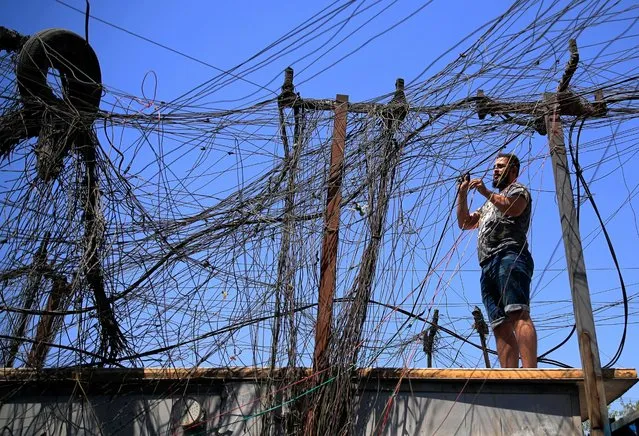
Muqtada Haider turns the switches to transfer electricity to private homes in Baghdad, Iraq, Friday, September 10, 2021. In Iraq, electricity is a potent symbol of endemic corruption, rooted in the country’s sectarian power-sharing system. This contributes to chronic electrical outages of up to 14 hours a day in a major oil-producing nation with plentiful energy resources. (Photo by Hadi Mizban/AP Photo)

Muqtada Haider turns the switches to transfer electricity to private homes in Baghdad, Iraq, Friday, September 10, 2021. In Iraq, electricity is a potent symbol of endemic corruption, rooted in the country’s sectarian power-sharing system. This contributes to chronic electrical outages of up to 14 hours a day in a major oil-producing nation with plentiful energy resources. (Photo by Hadi Mizban/AP Photo)
Details
29 Sep 2021 08:03:00
Photographers: Romain Laurent

“Romain Laurent is 29 years old, originally from the french Alps, living and working in Paris. Romain Laurent studied design for 3 years at ENSAAMA Olivier de Serres (National school of applied arts) in Paris and then switched to Photography at Gobelins, l’ecole de l’image, also in Paris. Working as a professional photographer since 2006”.
Details
25 Mar 2012 11:33:00
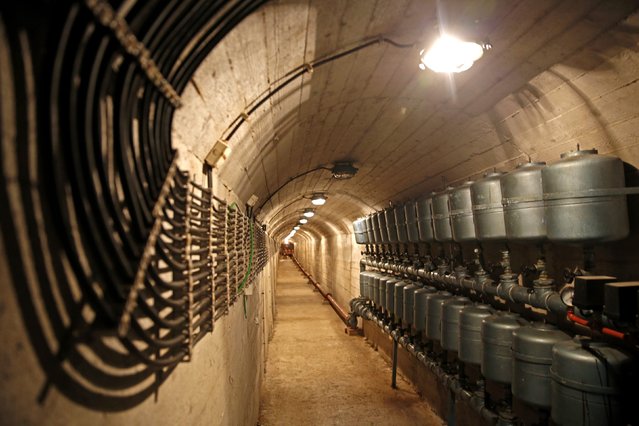
A tunnel with electric switches are seen in Josip Broz Tito's underground secret bunker (ARK) in Konjic, October 16, 2014. (Photo by Dado Ruvic/Reuters)

A tunnel with electric switches are seen in Josip Broz Tito's underground secret bunker (ARK) in Konjic, October 16, 2014. In the early 1950s, Josip Broz Tito, the late leader of the former Yugoslavia, ordered the building of the secret bunker, located 900 feet (270 m) underground and near the Bosnian town of Konjic, to safeguard the country's ruling class in case of a nuclear attack. Construction at the complex, which had a cost equivalent price tag of $4.6 billion, continued until 1979, the year before Tito died. (Photo by Dado Ruvic/Reuters)
Details
28 Nov 2014 12:14:00
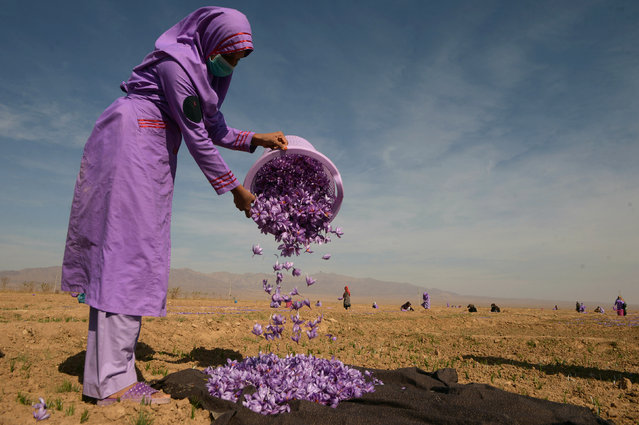
In this photograph taken on October 27, 2017 an Afghan woman collects saffron flowers after picking them in a field on the outskirt of Herat For years, Afghanistan has tried to give farmers alternatives such as fruit crops and saffron to wean them away from poppy farming – the lifeblood of the Taliban insurgency. International donors have splurged billions of dollars on counter- narcotics efforts in Afghanistan over the past decade, including efforts to encourage farmers to switch to other cash crops such as saffron. But those efforts have shown little results. (Photo by Hoshang Hashimi/AFP Photo)

In this photograph taken on October 27, 2017 an Afghan woman collects saffron flowers after picking them in a field on the outskirt of Herat For years, Afghanistan has tried to give farmers alternatives such as fruit crops and saffron to wean them away from poppy farming – the lifeblood of the Taliban insurgency. International donors have splurged billions of dollars on counter- narcotics efforts in Afghanistan over the past decade, including efforts to encourage farmers to switch to other cash crops such as saffron. But those efforts have shown little results. (Photo by Hoshang Hashimi/AFP Photo)
Details
25 Nov 2017 07:48:00