Loading...
Done
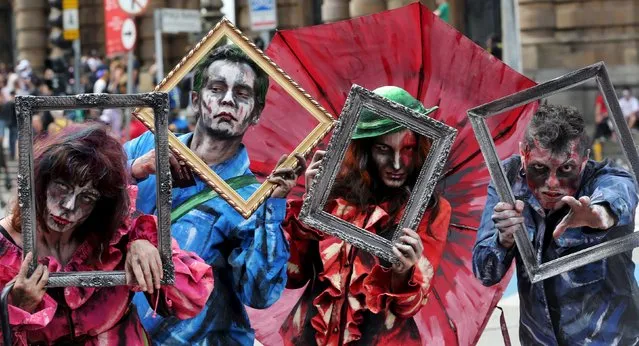
Revellers with their bodies and faces painted attend the "Zombie Walk" parade in Sao Paulo, Brazil, November 2, 2015. (Photo by Paulo Whitaker/Reuters)

Revellers with their bodies and faces painted attend the "Zombie Walk" parade in Sao Paulo, Brazil, November 2, 2015. (Photo by Paulo Whitaker/Reuters)
Details
05 Nov 2015 08:06:00
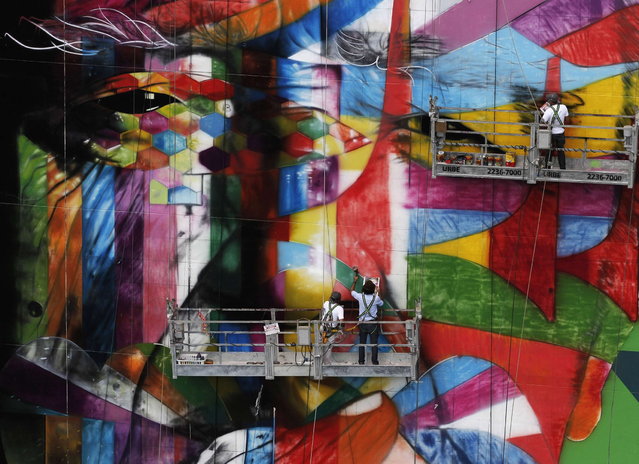
Brazilian graffiti artist Eduardo Kobra (C) puts the final touches to his piece of art in tribute to Brazilian architect Oscar Niemeyer, next to his assistants, at the financial center on Sao Paulo's Avenida Paulista January 22, 2013. Kobra created the 56-metre (61-yard) tall graffiti artwork as a tribute to Niemeyer, one of the 20th century's most influential modernist architects. Niemeyer died in December 2012, aged 104. REUTERS/Nacho Doce (BRAZIL - Tags: SOCIETY TPX IMAGES OF THE DAY)

Brazilian graffiti artist Eduardo Kobra (C) puts the final touches to his piece of art in tribute to Brazilian architect Oscar Niemeyer, next to his assistants, at the financial center on Sao Paulo's Avenida Paulista January 22, 2013. Kobra created the 56-metre (61-yard) tall graffiti artwork as a tribute to Niemeyer, one of the 20th century's most influential modernist architects. Niemeyer died in December 2012, aged 104. (Photo by Andre Penner/AP Photo)
Details
24 Jan 2013 09:22:00
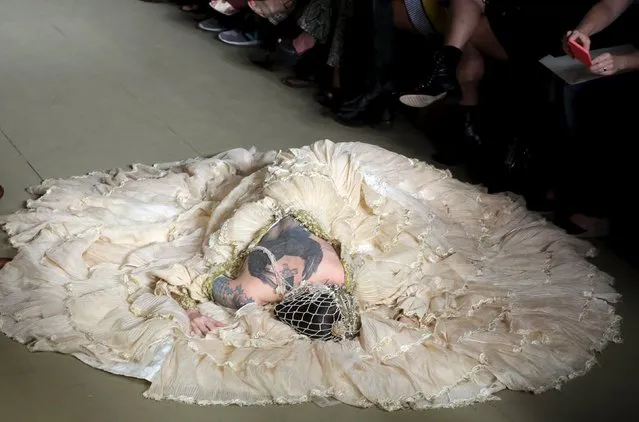
A model presents a creation from Lino Villaventura Summer 2016 Ready To Wear collection during Sao Paulo Fashion Week in Sao Paulo April 16, 2015. (Photo by Paulo Whitaker/Reuters)

A model presents a creation from Lino Villaventura Summer 2016 Ready To Wear collection during Sao Paulo Fashion Week in Sao Paulo April 16, 2015. (Photo by Paulo Whitaker/Reuters)
Details
17 Apr 2015 10:24:00
De Markies – The Mobile Home

The mobile home “De Markies” was an entry in the “Temporary Living” competition 1985 and was conceived as a mobile home. Onthe road it measures 2.00 m by 4.50 m, and once it has arrived at its destination its floorspace can be increased threefold in a matter of seconds. “De Markies” was awarded the Public Prize at the Rotterdam Design Prize 1996. For further information please visit Bothlink.
Details
29 Jul 2013 12:16:00
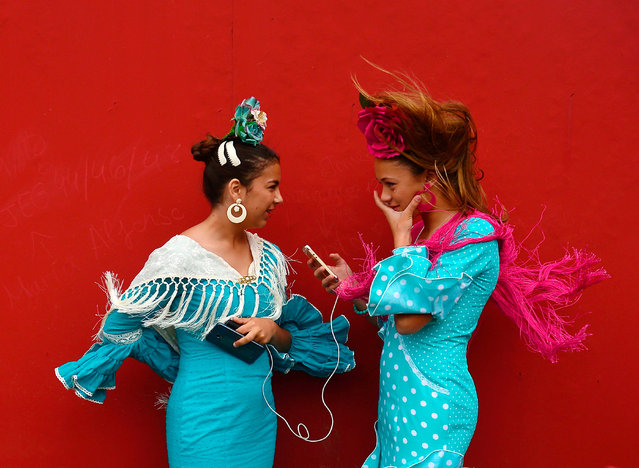
Two girls wearing traditional Sevillian dresses talk during the “Feria de Abril” (April Fair) in Sevilla on April 30, 2017. The fair dates back to 1847 when it was originally organized as a livestock fair but has turned into a week of flamenco dancing, music and bullfighting. (Photo by Cristina Quicler/AFP Photo)

Two girls wearing traditional Sevillian dresses talk during the “Feria de Abril” (April Fair) in Sevilla on April 30, 2017. The fair dates back to 1847 when it was originally organized as a livestock fair but has turned into a week of flamenco dancing, music and bullfighting. (Photo by Cristina Quicler/AFP Photo)
Details
06 May 2017 07:31:00
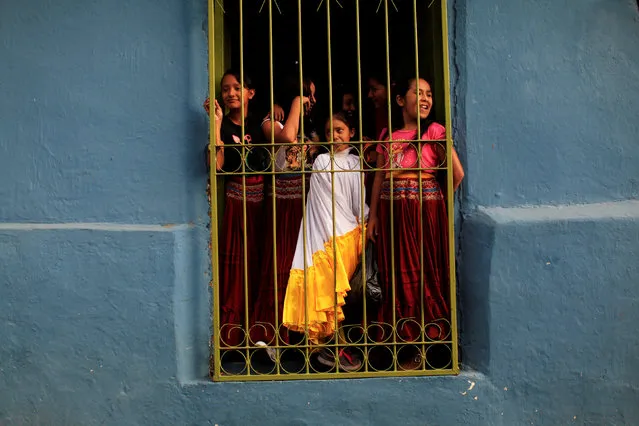
Girls watch a procession during the “Fiesta de las Palancas” celebration to ask for blessings and abundance during the new year in Panchimalco, El Salvador, January 5, 2017. (Photo by Jose Cabezas/Reuters)

Girls watch a procession during the “Fiesta de las Palancas” celebration to ask for blessings and abundance during the new year in Panchimalco, El Salvador, January 5, 2017. (Photo by Jose Cabezas/Reuters)
Details
08 Jan 2017 13:56:00
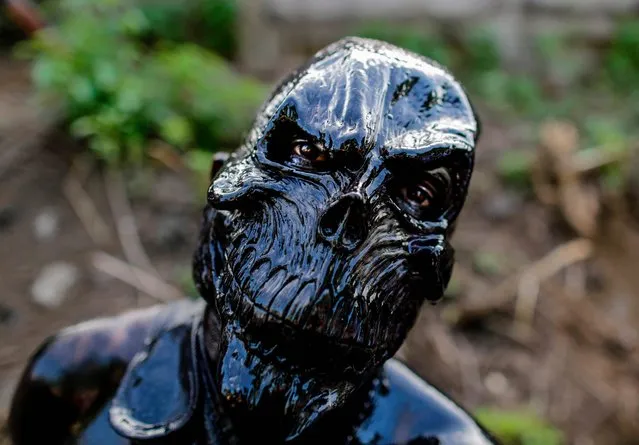
A catholic faithful smeared in burnt oil, takes part in the opening of the ten-day celebration of the Santo Domingo de Guzman festival in Managua, on August 1, 2019. (Photo by Inti Ocon/AFP Photo)

A catholic faithful smeared in burnt oil, takes part in the opening of the ten-day celebration of the Santo Domingo de Guzman festival in Managua, on August 1, 2019. In Central America the black devil, or El Cadejo, is an evil dog-like spirit with glowing red eyes that locals believe eats new born puppies. (Photo by Inti Ocon/AFP Photo)
Details
06 Aug 2019 00:01:00
A view of traditional bolinhos de bacalhau (fried codfish balls) in Rio de Janeiro, Brazil, May 7, 2016. (Photo by Sergio Moraes/Reuters)

If the most popular foods of Rio de Janeiro have one thing in common, it is their informality. You can find fine restaurants in the city, but they do not set Rio apart from other places. What does set it apart, and what invariably brings its residents, known as "Cariocas," together is the unpretentious food they eat in bright, loud, crowded bars and restaurants, on busy street corners, or after a day at the beach. Here: A view of traditional bolinhos de bacalhau (fried codfish balls) in Rio de Janeiro, Brazil, May 7, 2016. (Photo by Sergio Moraes/Reuters)
Details
05 Aug 2016 13:20:00