Loading...
Done
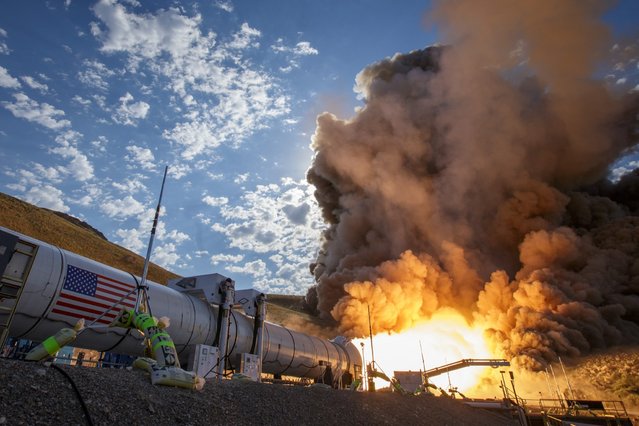
The second and final qualification motor (QM-2) test for the Space Launch System's booster, June 28, 2016, at Orbital ATK Propulsion Systems test facilities in Promontory, Utah. (Photo by Bill Ingalls/NASA)

The second and final qualification motor (QM-2) test for the Space Launch System's booster, June 28, 2016, at Orbital ATK Propulsion Systems test facilities in Promontory, Utah. During the Space Launch System flight the boosters will provide more than 75 percent of the thrust needed to escape the gravitational pull of the Earth, the first step on NASA's Journey to Mars. (Photo by Bill Ingalls/NASA)
Details
29 Jun 2016 11:32:00
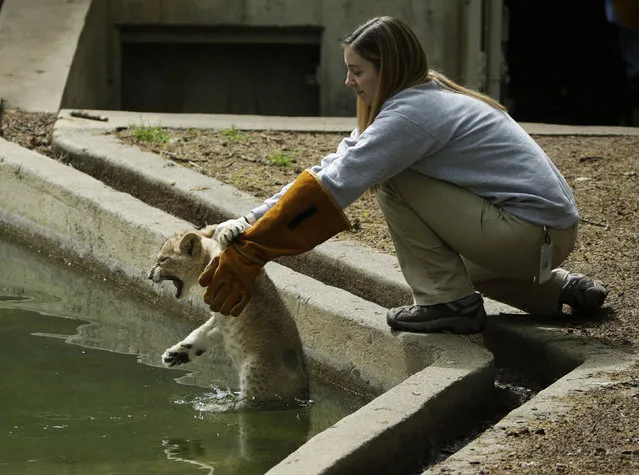
Smithsonian National Zoo biologist Leigh Pitsko releases a male lion cub for its swim test in the zoo habitat moat, in Washington May 6, 2014. Four, unnamed ten-week old lion cubs were tested today for their ability to swim and remove themselves from their zoo habitat moat. (Photo by Gary Cameron/Reuters)

Smithsonian National Zoo biologist Leigh Pitsko releases a male lion cub for its swim test in the zoo habitat moat, in Washington May 6, 2014. Four, unnamed ten-week old lion cubs were tested today for their ability to swim and remove themselves from their zoo habitat moat. (Photo by Gary Cameron/Reuters)
Details
08 May 2014 07:40:00
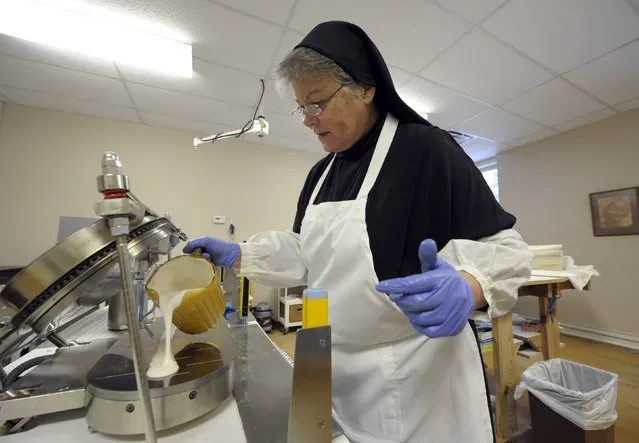
Sister Rebecca Leis pours low-gluten alter bread batter into a machine that bakes the thin bread at the Benedictine Sisters of Perpetual Adoration monastery in Clyde, Missouri, December 18, 2014. The Sisters have made communion wafers since 1910 and began making a low-gluten version in 2003 and have gone from 143 customers in 2004 to more than 11,000 customers from around the world. (Photo by Dave Kaup/Reuters)

Sister Rebecca Leis pours low-gluten alter bread batter into a machine that bakes the thin bread at the Benedictine Sisters of Perpetual Adoration monastery in Clyde, Missouri, December 18, 2014. The Sisters have made communion wafers since 1910 and began making a low-gluten version in 2003 and have gone from 143 customers in 2004 to more than 11,000 customers from around the world. (Photo by Dave Kaup/Reuters)
Details
25 Dec 2014 13:21:00
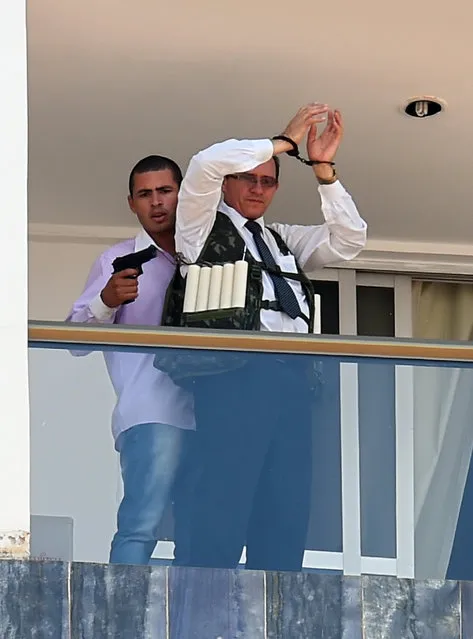
An unidentified man keeps a hotel employee with an explosive-laden vest at a balcony of the hotel in Brasilia on September 29, 2014. (Photo by Evaristo Sa/AFP Photo)

“A Brazilian hotel was evacuated in the capital, Brasilia, on Monday after a man took hostage an employee who was held for hours before he was safely released to police. Firefighters and police cordoned off the area and about 300 guests and other employees left the hotel – some reportedly told to leave by the man who took the employee hostage”. – Associated Press. (Photo by Evaristo Sa/AFP Photo)
Details
30 Sep 2014 08:59:00


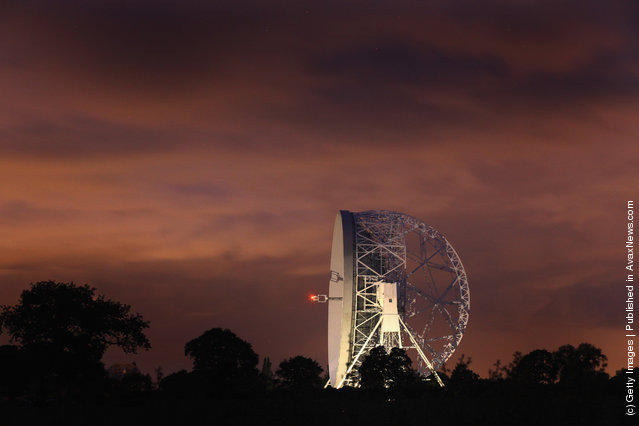
“The Lovell Telescope is a radio telescope at Jodrell Bank Observatory, near Goostrey, Cheshire in the north-west of England. When it was constructed in 1955, the telescope was the largest steerable dish radio telescope in the world at 76.2 m (250 ft) in diameter; it is now the third largest, after the Green Bank telescope in West Virginia, USA, and the Effelsberg telescope in Germany. It was originally known as the 250 ft (76 m) telescope or the Radio Telescope at Jodrell Bank, before becoming the Mark I telescope around 1961 when future telescopes (the Mark II, III, and IV) were being discussed. It was renamed to the Lovell Telescope in 1987 after Bernard Lovell, and became a Grade I listed building in 1988. The telescope forms part of the MERLIN and European VLBI Network arrays of radio telescopes”. – Wikipedia

Photo: The Lovell Telescope listens to the night sky for radio signals from space at Jodrell Bank on June 22, 2011 in Holmes Chapel, England. Jodrell Bank Centre for Astrophysics and it's world famous Lovell Telescope is on the shortlist of Britain's submission for Unesco World Heritage Site status. (Photo by Christopher Furlong/Getty Images)

Details
24 Jun 2011 09:34:00
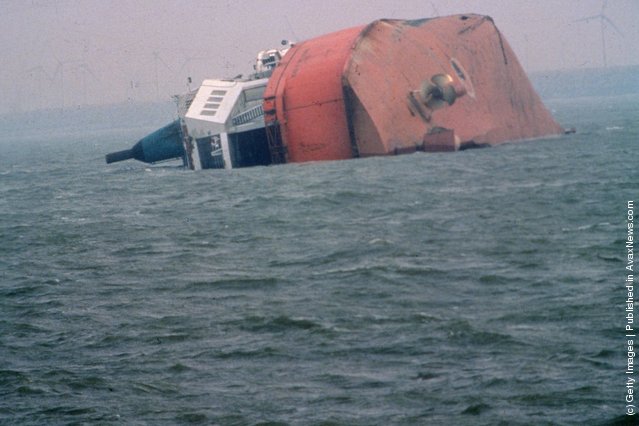
The wreck of the Herald of Free Enterprise, which capsized near Zeebrugge on the 6th of March 1987

“MS Herald of Free Enterprise was a roll-on roll-off (RORO) car and passenger ferry owned by Townsend Thoresen. She was one of three ships commissioned by the company to operate on the Dover–Calais route across the English Channel. The ferry capsized on the night of 6 March 1987, moments after leaving the Belgian port of Zeebrugge, killing 193 passengers and crew. This was the deadliest maritime disaster involving a British ship in peacetime since the sinking of the Iolaire in 1919”. – Wikipedia

Photo: The wreck of the Herald of Free Enterprise, which capsized near Zeebrugge on the 6th of March 1987. (Photo by Hulton Archive/Getty Images). 1987
Details
06 Mar 2012 13:26:00
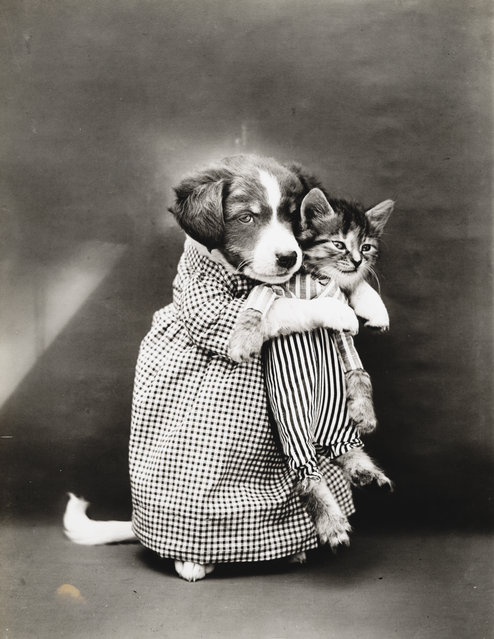
Photograph shows a puppy holding a kitten, 1914. (Photo by Harry Whittier Frees/Library of Congress)

“Harry Whittier Frees (1879–1953) was an American photographer who created novelty postcards and children's books based on his photographs of animals. He dressed the animals and posed them in human situations with props, often with captions; these can be seen as progenitors of modern lolcats”. – Wikipedia. Photo: “The nurse”. Photograph shows a puppy holding a kitten, 1914. (Photo by Harry Whittier Frees/Library of Congress)

P.S. All pictures are presented in high resolution. To see Hi-Res images – just TWICE click on any picture. In other words, click small picture – opens the BIG picture. Click BIG picture – opens VERY BIG picture (if available; this principle works anywhere on the site AvaxNews).
Details
28 Mar 2014 11:20:00
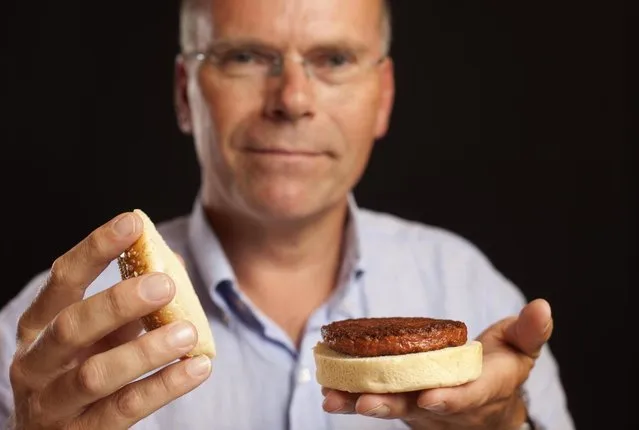
In this handout image provided by Ogilvy, a burger made from cultured beef, which has been developed by Professor Mark Post of Maastricht University in the Netherlands (pictured) is shown to the media during a press conference on August 5, 2013 in London, England. Cultured Beef could help solve the coming food crisis and combat climate change with commercial production of Cultured Beef beginning within ten to twenty years. (Photo by David Parry via Getty Images)

In this handout image provided by Ogilvy, a burger made from cultured beef, which has been developed by Professor Mark Post of Maastricht University in the Netherlands (pictured) is shown to the media during a press conference on August 5, 2013 in London, England. The in-vitro burger, cultured from cattle stem cells, the first example of what its creator says could provide an answer to global food shortages and help combat climate change, was fried in a pan and tasted by two volunteers. The burger is the result of years of research by Dutch scientist Mark Post, a vascular biologist at the University of Maastricht, who is working to show how meat grown in petri dishes might one day be a true alternative to meat from livestock.The meat in the burger has been made by knitting together around 20,000 strands of protein that has been cultured from cattle stem cells in Post's lab. (Photo by David Parry)
Details
06 Aug 2013 08:48:00