Loading...
Done
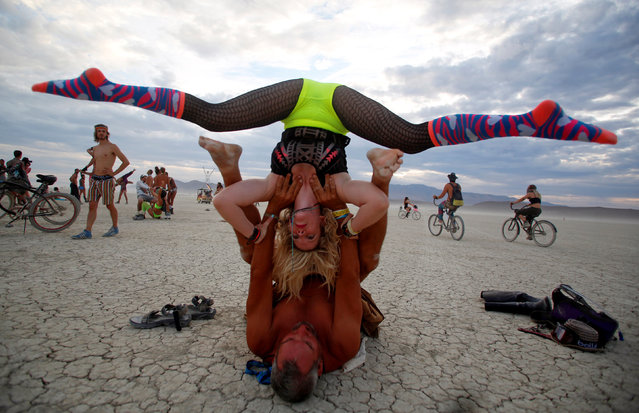
Mark Dill and Brit Thacker practice acro-yoga as approximately 70,000 people from all over the world gather for the 30th annual Burning Man arts and music festival in the Black Rock Desert of Nevada, U.S. August 29, 2016. (Photo by Jim Urquhart/Reuters)

Mark Dill and Brit Thacker practice acro-yoga as approximately 70,000 people from all over the world gather for the 30th annual Burning Man arts and music festival in the Black Rock Desert of Nevada, U.S. August 29, 2016. (Photo by Jim Urquhart/Reuters)
Details
31 Aug 2016 12:13:00
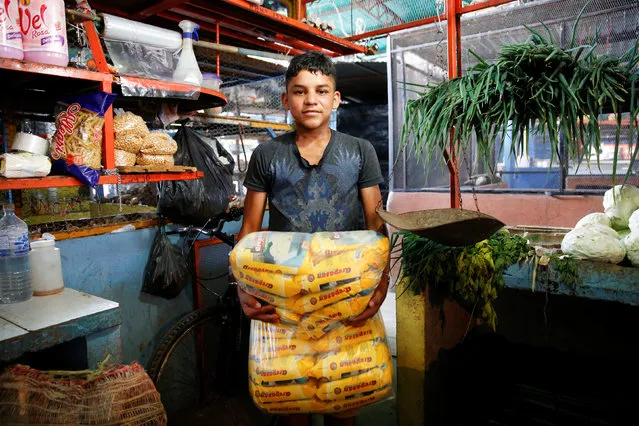
Carlos Cure holds packets of corn flour made in Colombia as he poses for a picture at a stall that sells food and staple items at a market in La Fria, Venezuela, June 2, 2016. (Photo by Carlos Garcia Rawlins/Reuters)

Carlos Cure holds packets of corn flour made in Colombia as he poses for a picture at a stall that sells food and staple items at a market in La Fria, Venezuela, June 2, 2016. (Photo by Carlos Garcia Rawlins/Reuters)
Details
09 Jun 2016 09:09:00
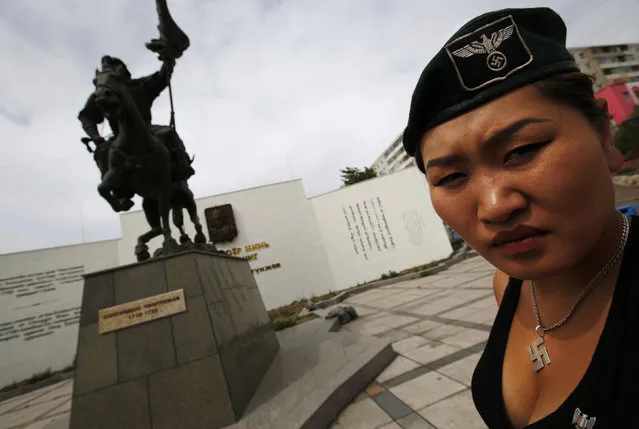
Uranjargal, a leader of the Mongolian neo-Nazi group Tsagaan Khass, stands next to a statue of Chingunjav, a Mongolian national hero, in Ulan Bator June 22, 2013. (Photo by Carlos Barria/Reuters)

Uranjargal, a leader of the Mongolian neo-Nazi group Tsagaan Khass, stands next to a statue of Chingunjav, a Mongolian national hero, in Ulan Bator June 22, 2013. The group has rebranded itself as an environmentalist organisation fighting pollution by foreign-owned mines, seeking legitimacy as it sends Swastika-wearing members to check mining permits. Over the past years, ultra-nationalist groups have expanded in the country and among those garnering attention is Tsagaan Khass, which has recently shifted its focus from activities such as attacks on women it accuses of consorting with foreign men to environmental issues, with the stated goal of protecting Mongolia from foreign mining interests. This ultra-nationalist group was founded in the 1990s and currently has 100-plus members. (Photo by Carlos Barria/Reuters)
Details
09 Jul 2013 07:23:00
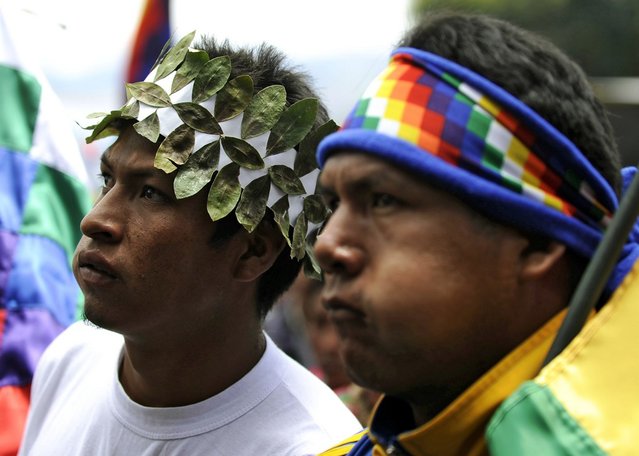
Coca growers chew coca leaves during a celebration for the reincorporation of Bolivia to the UN Convention Against Illicit Traffic in Narcotic Drugs in La Paz on January 14, 2013. "The coca leaf is not any more seen as cocaine (..), it is a victory of our identity" said Bolivian President Evo Morales. AFP PHOTO/Jorge Bernal        (Photo credit should read JORGE BERNAL/AFP/Getty Images)

Coca growers chew coca leaves during a celebration for the reincorporation of Bolivia to the UN Convention Against Illicit Traffic in Narcotic Drugs in La Paz on January 14, 2013. “The coca leaf is not any more seen as cocaine (...), it is a victory of our identity” said Bolivian President Evo Morales. (Photo by Jorge Bernal/AFP Photo)
Details
15 Jan 2013 10:16:00
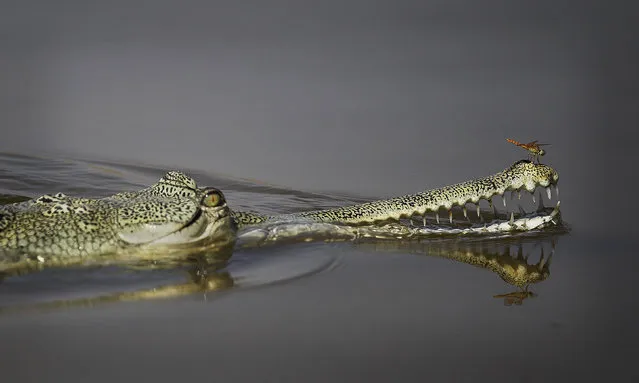
In this photo taken Wednesday, April 30, 2014, a dragonfly sits on the nose of a Gharial, rare crocodile-like creatures, in the River Chambal near Bhopepura village in the northern Indian state of Uttar Pradesh. The narrow 250-mile stretch of the Chambal is a place of crocodiles and jackals, of river dolphins and the occasional wolf. Hundreds of species of birds, storks, geese, babblers, larks, falcons and so many more, nest along the river. (Photo by Altaf Qadri/AP Photo)

In this photo taken Wednesday, April 30, 2014, a dragonfly sits on the nose of a Gharial, rare crocodile-like creatures, in the River Chambal near Bhopepura village in the northern Indian state of Uttar Pradesh. The narrow 250-mile stretch of the Chambal is a place of crocodiles and jackals, of river dolphins and the occasional wolf. Hundreds of species of birds, storks, geese, babblers, larks, falcons and so many more, nest along the river. Endangered birds lay small speckled eggs in tiny pits they dig in the sandbars. Gharials, rare crocodile-like creatures that look like they swaggered out of the Mesozoic Era, are commonplace here and nowhere else. (Photo by Altaf Qadri/AP Photo)

Details
23 Feb 2015 12:55:00
Chen interacts with his “smart” s*x doll as he lays in a bed in his home in Guangzhou, Guandong Province, China, 05 April 2018. (Photo by Aleksandar Plavevski/EPA/EFE)

Chen interacts with his “smart” sеx doll as he lays in a bed in his home in Guangzhou, Guandong Province, China, 05 April 2018. Chen, because of his busy pharmaceutical sales job and the travel it involves, has no time for a girlfriend. Chinese girls all want to talk about marriage after the second date and he is not interested in that for now, he said. (Photo by Aleksandar Plavevski/EPA/EFE)
Details
30 May 2018 00:05:00
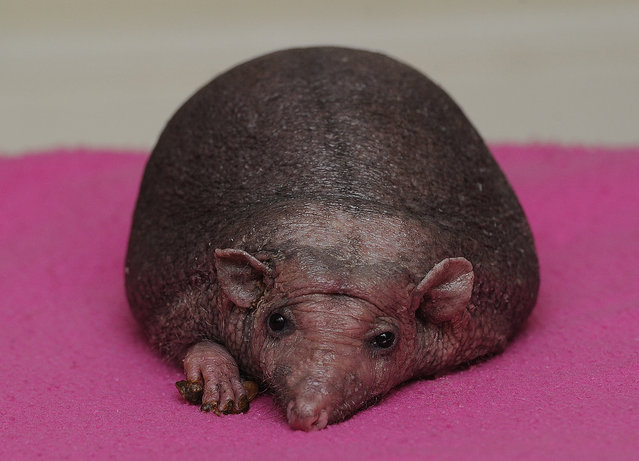
Meet the world's smoothest cuddliest hedgehog. Names after brave hero, but Nelson is completely bald so when curled up he looks like an egg. Doesn't have a single prickle or strand of hair. Thought to be suffering a stress related alopecia following a trauma in the wild. Volunteers have been massaging him for half an hour a day for the last year to encourage spikes to grow. Now given up but he still gets daily massages because he enjoys them so much and to keep his cuddle skin soft and smooth. Unlike his namesake Nelson could not defend himself so will live out his days at the Foxy Lodge Wildlife Rescue in Hemsby, England. (Photo by Jeremy Durkin)

Meet the world's smoothest cuddliest hedgehog. Names after brave hero, but Nelson is completely bald so when curled up he looks like an egg. Doesn't have a single prickle or strand of hair. Thought to be suffering a stress related alopecia following a trauma in the wild. Volunteers have been massaging him for half an hour a day for the last year to encourage spikes to grow. Now given up but he still gets daily massages because he enjoys them so much and to keep his cuddle skin soft and smooth. Unlike his namesake Nelson could not defend himself so will live out his days at the Foxy Lodge Wildlife Rescue in Hemsby, England. (Photo by Jeremy Durkin)
Details
23 Oct 2016 11:33:00
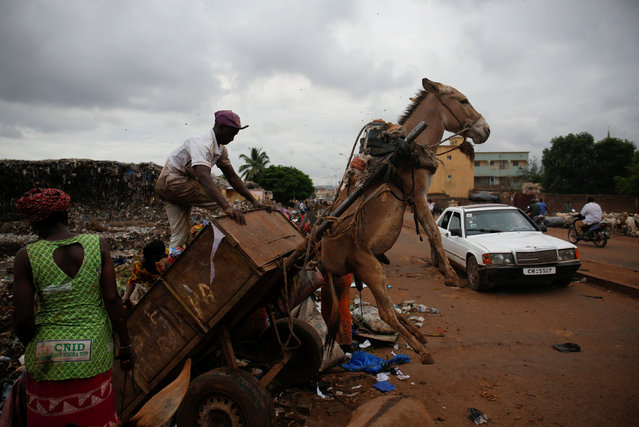
A waste picker unloads garbage at a waste transfer station in Bamako, Mali, August 19, 2018. In the Malian capital of Bamako, donkey carts driven by young men like 19-year-old Arouna Diabate play a vital role battling the fast-growing city's waste problem. Every morning before dawn, Diabate hitches his donkey to a cart and sets off on his rounds, going door-to-door to collect household garbage which he delivers to a local waste transfer station for a monthly salary of around $35. “I won't be picking up trash with a donkey cart for the rest of my life, but for now people appreciate us because we help clean up the homes of Bamako”, Diabate said. (Photo by Luc Gnago/Reuters)

A waste picker unloads garbage at a waste transfer station in Bamako, Mali, August 19, 2018. In the Malian capital of Bamako, donkey carts driven by young men like 19-year-old Arouna Diabate play a vital role battling the fast-growing city's waste problem. Every morning before dawn, Diabate hitches his donkey to a cart and sets off on his rounds, going door-to-door to collect household garbage which he delivers to a local waste transfer station for a monthly salary of around $35. “I won't be picking up trash with a donkey cart for the rest of my life, but for now people appreciate us because we help clean up the homes of Bamako”, Diabate said. (Photo by Luc Gnago/Reuters)
Details
18 Sep 2018 00:01:00