Loading...
Done


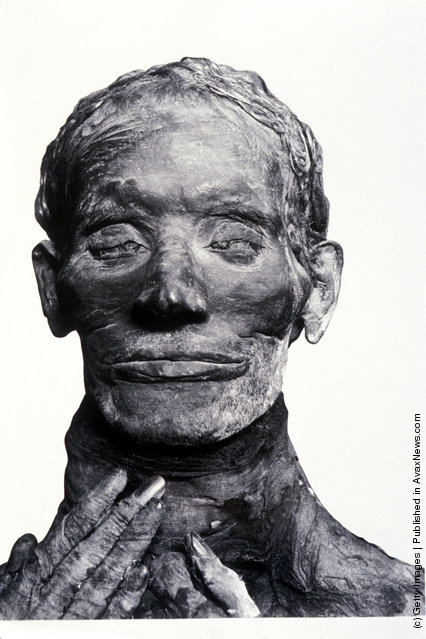
The mummy of Yuya thought by some to be Josua who, after Moses, led the Hebrews into the Promised land and logically would be the father-in-law of Amenophis III, at Cairo Museum, Egypt. (Photo by Patrick Landmann/Cairo Museum/Getty Images)
Details
22 Apr 2011 08:47:00
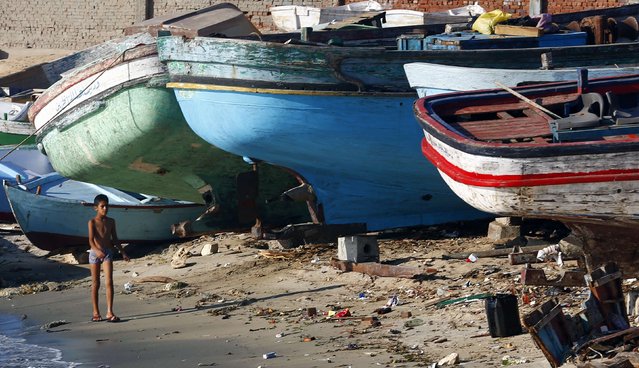
A boy walks past boats docked at the entrance gate of the fishermen's village in the El Max area of the Mediterranean city of Alexandria September 12, 2014.  El Max, where hundreds of boats dart through the canals, has been called the “Venice of Egypt” for its waterways and relaxed atmosphere. Its fishermen, however, worry about how they will make ends meet on meagre earnings they  say are being reduced further by polluted waters that are making fishing more difficult. (Photo by Amr Abdallah Dalsh/Reuters)

A boy walks past boats docked at the entrance gate of the fishermen's village in the El Max area of the Mediterranean city of Alexandria September 12, 2014. El Max, where hundreds of boats dart through the canals, has been called the “Venice of Egypt” for its waterways and relaxed atmosphere. Its fishermen, however, worry about how they will make ends meet on meagre earnings they say are being reduced further by polluted waters that are making fishing more difficult. While the government has tried to fix the state's bloated finances by cutting subsidies and reining in spending, some argue the reforms hurt Egypt's most vulnerable who have long relied on a generous system of fuel and food subsidies to supplement low incomes. (Photo by Amr Abdallah Dalsh/Reuters)

Details
12 Dec 2014 12:42:00
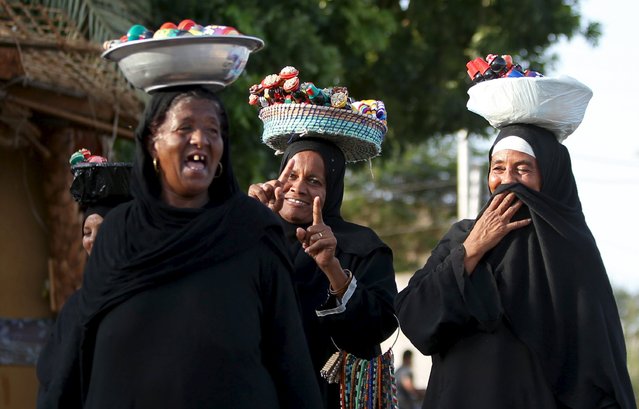
Nubian women sell traditional handicrafts at the Nubian Gharb Suheil village, near Aswan south of Egypt, October 1, 2015. For half a century, Egypt's Nubians have patiently lobbied the government in Cairo for a return to their homelands on the banks of the upper Nile, desperate to reclaim territory their ancestors first cultivated 3,000 years ago. (Photo by Mohamed Abd El Ghany/Reuters)

Nubian women sell traditional handicrafts at the Nubian Gharb Suheil village, near Aswan south of Egypt, October 1, 2015. For half a century, Egypt's Nubians have patiently lobbied the government in Cairo for a return to their homelands on the banks of the upper Nile, desperate to reclaim territory their ancestors first cultivated 3,000 years ago. (Photo by Mohamed Abd El Ghany/Reuters)
Details
19 Nov 2015 08:04:00
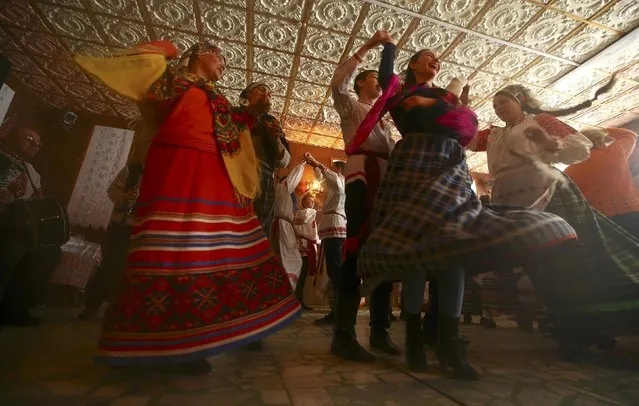
Local residents take part in the celebrations of Kolyada pagan holiday, which over the centuries has merged with Orthodox Christmas festivities and marks the upcoming end of winter, in the village of Noviny, Belarus, January 21, 2017. (Photo by Vasily Fedosenko/Reuters)

Local residents take part in the celebrations of Kolyada pagan holiday, which over the centuries has merged with Orthodox Christmas festivities and marks the upcoming end of winter, in the village of Noviny, Belarus, January 21, 2017. (Photo by Vasily Fedosenko/Reuters)
Details
22 Jan 2017 09:38:00
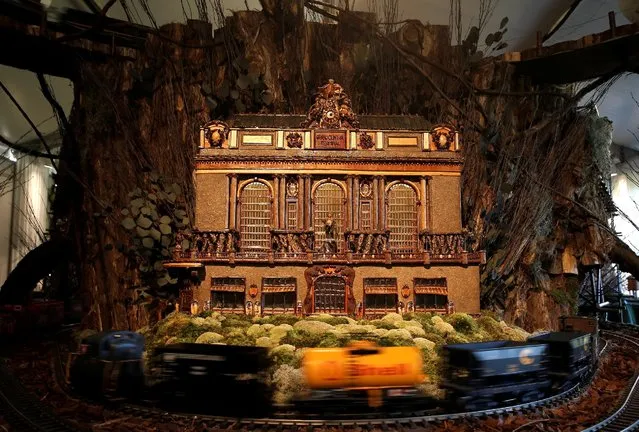
A model train travels past a scaled model of New York's Grand Central Station built entirely with plant parts during a media preview of the 25th annual Holiday Train Show at the New York Botanical Garden in the Bronx borough of New York City, U.S., November 14, 2016. (Photo by Mike Segar/Reuters)

A model train travels past a scaled model of New York's Grand Central Station built entirely with plant parts during a media preview of the 25th annual Holiday Train Show at the New York Botanical Garden in the Bronx borough of New York City, U.S., November 14, 2016. (Photo by Mike Segar/Reuters)
Details
15 Nov 2016 11:41:00
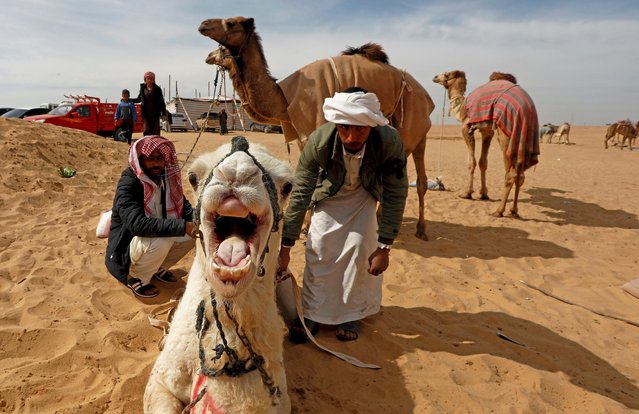
Bedouin breeders fix a robot jockey mounted on a camel before the 18th International Camel Racing festival at the Sarabium desert in Ismailia, Egypt, March 12, 2019. (Photo by Amr Abdallah Dalsh/Reuters)
Bedouin breeders fix a robot jockey mounted on a camel before the 18th International Camel Racing festival at the Sarabium desert in Ismailia, Egypt, March 12, 2019. Several Gulf countries have banned child jockeys from the traditional Bedouin sport after rights groups said the youngsters were often injured and some had been abducted or sold by their families. (Photo by Amr Abdallah Dalsh/Reuters)
Details
21 Mar 2019 00:01:00
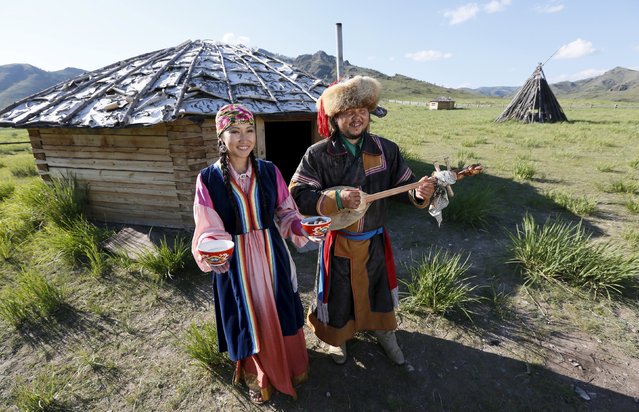
Members of national folklore and ethnographic groups and employees of a museum-preserve participate in the reconstruction of daily life and traditional holidays celebrated by indigenous population of the Republic of Khakassia during a demonstration for visitors outside a traditional wooden yurt near Kazanovka village, southwest of the city of Abakan, Russia, July 24, 2015. (Photo by Ilya Naymushin/Reuters)

Members of national folklore and ethnographic groups and employees of a museum-preserve participate in the reconstruction of daily life and traditional holidays celebrated by indigenous population of the Republic of Khakassia during a demonstration for visitors outside a traditional wooden yurt near Kazanovka village, southwest of the city of Abakan, Russia, July 24, 2015. (Photo by Ilya Naymushin/Reuters)
Details
27 Jul 2015 11:07:00
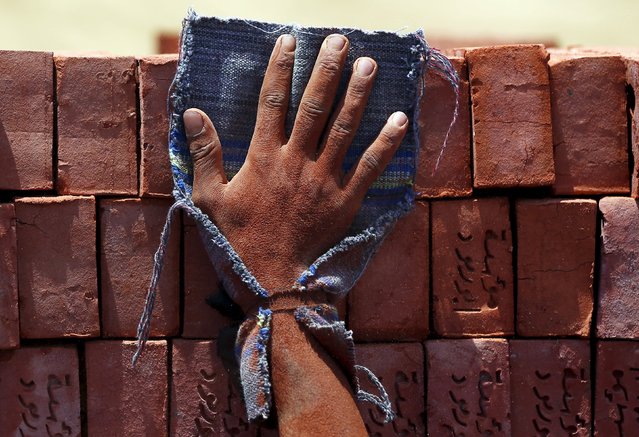
A hand of a labourer pushes bricks at a traditional brick factory in Arab Mesad district of Helwan, northeast of Cairo, May 14, 2015. (Photo by Amr Abdallah Dalsh/Reuters)
A hand of a labourer pushes bricks at a traditional brick factory in Arab Mesad district of Helwan, northeast of Cairo, May 14, 2015. About 45 labourers are employed at the brick factory and most work 10 hours a day. Adult workers earn a daily wage of 70 Egyptian pounds ($9) and child workers earn 40 Egyptian pounds ($5). The labourers, who are usually temporary or seasonally employed in Egypt's brick-making industry, experience unsafe work conditions, according to local media. (Photo by Amr Abdallah Dalsh/Reuters)
Details
19 May 2015 11:37:00