Loading...
Done
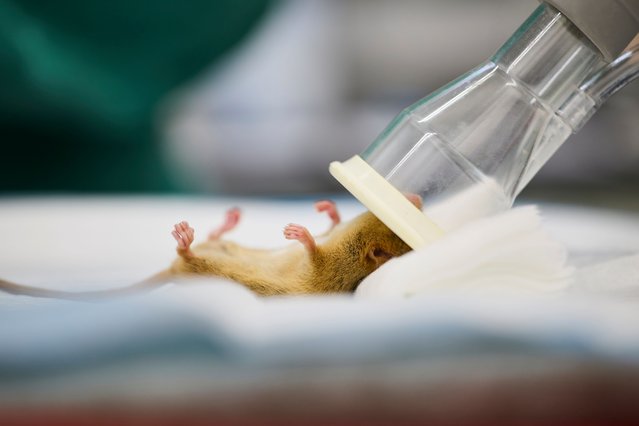
This hazel dormouse is being given a once-over by a disease risk team at ZSL London Zoo, UK in May 2025, as part of reintroduction programme. (Photo by David Levene/The Guardian)

This hazel dormouse is being given a once-over by a disease risk team at ZSL London Zoo, UK in May 2025, as part of reintroduction programme. (Photo by David Levene/The Guardian)
Details
01 Jun 2025 02:56:00
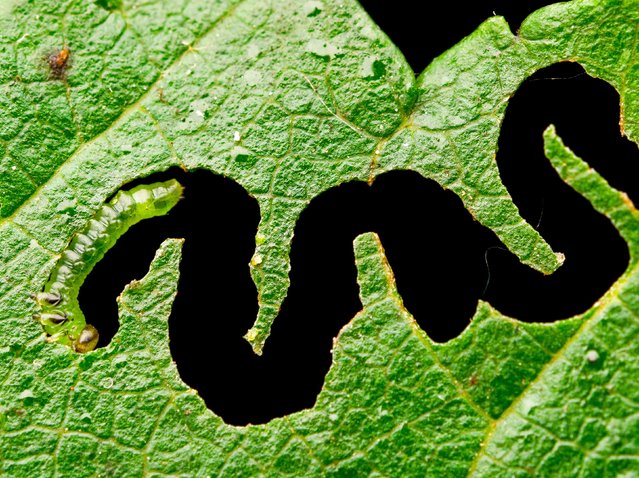
Miniscule larvae carve winding tunnels as they eat through small leaves in a small forest near the town of Velbert in western Germany in July 2022. The hungry green sawfly larvae measure just three millimetres in length and are difficult to spot on the leaves of the beech tree unless up close. (Photo by Christian Brockes/Solent News)

Miniscule larvae carve winding tunnels as they eat through small leaves in a small forest near the town of Velbert in western Germany in July 2022. The hungry green sawfly larvae measure just three millimetres in length and are difficult to spot on the leaves of the beech tree unless up close. (Photo by Christian Brockes/Solent News)
Details
24 Dec 2022 04:05:00
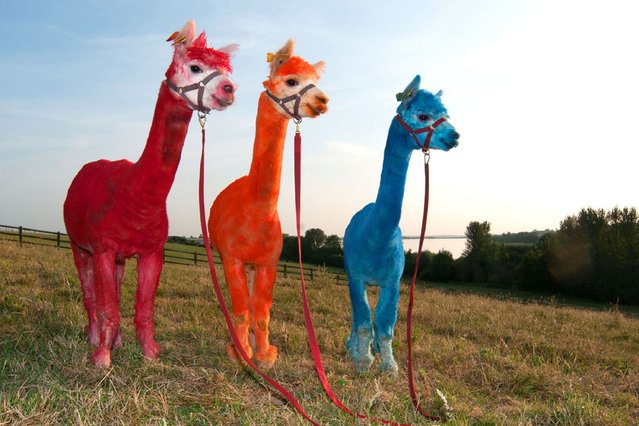
Three very colouful alpacas enjoy the hot weather at Toft Farm, Rugby, on July 19, 2013. (Photo by Caters News)

Three very colouful alpacas enjoy the hot weather at Toft Farm, Rugby, on July 19, 2013. (Photo by Caters News)
Details
20 Jul 2013 12:14:00
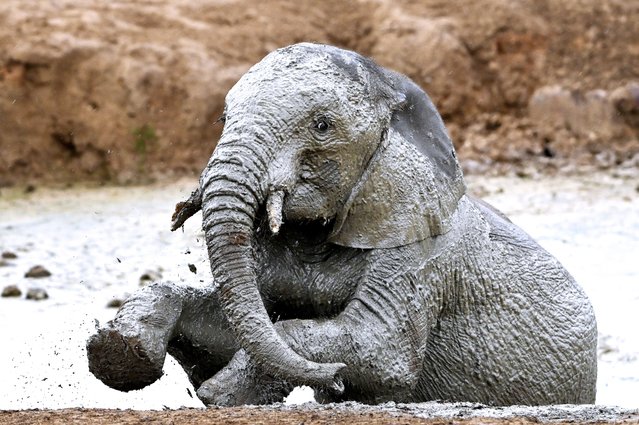
A baby elephant struggles to climb out of a dam before being rescued by rangers at Addo Elephant National Park in South Africa in the last decade of March 2025, having been pushed into the water by another elephant. (Photo by Anne Laing/Caters News Agency)

A baby elephant struggles to climb out of a dam before being rescued by rangers at Addo Elephant National Park in South Africa in the last decade of March 2025, having been pushed into the water by another elephant. (Photo by Anne Laing/Caters News Agency)
Details
13 Apr 2025 03:35:00
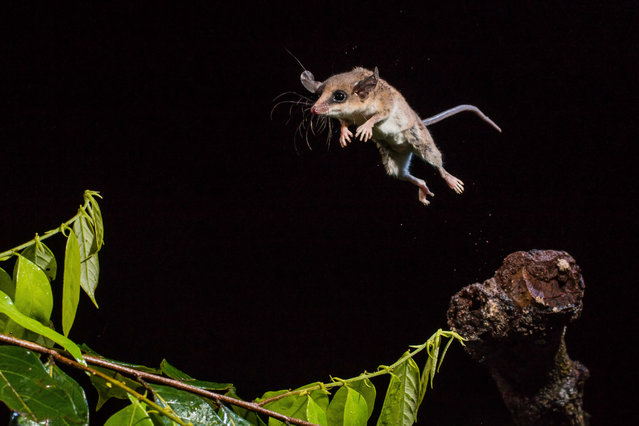
Tropical acrobatics by Adrià López Baucells in Manaus, Brazil. An unidentified South American marsupial, although the characteristic black markings on its face indicate it may be a mouse opossum. These small creatures are nocturnal and feed on bugs, fruit and bird eggs. (Photo by Adrià López Baucells/2019 Royal Society of Biology Photography Competition)

Tropical acrobatics by Adrià López Baucells in Manaus, Brazil. An unidentified South American marsupial, although the characteristic black markings on its face indicate it may be a mouse opossum. These small creatures are nocturnal and feed on bugs, fruit and bird eggs. (Photo by Adrià López Baucells/2019 Royal Society of Biology Photography Competition)
Details
10 Oct 2019 00:03:00
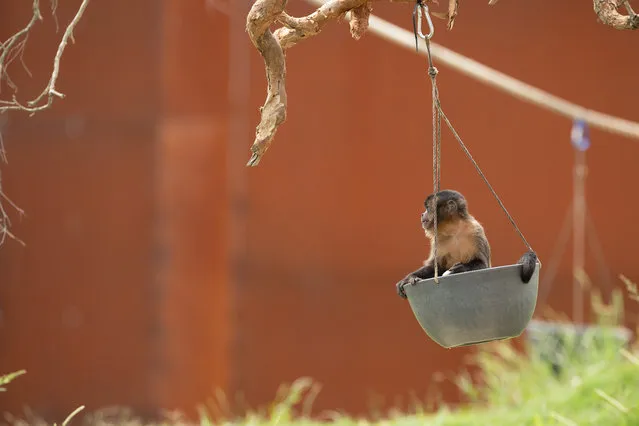
A Tufted Capuchin sits in a hanging food tray on a tree in it's enclosure at Sydney Zoo on February 24, 2020 in Sydney, Australia. Sydney Zoo, located at Bungarribee Park in Western Sydney, is the first new zoo to be built in Sydney in more than 100 years. The Zoo opened to the public on 7 December 2019. (Photo by Mark Kolbe/Getty Images)

A Tufted Capuchin sits in a hanging food tray on a tree in it's enclosure at Sydney Zoo on February 24, 2020 in Sydney, Australia. Sydney Zoo, located at Bungarribee Park in Western Sydney, is the first new zoo to be built in Sydney in more than 100 years. The Zoo opened to the public on 7 December 2019. (Photo by Mark Kolbe/Getty Images)
Details
01 Mar 2020 00:03:00
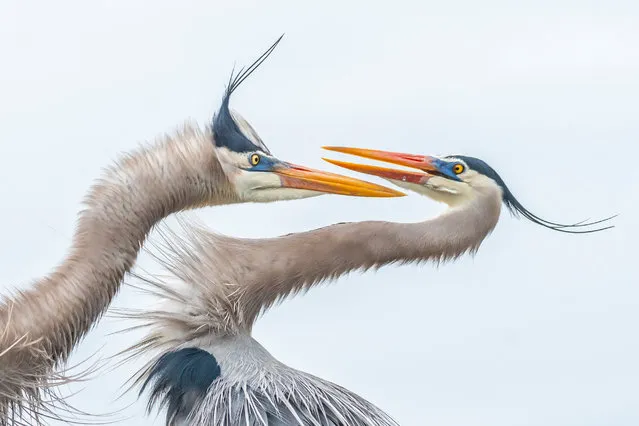
Melissa Rowell, amateur honourable mention. Wakodahatchee wetlands, Delray Beach, Florida, US. Equipped with sinewy necks and spear-like bills, great blue herons can lunge with fearsome speed to strike their aquatic prey. Adults will also employ rapid stabbing motions as one aspect of their complex courtship displays; they’re seemingly dangerous moves, but fitting to the intensity of mating season. (Photo by Melissa Rowell/Audubon photography awards)

Wakodahatchee wetlands, Delray Beach, Florida, US. Equipped with sinewy necks and spear-like bills, great blue herons can lunge with fearsome speed to strike their aquatic prey. Adults will also employ rapid stabbing motions as one aspect of their complex courtship displays; they’re seemingly dangerous moves, but fitting to the intensity of mating season. (Photo by Melissa Rowell/Audubon Photography Awards)
Details
17 Jul 2019 00:03:00
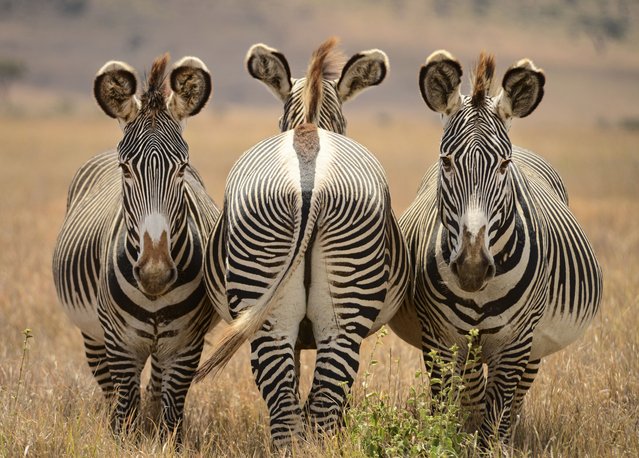
It doesn’t make for the most flattering photoshoot, but there is a reason these zebras at Lewa wildlife conservancy in Kenya in the second decade of August 2025 are stood head to tail: they use their tails to swat flies from each others’ faces. (Photo by Andrew Campbell/Solent News & Photo Agency)

It doesn’t make for the most flattering photoshoot, but there is a reason these zebras at Lewa wildlife conservancy in Kenya in the second decade of August 2025 are stood head to tail: they use their tails to swat flies from each others’ faces. (Photo by Andrew Campbell/Solent News & Photo Agency)
Details
17 Aug 2025 03:01:00