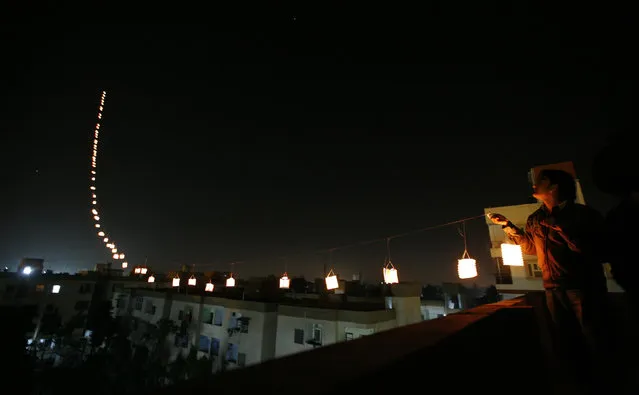
A man flies a kite made of 110 Tukkal or paper lanterns for the Hindu festival of “Makar Sankranti”, which marks the start of spring, in Ahmedabad January 13, 2011. (Photo by Amit Dave/Reuters)
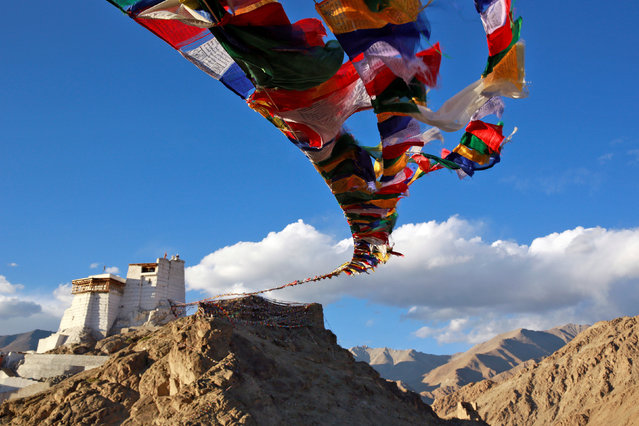
Prayer flags fly at Namgyal Tsemo Monastery above the town of Leh in Ladakh, India September 24, 2016. High in the Indian Himalayas, young novice monks in maroon robes take their lessons inside the 15th-century Thiksey monastery. (Photo by Cathal McNaughton/Reuters)
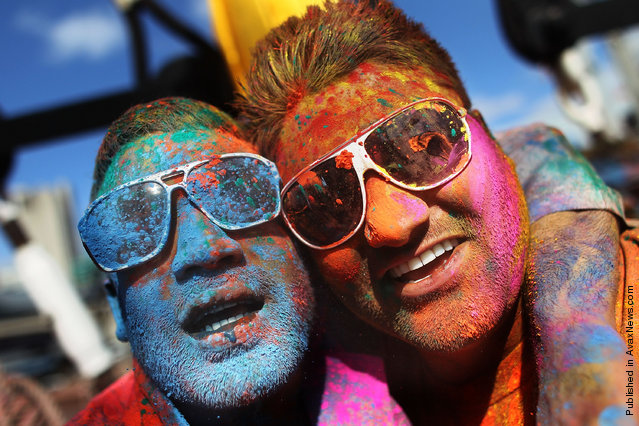
Revelers celebrate the Indian festival of Holi on the deck of the ship Peking at South Street Seaport in Manhattan March 19, 2011 in New York City. The Hindu festival of Holi , also known as the Festival of Colors, marks the arrival of spring where participants throw colored powder and water on one another. Many of the New York participants are Indian-American.
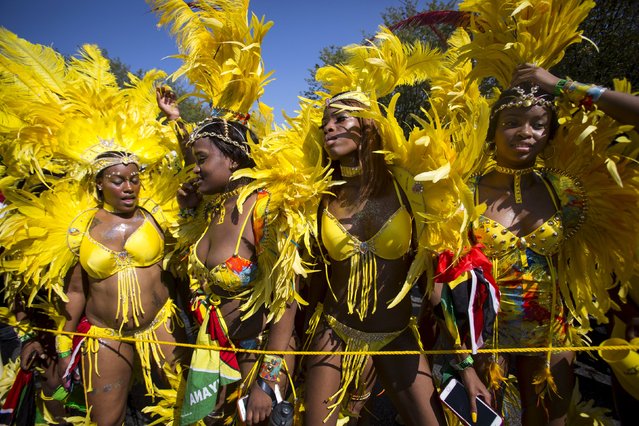
Women dance in costume during the West Indian Day Parade in Brooklyn, New York September 7, 2015. The parade, which takes place annually, celebrates Caribbean culture and history. (Photo by Andrew Kelly/Reuters)
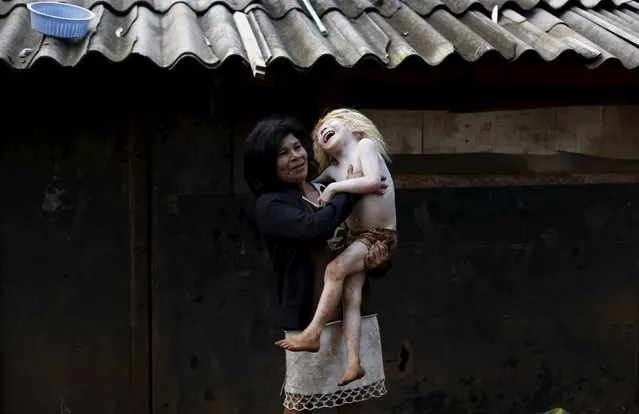
A Guarani Indian woman jokes with her son in the village of Pyau at Jaragua district, in Sao Paulo April 27, 2015. The National Indian Foundation (FUNAI) has recognised 521 hectares of this area as indigenous territory, making it the smallest indigenous reserve in Brazil. Members of the Guarani community have now established a new village outside the demarcation and are being threatened with an eviction through a court order. (Photo by Nacho Doce/Reuters)
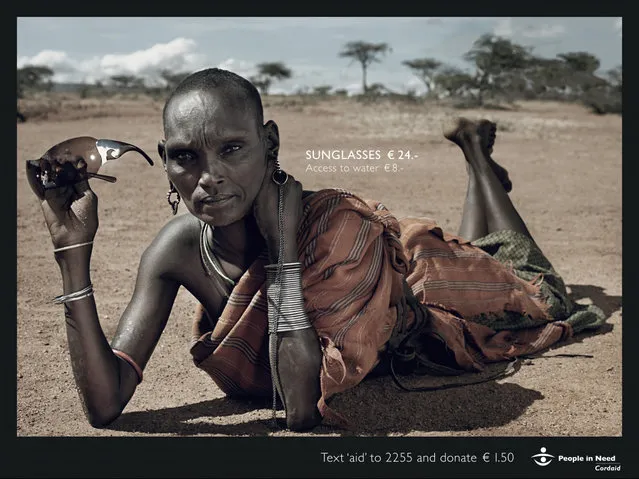
'The Dutch charity organization Mensen in Nood (people in need) hits the streets with a remarkable campaign. People in need are posing with the typical attributes of consumer culture. The price of a designer handbag (€32) is compared with the price of a whole week of food (€4), The price a pint of beer (€4.50) with the price of 50 liter clean water (€1.50). The pictures were taken by Swedish fashion photographer Carl Stolz.' - Occupy Design UK
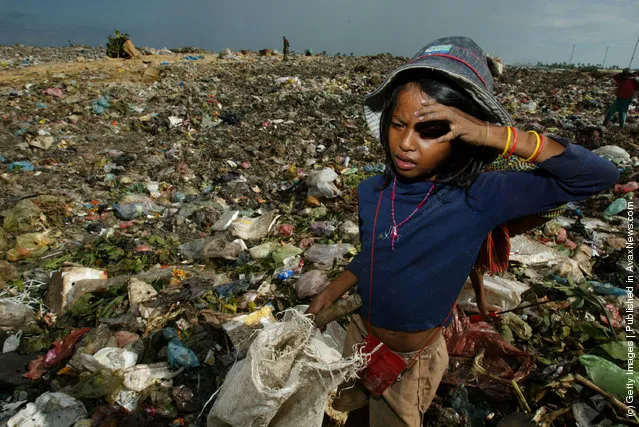
A Cambodian girl goes through the garbage dump looking for things to recycle in order to survive July 26, 2003 in Phnom Penh, Cambodia. Rampant corruption in this impoverished country has lead to extreme poverty with many Cambodians living below the poverty line. (Photo by Paula Bronstein/Getty Images)
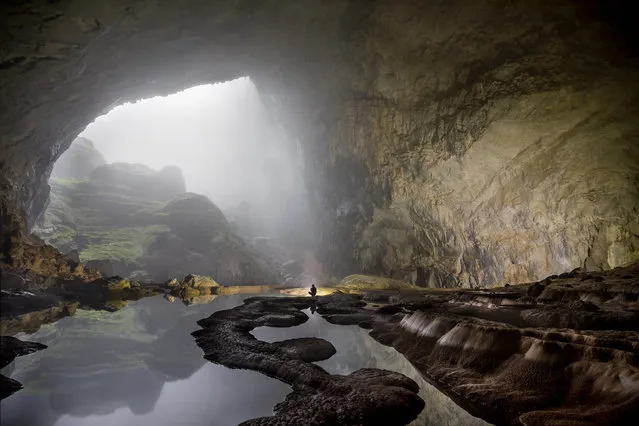
Vietnam’s Son Doong cave, the largest in the world, could hold a 40-story skyscraper inside. The pristine ecosystem has its own river and jungle. Despite its size, Son Doong wasn’t discovered until 1991. It was lost again for nearly two decades and was fully explored for the first time in 2009. (Photo by Jason Speth/HuffPost)