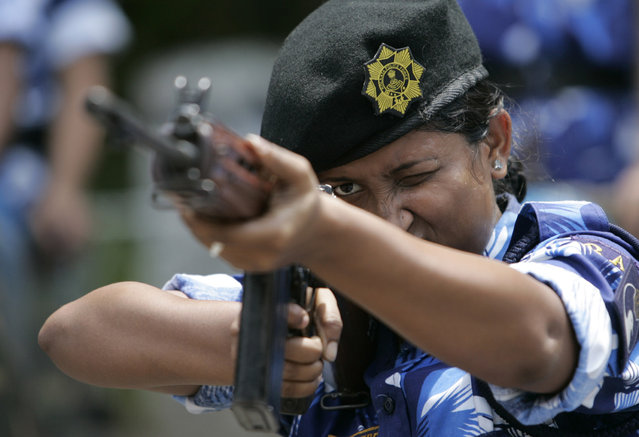
Mamoni Mandal, member of the Rapid Action Force (RAF), attends a training session at a police training school in Kolkata April 15, 2007. (Photo by Parth Sanyal/Reuters)
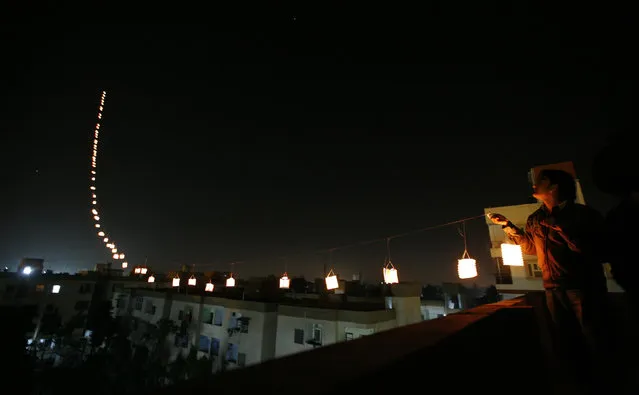
A man flies a kite made of 110 Tukkal or paper lanterns for the Hindu festival of “Makar Sankranti”, which marks the start of spring, in Ahmedabad January 13, 2011. (Photo by Amit Dave/Reuters)
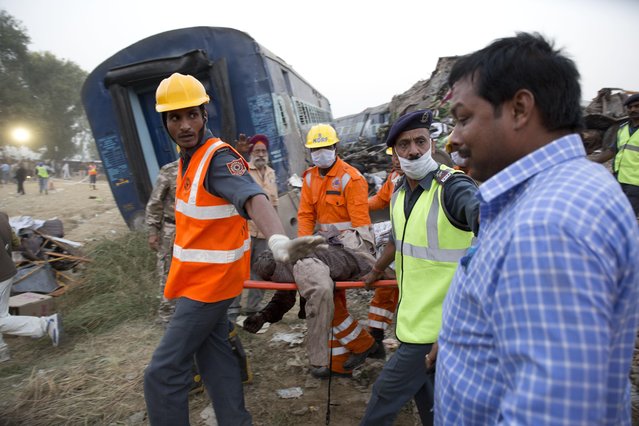
A relative, right, breaks down as rescuers carry the body of a victim after 14 coaches of an overnight passenger train rolled off the track near Pukhrayan village Kanpur Dehat district, Uttar Pradesh state, India, Sunday, November 20, 2016. Dozens were killed and dozens more were injured in the accident. (Photo by Rajesh Kumar Singh/AP Photo)
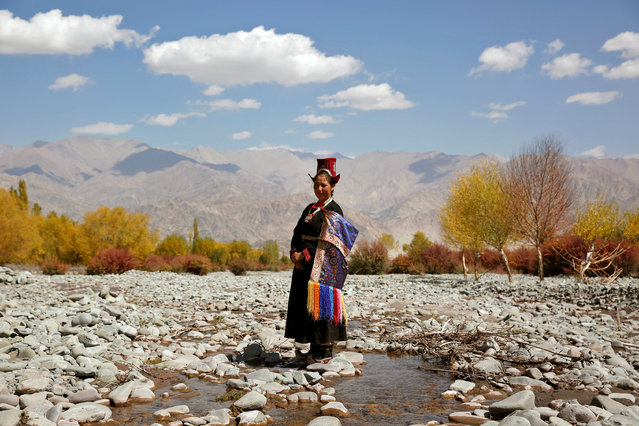
Tsewang Dolma, 33, a farmer and housewife poses for a photograph in Matho, a village nestled high in the Indian Himalayas, India September 29, 2016. When asked how living in the world's fastest growing major economy had affected life, Dolma replied: “Our culture is spoiled now. We don't wear our traditional dress”. (Photo by Cathal McNaughton/Reuters)
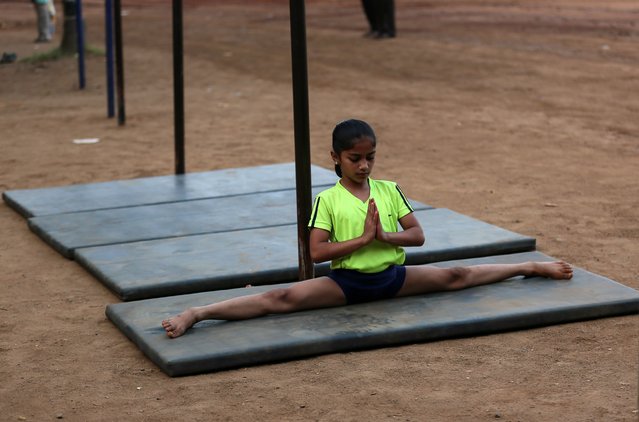
An Indian student warms up during the 44th Samartha Summer Sports Coaching Camp organized by Shree Samarth Vyayam Mandir in Mumbai, India, 25 April 2018. Mallakhamba arose in the western state of Maharashtra centuries ago. It was originally practiced by wrestlers and soldiers as a strength training exercise. (Photo by Divyakant Solanki/EPA/EFE)
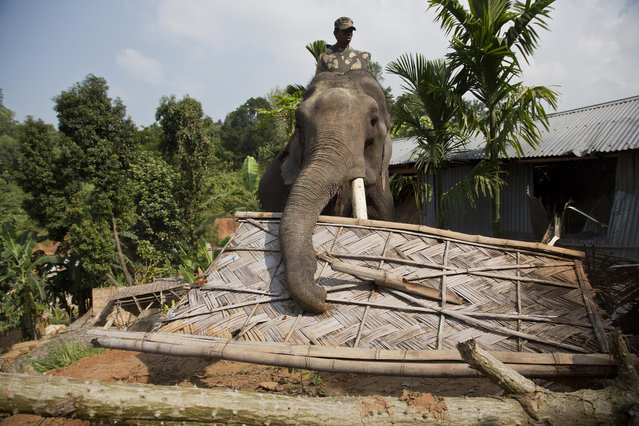
An elephant is used to demolish a house during an eviction drive inside Amchang Wildlife Sanctuary on the outskirts of Gauhati, Assam, India, Monday, November 27, 2017. Indian police on Monday took the unusual step of using elephants in an attempt to evict hundreds of people living illegally in the protected forest area in the country's remote northeast. Police used bulldozers and the elephants in a show of force, and the forest dwellers responded by hurling rocks. (Photo by Anupam Nath/AP Photo)
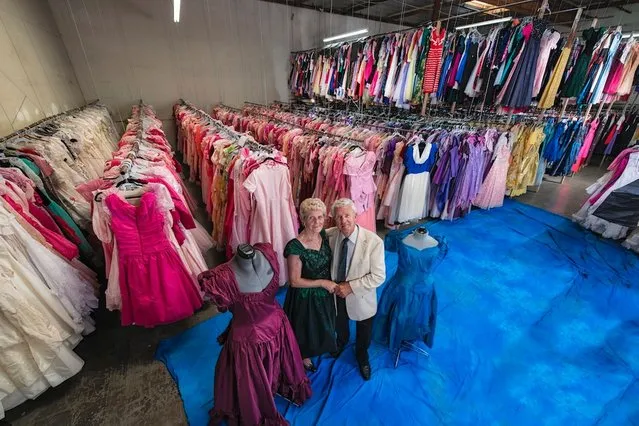
There are many types of collections. Some are formed by purposefully collecting certain objects, such as stamps or coins. However, some collections are only a byproduct of an obsession, a quirk of mind. For example, Paul Brockmann got into the habit of buying his girlfriend and later his wife a dress every time they went ballroom dancing. It might seem excessive to some, but it was his way of showing his affection. Overtime, this collection grew to be enormous, counting 55,000 dresses in total. Basic math tells us that either they went ballroom dancing three times per day for every day of their lives, or he bought them in huge bundles every time.
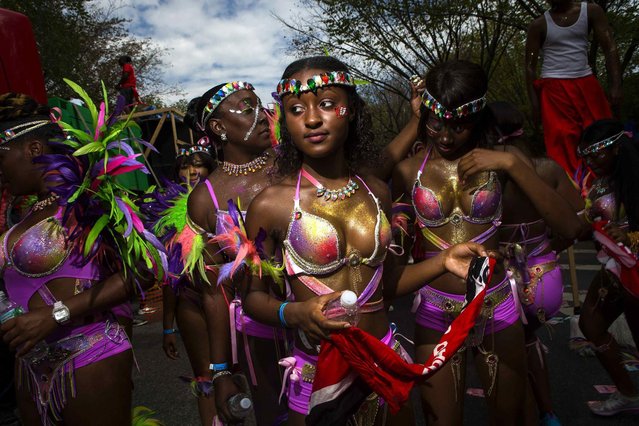
Participants wearing costumes take part in the West Indian Day Parade in the Brooklyn borough of New York September 1, 2014. The parade, which draws a crowd of a million plus, celebrates Caribbean culture. (Photo by Eric Thayer/Reuters)