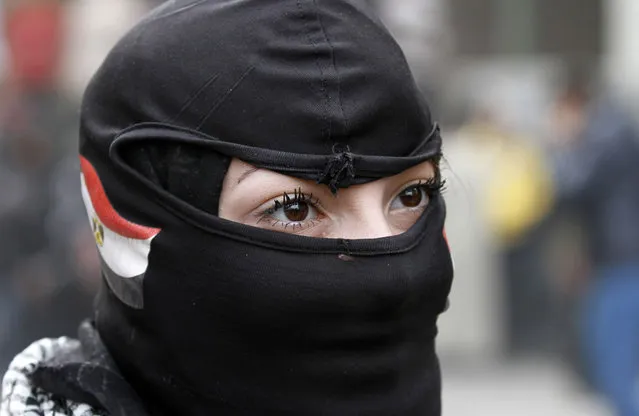
A young protester takes part in a protest near Tahrir Square to call for the fall of Islamist President on January 24, 2012 in Cairo. (Photo by Mohammed Abed/AFP Photo via The Atlantic)
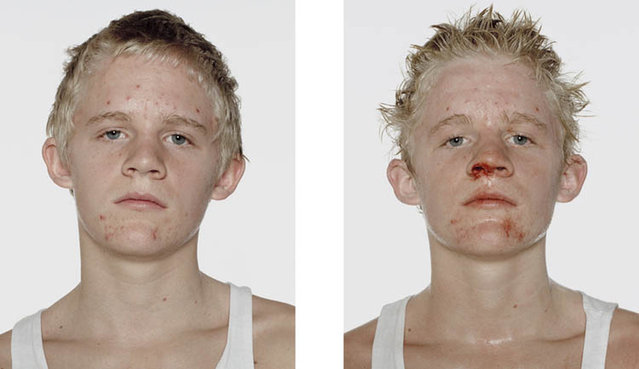
141 boxers’ by Danish visual artist and photographer Nicolai Howalt is a series of diptychs portraying boxers before and after their fight. Ranging from young boys to women, the collection of images delineates not only the brutal aftermath of a match but the more subtle changes in the subject’s physiology due to adrenaline, struggle, and the complex emotions that come with victory and loss.
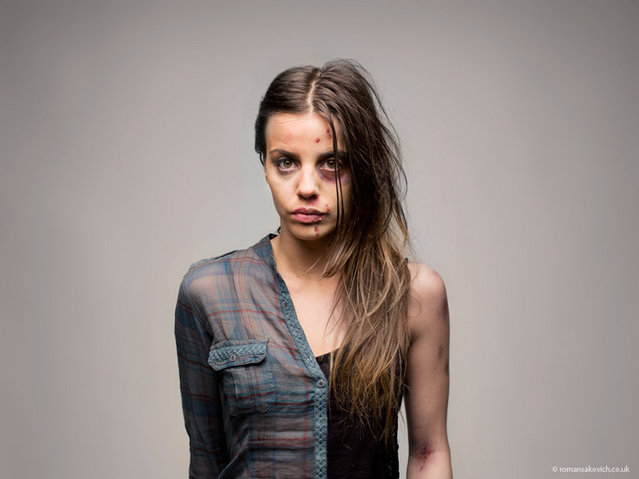
The above portrait is part of London-based photographer Roman Sakovich's project, “Half”, which highlights the drastic physical effects of substance abuse. Sakovich has created split images that simultaneously portray an individual prior to and post addiction, leaving the viewer with a stark visualization of the damaging effects of drug use on our bodies.
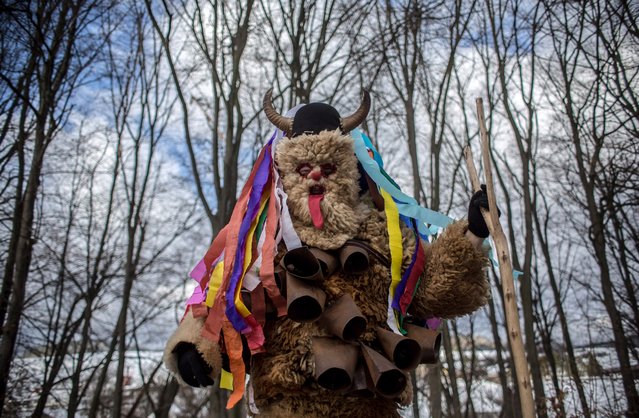
A participant dressed in a traditional devil costume walks from house to house during the traditional St. Nicholas parade on December 3, 2016 in village of Francova Lhota, Czech Republic. This type of parade is one of the most popular age-old traditions in a few villages in the Wallachia region of Eastern Czech Republic. St. Nicholas and company roam the streets going from house to house, for two or three days as St. Nicholas gives sweets and tiny gifts as a present to children and the devils get up to mischief. (Photo by Matej Divizna/Getty Images)
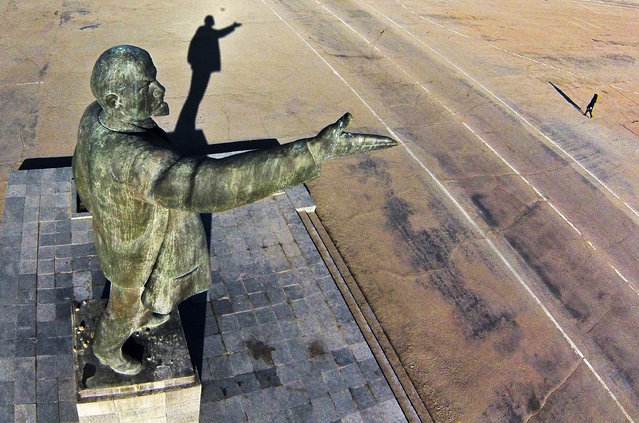
In this aerial file photo taken on Tuesday, October 31, 2017, a woman walks past a statue of Soviet Union founder Vladimir Lenin at the Russian leased Baikonur cosmodrome, in Kazakhstan. The thousands of statues of Vladimir Lenin spread across the vast region bring to mind poet Vladimir Mayakovsky's ringing line of devotion: “Lenin lived, Lenin lives, Lenin will live”. (Photo by Dmitri Lovetsky/AP Photo)
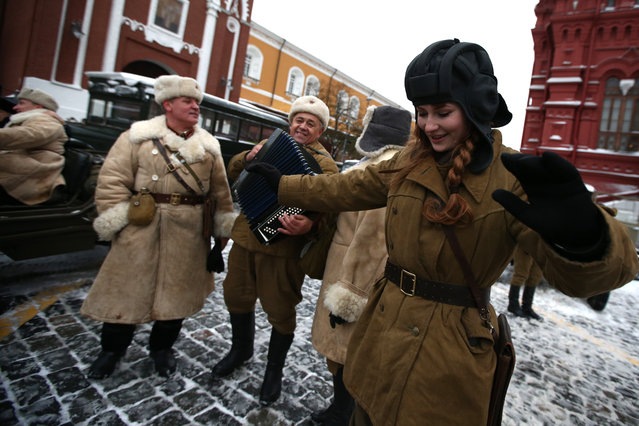
People in historical uniforms prepare for a parade at Red Square commemorating the 75th anniversary of the Red Army’s defence of Moscow during the second world war in Moscow, Russia on November 7, 2016. (Photo by Stanislav Krasilnikov/TASS)
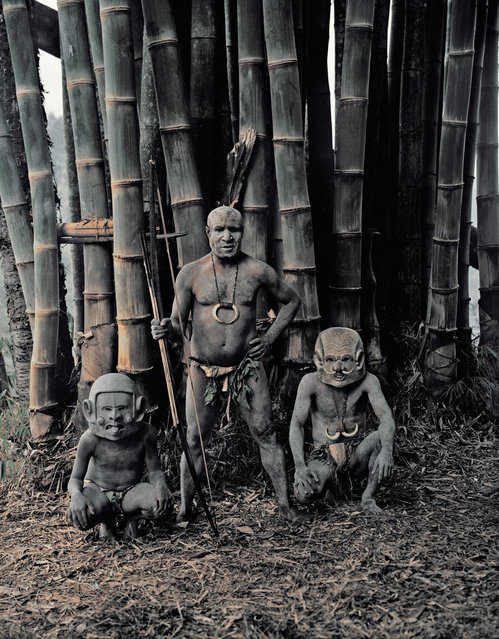
“Asaro from the Eastern Highlands”. The mudmen could not cover their faces with mud because the people of Papua New Guinea thought that the mud from the Asaro river was poisonous. So instead of covering their faces with this alleged poison, they made masks from pebbles that they heated and water from the waterfall, with unusual designs such as long or very short ears either going down to the chin or sticking up at the top, long joined eyebrows attached to the top of the ears, horns and sideways mouths. (Photo and caption by Jimmy Nelson)
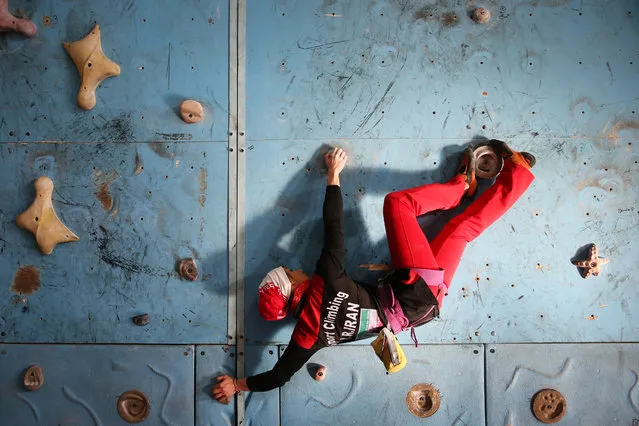
In this Monday, January 18, 2016 photo, Iranian rock climber, Farnaz Esmaeilzadeh, scales a climbing gym in the city of Zanjan, some 330 kilometers (207 miles) west of the capital Tehran, Iran. Esmaeilzadeh, 27, who has been climbing since she was 13, has distinguished herself in international competitions despite the barriers she faces as a female athlete in conservative Iran. (Photo by Ebrahim Noroozi/AP Photo)