Loading...
Done
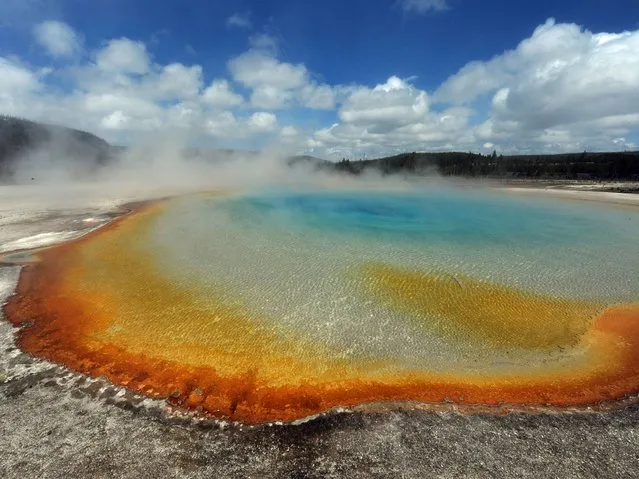
View of the “Sunset Lake” hot spring with it's unique colors caused by brown, orange and yellow algae-like bacteria called Thermophiles, that thrive in the cooling water turning the vivid aqua-blues to a murkier greenish brown, in the Yellowstone National Park, Wyoming on June 1, 2011. (Photo by Mark Ralston/AFP Photo)

View of the “Sunset Lake” hot spring with it's unique colors caused by brown, orange and yellow algae-like bacteria called Thermophiles, that thrive in the cooling water turning the vivid aqua-blues to a murkier greenish brown, in the Yellowstone National Park, Wyoming on June 1, 2011. Yellowstone National Park, was established by the U.S. Congress and signed into law by President Grant on March 1, 1872. The park is located primarily in the U.S. state of Wyoming, though it also extends into Montana and Idaho and was the first national park in the world. It is known for its wildlife and its many geothermal features, especially the Old Faithful Geyser. (Photo by Mark Ralston/AFP Photo)
Details
06 Apr 2014 08:02:00
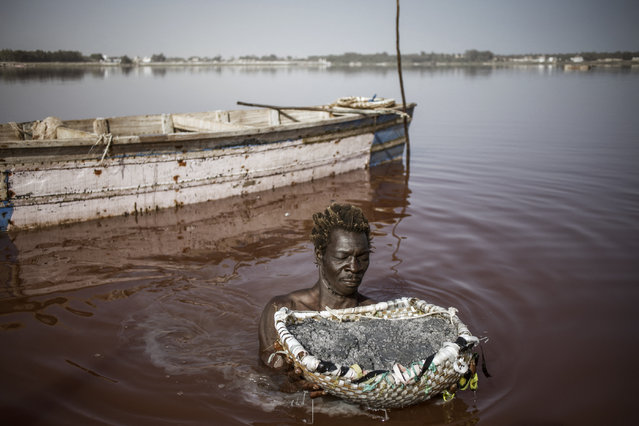
Toure, a Gambian salt harvester, holds a basket filled with  the salt collected from the crust of the bottom of the Lake Retba (Pink Lake) in Senegal on March 16, 2021. Lake Retba, divided from the Atlantic Ocean by a narrow corridor of dunes, owes its name to the pink waters caused by the Dunaliella salina algae and is known for its high salt content, up to 40% in some areas. (Photo by Marco Longari/AFP Photo)

Toure, a Gambian salt harvester, holds a basket filled with the salt collected from the crust of the bottom of the Lake Retba (Pink Lake) in Senegal on March 16, 2021. Lake Retba, divided from the Atlantic Ocean by a narrow corridor of dunes, owes its name to the pink waters caused by the Dunaliella salina algae and is known for its high salt content, up to 40% in some areas. (Photo by Marco Longari/AFP Photo)
Details
24 Mar 2021 10:29:00
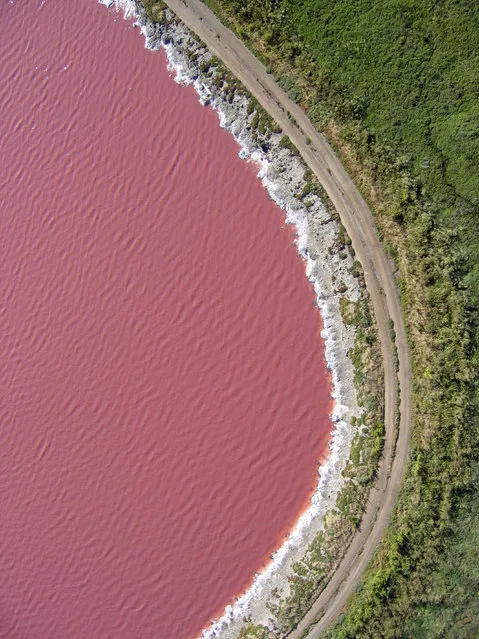
Aerial view of the salt ponds in San Francisco, California. (Photo by Cris Benton/Caters News)

These spectacular landscapes may look like something from another planet – but they are in fact colorful salt ponds which stretch for miles. Despite being better known for tech companies and expensive property – San Francisco, California is also home to this vibrant quilt of color spanning the South Bay Area. From eerie green pools to gothic shades of red the surreal landscapes are caused by the organisms or micro-algae living within them. Photo: Aerial view of the salt ponds in San Francisco, California. (Photo by Cris Benton/Caters News)
Details
02 Jul 2014 10:18:00
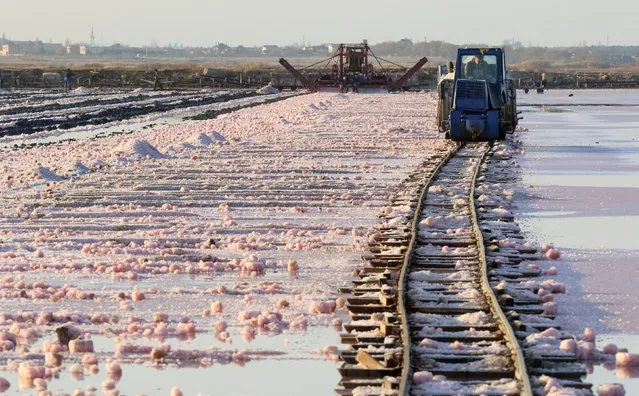
A train drives along a field at a salt production site at the Sasyk-Sivash lake near the city of Yevpatoria, Crimea, November 14, 2017. (Photo by Pavel Rebrov/Reuters)

A train drives along a field at a salt production site at the Sasyk-Sivash lake near the city of Yevpatoria, Crimea, November 14, 2017. A saltwater lagoon known as Lake Sasyk-Sivash on Ukraine's Crimea peninsula is the source of a rare resource: pink salt. The mineral is tinted by tiny algae that produce the pigment beta-carotene. Each autumn, seasonal workers collect thousands of tons of pink salt for processing and export. (Photo by Pavel Rebrov/Reuters)
Details
16 Nov 2017 08:18:00
Tourists pose for a selfie in Cancun, October 13, 2015. Cancun's transformation in the 1970s from a small Caribbean fishing village into a strip of nightclubs and high-rise hotels has reduced biodiversity and polluted water resources as infrastructure struggles to keep up. (Photo by Edgard Garrido/Reuters)

Tourists pose for a selfie in Cancun, October 13, 2015. Cancun's transformation in the 1970s from a small Caribbean fishing village into a strip of nightclubs and high-rise hotels has reduced biodiversity and polluted water resources as infrastructure struggles to keep up. (Photo by Edgard Garrido/Reuters)
Details
15 Nov 2015 08:03:00
Broomfield Samson, a rare breed Suffolk punch, and his rider, Alison Carroll, cool off in the River Lune at Loyne Bridge near Gressingham in Lancashire, UK on May 21, 2024. (Photo by James Glossop/ The Times & Sunday Times)

Broomfield Samson, a rare breed Suffolk punch, and his rider, Alison Carroll, cool off in the River Lune at Loyne Bridge near Gressingham in Lancashire, UK on May 21, 2024. (Photo by James Glossop/ The Times & Sunday Times)
Details
25 Jun 2025 04:12:00
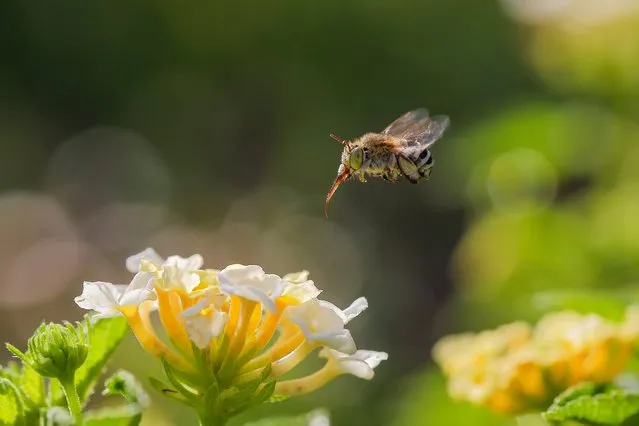
“Tasty Nature” by Dipesh Bhatt. “The blue banded bee (Amegilla cingulata) is pointing this sheath towards the flowers in preparation for sipping nectar”. Taken in Gujarat, India. (Photo by Dipesh Bhatt/2016 Royal Society of Biology Photographer of the Year competition)

“Tasty Nature” by Dipesh Bhatt. “The blue banded bee (Amegilla cingulata) is pointing this sheath towards the flowers in preparation for sipping nectar”. Taken in Gujarat, India. (Photo by Dipesh Bhatt/2016 Royal Society of Biology Photographer of the Year competition)
Details
30 Sep 2016 09:32:00
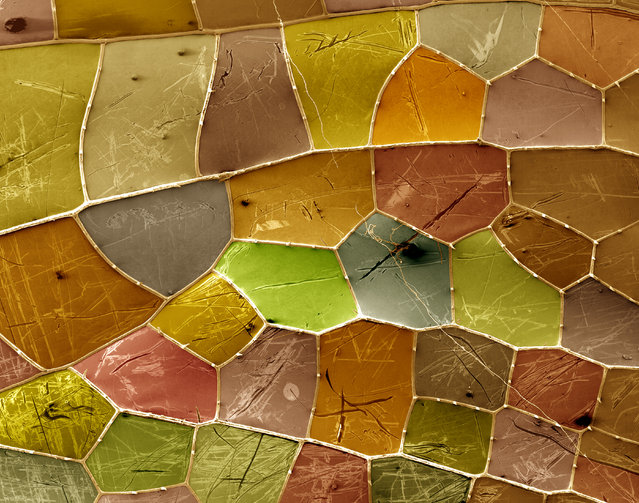
Micro or Macro? It's micro: this is an electron microscope image of the wing of a Green Darner dragonfly. (Photo by P. Kelly)

Macro or Micro? Scientists’ pictures baffle our sense of scale. It began when Stephen Young, a geography professor at Salem State University in Massachusetts, tricked his biologist colleague Paul Kelly into thinking a satellite image was one of his electron microscope scans. Can you guess whether they are close-up or very far away? (Photo by Paul Kelly)
Details
21 Apr 2014 10:24:00