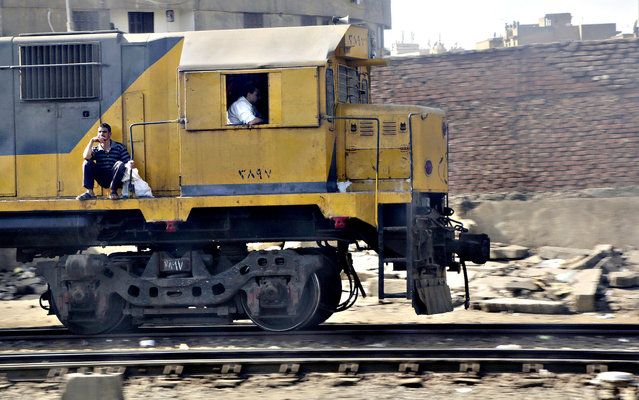
An Egyptian passenger sits on the locomotive of a train as it leaves Cairo train station in Egypt, Wednesday, October 14, 2015. (Photo by Amr Nabil/AP Photo)
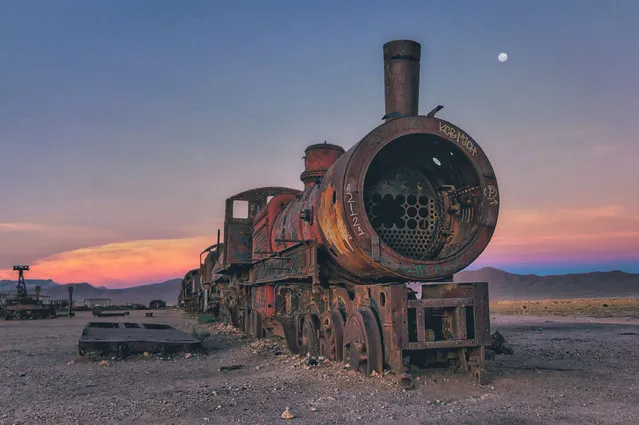
Chris Staring photographs a mysterious train graveyard in the heart of southern Bolivia, where the skeletons of British steam locomotives and rail cars rust away on the edge of the world’s largest salt flats. More than 100 rail cars and locomotives can be found in different states of decay in the train graveyard. (Photo by Chris Staring/Rex Features/Shutterstock)
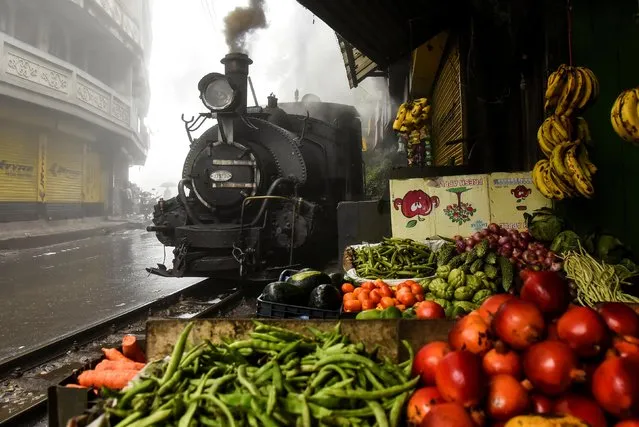
A Darjeeling Himalayan Railway steam train, which runs on a 2 foot gauge railway and is a UNESCO World Heritage Site, passes by a market in Ghum, India, June 27, 2019. (Photo by Ranita Roy/Reuters)
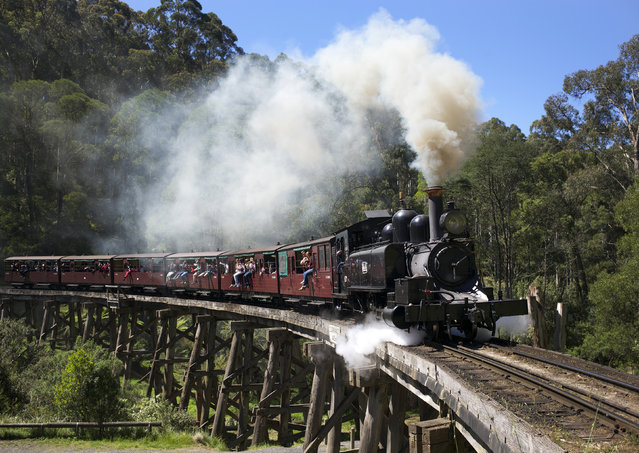
A Puffing Billy steam train hauled by locomotive 14A crosses the Monbulk Creek trestle after leaving Belgrave station near Melbourne, October 20, 2014. While the discovery of steam power 200 years ago powered the Industrial Revolution, the world long ago shunted most steam trains onto the sidings of history. (Photo by Jason Reed/Reuters)
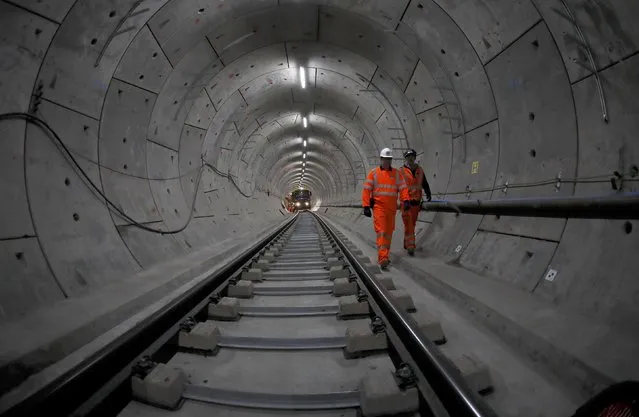
Workers lay railway track in a tunnel of the Crossrail project in Stepney, east London, Britain, November 16, 2016. Crossrail, which is Europe's largest construction project, is a railway link which will connect outlying areas to the east and west of London with tunnels under the centre of the capital. (Photo by Stefan Wermuth/Reuters)
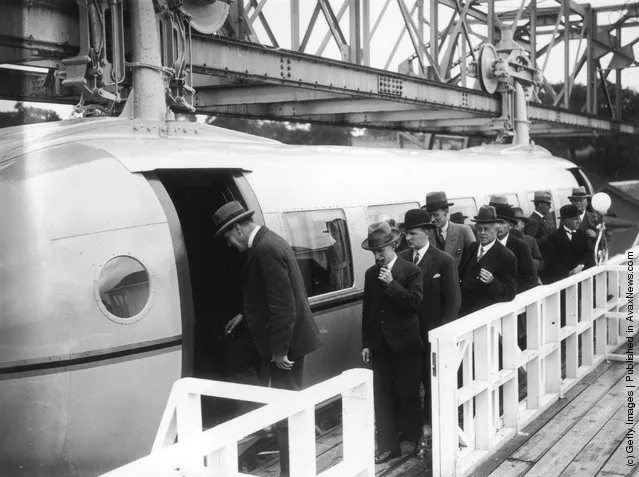
The first load of passengers queuing for the Bennie Railplane in Glasgow; the inventor George Bennie is third in the queue. The streamlined cars are self propelled, driven by air screws in front and behind, and hang from a steel girder. (Photo by J. A. Hampton/Topical Press Agency/Getty Images). 4th July 1930
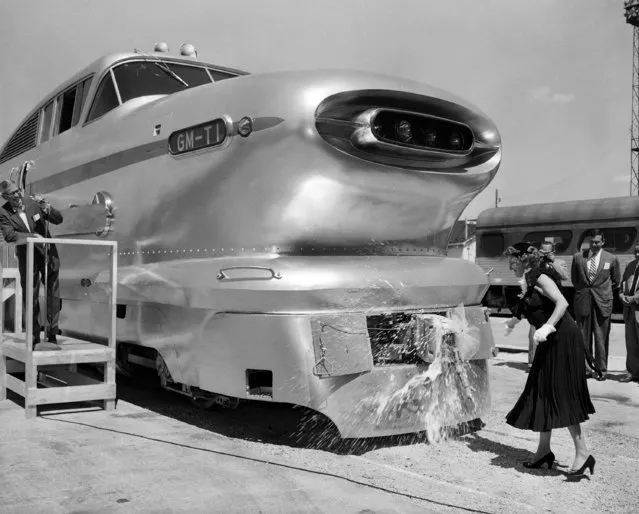
N.C. Dezendorf, wife of the general manager of the Electro-Motive division of General Motors, christens the new lightweight “Aerotrain” at the company's locomotive works in La Grange, Ill. on August 22, 1955. (Photo by Edward Kitch/AP Photo)
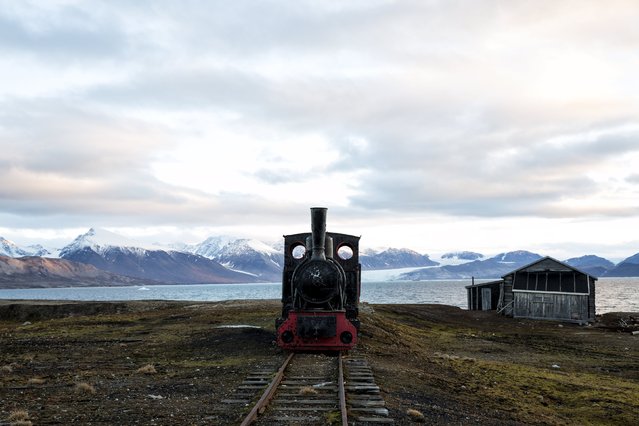
An old locomotive train that was used for transporting coal is preserved as a monument at Ny-Alesund, in Svalbard, Norway, October 11, 2015. A Norwegian chain of islands just 1,200 km (750 miles) from the North Pole is trying to promote new technologies, tourism and scientific research in a shift from high-polluting coal mining that has been a backbone of the remote economy for decades. (Photo by Anna Filipova/Reuters)