Loading...
Done
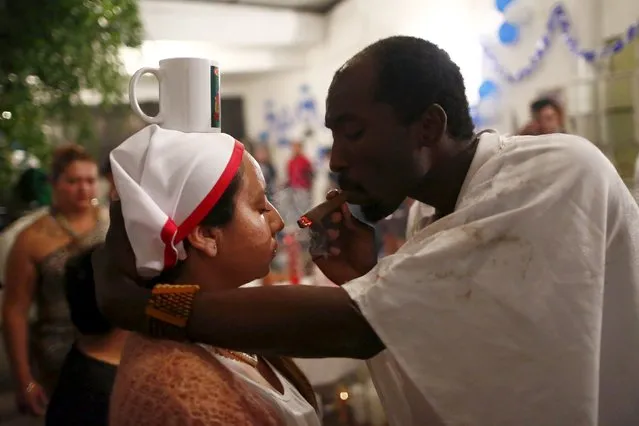
A voodoo priest smokes in the face of a woman as she holds a cup on her head during a voodoo ceremony in honor of Kouzen Zaka, also known as St. Isidro, in Mexico City, May 2, 2015. (Photo by Edgard Garrido/Reuters)

A voodoo priest smokes in the face of a woman as she holds a cup on her head during a voodoo ceremony in honor of Kouzen Zaka, also known as St. Isidro, in Mexico City, May 2, 2015. According to Haitain voodoo, Kouzen Zaka is the patron of work, whose patronage will help with employment and safeguard crops from robbers. (Photo by Edgard Garrido/Reuters)
Details
04 May 2015 09:38:00
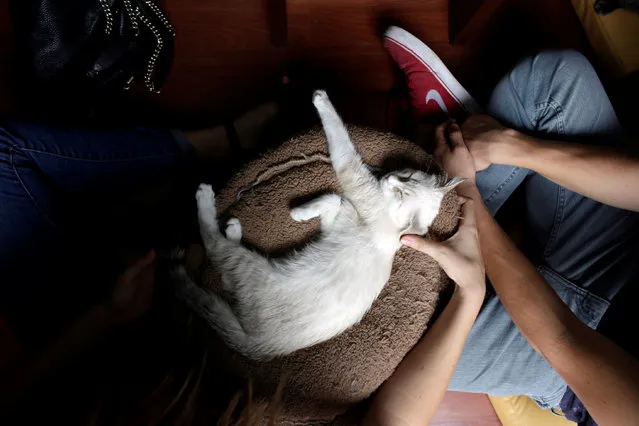
A cat sleeps between customers inside “Meow” cafe, where diners can play, interact or adopt cats given away by their former owners or rescued from the streets, in Monterrey, Mexico, May 14, 2016. (Photo by Daniel Becerril/Reuters)

A cat sleeps between customers inside “Meow” cafe, where diners can play, interact or adopt cats given away by their former owners or rescued from the streets, in Monterrey, Mexico, May 14, 2016. (Photo by Daniel Becerril/Reuters)
Details
16 May 2016 10:19:00
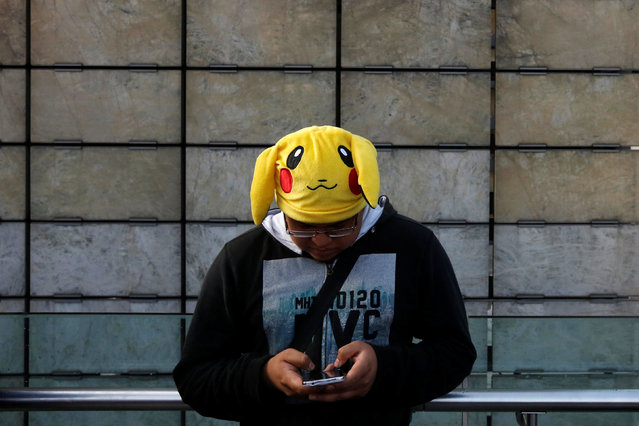
A man wearing a Pikachu hat, a character from Pokemon, plays Pokemon Go during a gathering to celebrate “Pokemon Day” in Mexico City, Mexico August 21, 2016. (Photo by Carlos Jasso/Reuters)

A man wearing a Pikachu hat, a character from Pokemon, plays Pokemon Go during a gathering to celebrate “Pokemon Day” in Mexico City, Mexico August 21, 2016. (Photo by Carlos Jasso/Reuters)
Details
22 Aug 2016 12:24:00
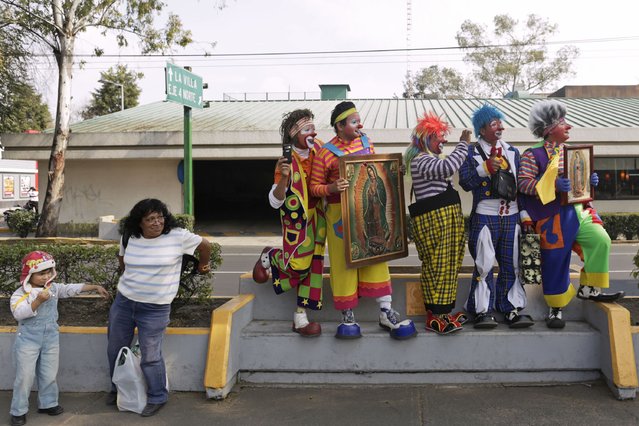
Clowns take part in the annual pilgrimage to the Basilica of Our Lady Guadalupe to pay homage to the Virgin of Guadalupe in Mexico City December 16, 2014. Dressed in colourful costumes, hundreds of clowns from all over Mexico walked towards the Basilica to give thanks to the virgin for the work they have received. (Photo by Carlos Jasso/Reuters)

Clowns take part in the annual pilgrimage to the Basilica of Our Lady Guadalupe to pay homage to the Virgin of Guadalupe in Mexico City December 16, 2014. Dressed in colourful costumes, hundreds of clowns from all over Mexico walked towards the Basilica to give thanks to the virgin for the work they have received. (Photo by Carlos Jasso/Reuters)
Details
18 Dec 2014 14:52:00
The Mexico–United States Wall

The Mexico – United States barrier – also known in the United States as the border fence, rotted fence or border wall – is actually several separation barriers designed to prevent illegal movement across the Mexico – United States border.
Details
13 May 2013 10:10:00
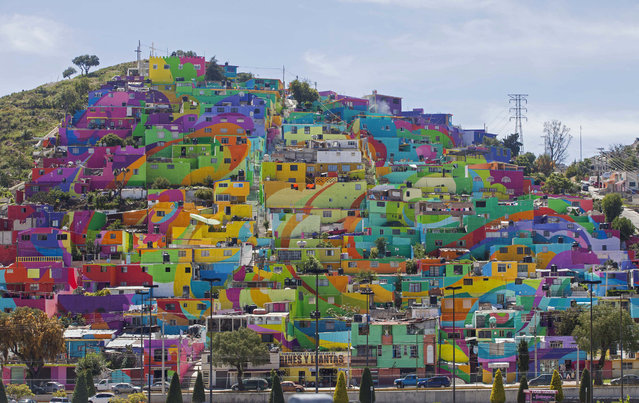
Hundreds of houses painted in bright colors in what organizers claim is Mexico's largest mural, is part of a government-sponsored project is called Pachuca Paints Itself, in the Palmitas neighborhood, in Pachuca, Mexico, Thursday, July 30, 2015. German Crew is the artist collective responsible for painting the mural project. Director Enrique Gomez, who goes by MYBE, said the crew has painted 1,500 square meters with 20,000 liters of paint. (Photo by Sofia Jaramillo/AP Photo)

Hundreds of houses painted in bright colors in what organizers claim is Mexico's largest mural, is part of a government-sponsored project is called Pachuca Paints Itself, in the Palmitas neighborhood, in Pachuca, Mexico, Thursday, July 30, 2015. German Crew is the artist collective responsible for painting the mural project. Director Enrique Gomez, who goes by MYBE, said the crew has painted 1,500 square meters with 20,000 liters of paint. Working hand-in-hand with residents, muralists have painted the facades of 200 homes bright lavender, lime green, incandescent orange – hues more commonly found in a bag of Skittles than in the drab, cement-and-cinderblock neighborhoods where many of Mexico's poor live. The project aims to bring the community together and rehabilitate the area. (Photo by Sofia Jaramillo/AP Photo)

Details
03 Aug 2015 12:02:00
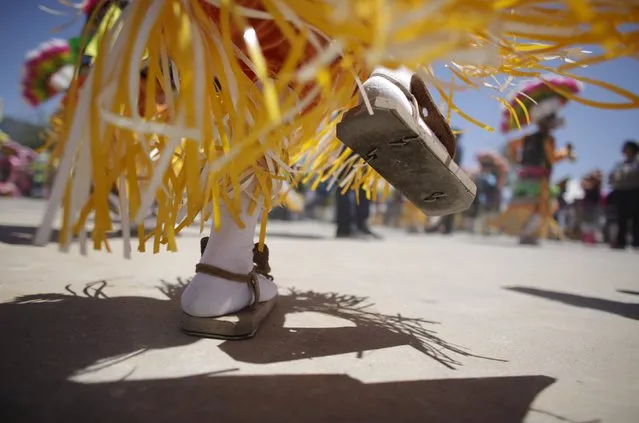
Matachines dancers participate in a religious festival in Saltillo, Mexico, April 17, 2016. Matachines dancing is a masked dance introduced by Spanish missionaries, and has been adopted by cultures from Peru to northern Mexico. It is performed to show respect to Mother Mary or the Guadalupe Virgin, a saint, or to simply worship God. (Photo by Daniel Becerril/Reuters)

Matachines dancers participate in a religious festival in Saltillo, Mexico, April 17, 2016. Matachines dancing is a masked dance introduced by Spanish missionaries, and has been adopted by cultures from Peru to northern Mexico. It is performed to show respect to Mother Mary or the Guadalupe Virgin, a saint, or to simply worship God. (Photo by Daniel Becerril/Reuters)
Details
19 Apr 2016 13:27:00
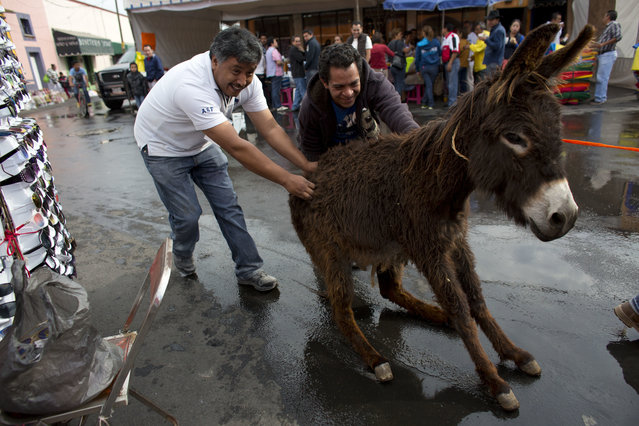
In this May 1, 2016 photo, a reluctant donkey is alternately pushed and pulled and enticed with carrots toward town hall in order to be dressed for the costume competition at the annual donkey festival in Otumba, Mexico state, Mexico. Otumba was an important donkey market during Spanish colonial times, standing at the crossroads of major roads leading to Mexico City, where the beasts pulled heavy loads and carried travelers. Today, however, farmers use tractors and pickup trucks, and the donkey population is in decline. (Photo by Rebecca Blackwell/AP Photo)

In this May 1, 2016 photo, a reluctant donkey is alternately pushed and pulled and enticed with carrots toward town hall in order to be dressed for the costume competition at the annual donkey festival in Otumba, Mexico state, Mexico. Otumba was an important donkey market during Spanish colonial times, standing at the crossroads of major roads leading to Mexico City, where the beasts pulled heavy loads and carried travelers. Today, however, farmers use tractors and pickup trucks, and the donkey population is in decline. (Photo by Rebecca Blackwell/AP Photo)
Details
04 May 2016 11:55:00