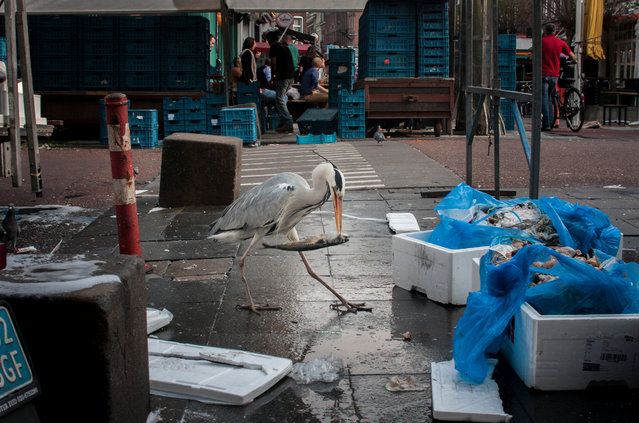
Over the years a large population of grey herons have made an unlikely home in urban Amsterdam. Julie Hrudova documents how the birds integrate into city life. Here: Hundreds of herons come to the city during winter to find food and shelter. (Photo by by Julie Hrudova/The Guardian)
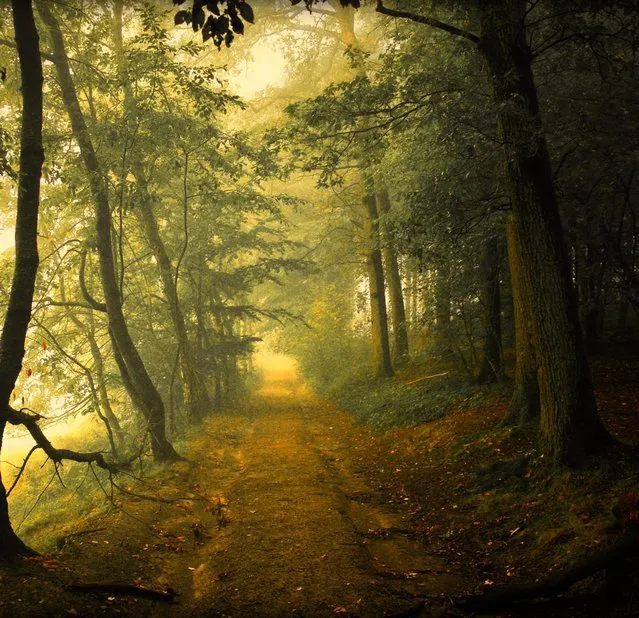
“Wer in der Natur, der Kunst oder dem Menschen Gott nicht finden kann, der findet ihn nirgendwo” (Who cannot find God in the nature, the art or the person, that nowhere finds him). Photo: Hunstiger Hohlweg. (Photo by Norbert)
Models showcase Valentine's Day underwear celebrating the results of a recent survey revealing that men find the lingerie, boxer shorts and vests, the biggest turn on ahead of February 14 Valentine celebrations, at Waterloo on February 2, 2006 in London, England. (Photo by Gareth Cattermole/Getty Images)
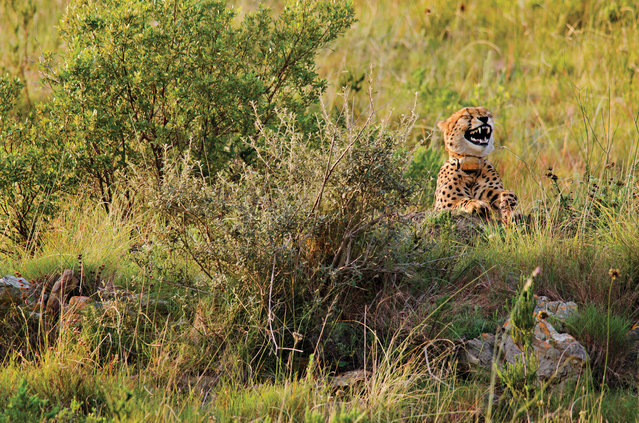
A comedic photo of a cheetah appearing to find something hilarious by Dutton Robert for the Comedy Wildlife Photo Awards 2016, South Africa, April, 2012. (Photo by Dutton Robert/Barcroft Images/Comedy Wildlife Photo Awards)
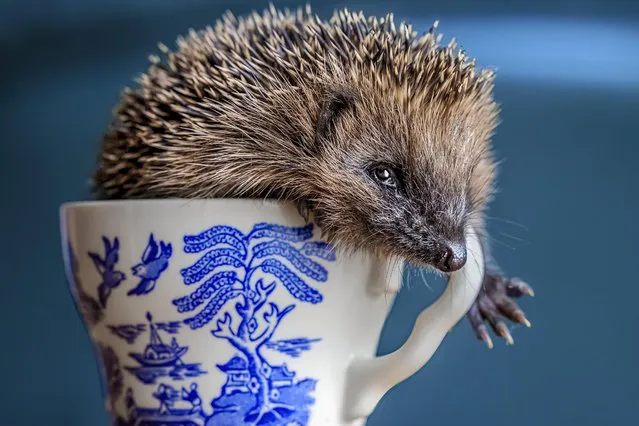
A two-week-old hoglet finds an unusual spot to sit at the Happy Hedgehogs rescue centre in Nidderdale, North Yorkshire in the second decade of September 2023. (Photo by James Glossop/The Times)
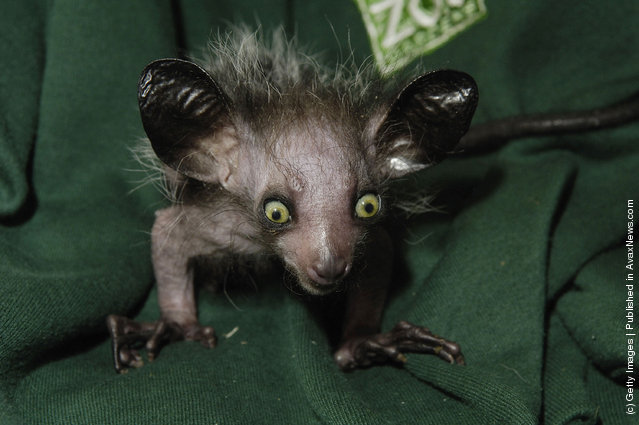
“The aye-aye (Daubentonia madagascariensis) is a lemur, a strepsirrhine primate native to Madagascar that combines rodent-like teeth and a special thin middle finger to fill the same ecological niche as a woodpecker. It is the world's largest nocturnal primate, and is characterized by its unusual method of finding food; it taps on trees to find grubs, then gnaws holes in the wood and inserts its narrow middle finger to pull the grubs out. The only other animal species known to find food in this way is the striped possum. From an ecological point of view the aye-aye fills the niche of a woodpecker as it is capable of penetrating wood to extract the invertebrates within”. – Wikipedia
Photo: In this handout image from Bristol Zoo is seen the first captive bred aye-aye in the UK named “Kintana” (meaning star in Malagasy) April 15, 2005 at Bristol Zoo Gardens, England. The zoo announced today only the second baby aye-aye to be hand-reared in the world (the first was in Jersey Zoo) and has now made his first public appearance since his birth on 11 February 2005. (Photo by Rob Cousins/Bristol Zoo via Getty Images)
Chloe Goodman attending the Fantastic Beasts and Where to Find Them European Premiere at Leicester Square, London. (Photo by Ian West/PA Images via Getty Images)