An Icelandic mare and her foal stand on a meadow at a stud farm in Wehrheim near Frankfurt, Germany, Tuesday, June 17, 2025. (Photo by Michael Probst/AP Photo)
New exhibition of sustainable fashion explores the role of tartan in Scottish traditional dance, opening on April 23, 2024 as part of the Pomegranates festival in Edinburgh, Scotland. Vengefully Changed Allegiance is asolo exhibition by fashion designer Alison Harm, founder of Edinburgh Psychomoda clothing brand, who uses industry scraps, vintage clot and broken jewellery. (Photo by Sally Anderson/Alamy Live News)
Graduating cadets throw their hats in the air in celebration during the commencement ceremony for graduates of the U.S. Air Force Academy in Colorado Springs, Colorado, U.S., May 30, 2024. (Photo by Kevin Mohatt/Reuters)
A young woman holds her smartphone at Red Square with the Kremlin's Spasskaya Tower, right, and St. Basil Cathedral, center, in the background in Moscow, Russia, Monday, July 25, 2016. (Photo by Pavel Golovkin/AP Photo)
American singer-songwriter Camila Cabello performs on the Other Stage during the Glastonbury Festival at Worthy Farm, in Pilton, Somerset, Britain, on June 29, 2024. (Photo by Dylan Martinez/Reuters)
Friends and family fuss over a quinceañera in preparation for her photo session at Colon square in the Zona Colonial neighborhood of Santo Domingo, Dominican Republic, Wednesday, May 15, 2024. Dominicans head to the polls on Sunday, May 19th to elect a new president and members of their Congress. (Photo by Matias Delacroix/AP Photo)
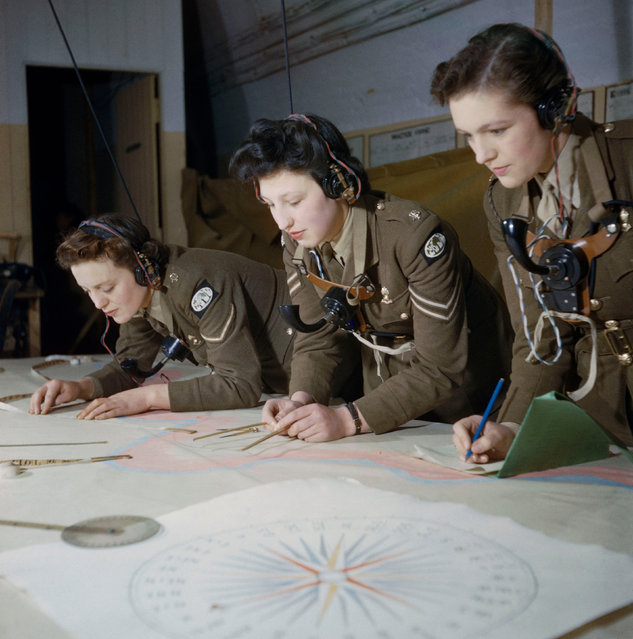
Auxiliary Territorial Service (ATS) plotters at work at Coastal Artillery Headquarters in Dover, December 1942. The Auxiliary Territorial Service was the women's branch of the British Army during the Second World War. It was formed on 9 September 1938, initially as a women's voluntary service, and existed until 1 February 1949, when it was merged into the Women's Royal Army Corps. The ATS had its roots in the Women's Auxiliary Army Corps (WAAC), which was formed in 1917 as a voluntary service. During the First World War its members served in a number of jobs including clerks, cooks, telephonists and waitresses. The WAAC was disbanded after four years in 1921. (Photo by Ted Dearberg/IWM/PA Wire)