Loading...
Done
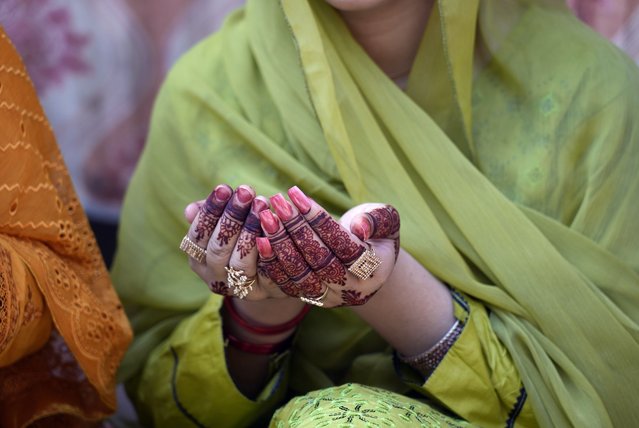
A woman has her hands painted with traditional henna as she attends Eid al-Adha prayers at historical Badshahi mosque in Lahore, Pakistan, Monday, June 17, 2024. Eid al-Adha or Feast of Sacrifice, the most important Islamic holiday, marks the willingness of the Prophet Ibrahim, Abraham to Christians and Jews, to sacrifice his son. During the holiday, which in most places lasts three days, Muslims slaughter goat, sheep or cattle, distribute part of the meat to the poor. (Photo by K.M. Chaudary/AP Photo)

A woman has her hands painted with traditional henna as she attends Eid al-Adha prayers at historical Badshahi mosque in Lahore, Pakistan, Monday, June 17, 2024. Eid al-Adha or Feast of Sacrifice, the most important Islamic holiday, marks the willingness of the Prophet Ibrahim, Abraham to Christians and Jews, to sacrifice his son. During the holiday, which in most places lasts three days, Muslims slaughter goat, sheep or cattle, distribute part of the meat to the poor. (Photo by K.M. Chaudary/AP Photo)
Details
06 Sep 2024 04:02:00
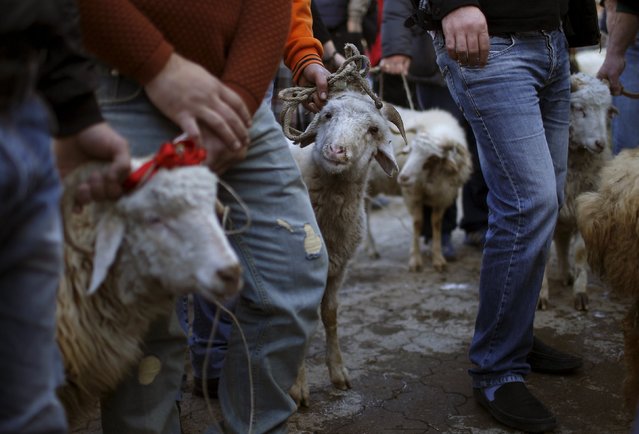
People stand with sheep for sacrifice outside a church during St. George's Day celebration in the village of Ikalto, Georgia, November 23, 2015. (Photo by David Mdzinarishvili/Reuters)

People stand with sheep for sacrifice outside a church during St. George's Day celebration in the village of Ikalto, Georgia, November 23, 2015. Georgia marks on Monday one of its most popular religious and public holidays. (Photo by David Mdzinarishvili/Reuters)
Details
25 Nov 2015 08:03:00
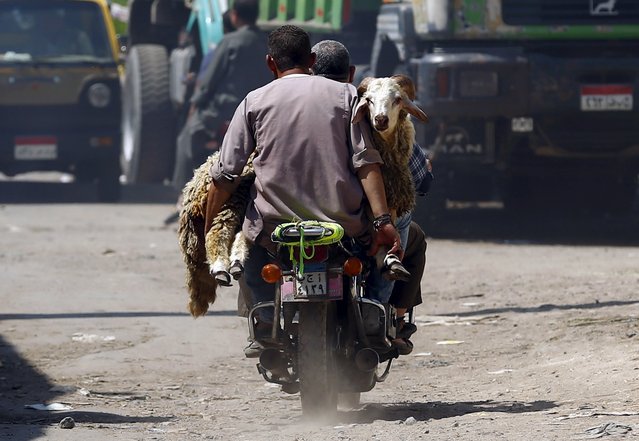
Men transport a sheep on their motorcycle after buying it at an old cattle market named “Al Emam Market” ahead of the Muslim festival Eid al-Adha in Cairo, Egypt, September 19, 2015. Muslims across the world are preparing to celebrate the annual festival of Eid al-Adha or the Festival of Sacrifice, which marks the end of the annual hajj pilgrimage, by slaughtering goats, sheep. (Photo by Amr Abdallah Dalsh/Reuters)

Men transport a sheep on their motorcycle after buying it at an old cattle market named “Al Emam Market” ahead of the Muslim festival Eid al-Adha in Cairo, Egypt, September 19, 2015. Muslims across the world are preparing to celebrate the annual festival of Eid al-Adha or the Festival of Sacrifice, which marks the end of the annual hajj pilgrimage, by slaughtering goats, sheep, cows and camels in commemoration of the Prophet Abraham's readiness to sacrifice his son to show obedience to Allah. (Photo by Amr Abdallah Dalsh/Reuters)
Details
22 Sep 2015 08:05:00
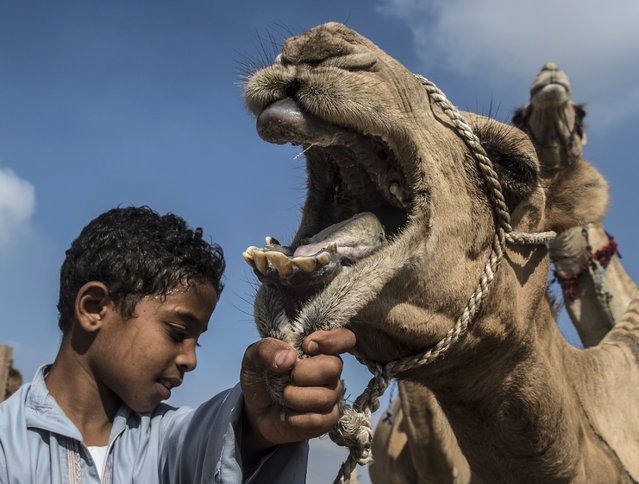
An Egyptian boy holds a camel at the Berqash camel market northeast of Cairo, on August 17, 2018. Muslims across the world are preparing for the Eid al-Adha holiday when custom requires the faithful to make a sacrifice. (Photo by Khaled Desouki/AFP Photo)

An Egyptian boy holds a camel at the Berqash camel market northeast of Cairo, on August 17, 2018. Muslims across the world are preparing for the Eid al-Adha holiday when custom requires the faithful to make a sacrifice. (Photo by Khaled Desouki/AFP Photo)
Details
21 Aug 2018 00:03:00
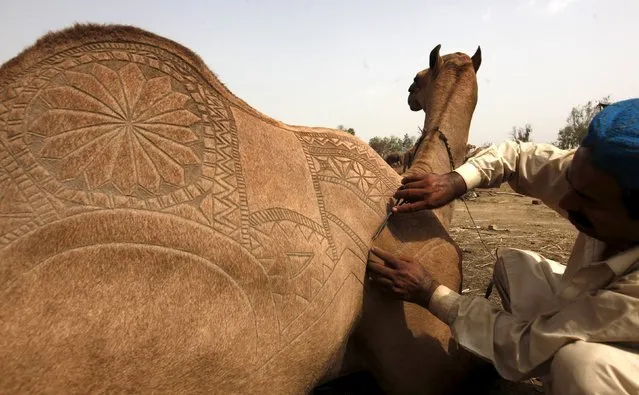
A sacrificial camel gets a haircut with patterns at the animal market on the outskirts of Karachi, Pakistan September 22, 2015. (Photo by Akhtar Soomro/Reuters)

A sacrificial camel gets a haircut with patterns at the animal market on the outskirts of Karachi, Pakistan September 22, 2015. Muslims across the world are preparing to celebrate the annual festival of Eid al-Adha or the Feast of the Sacrifice, which marks the end of the annual haj pilgrimage, by slaughtering goats, sheep, cows and camels in commemoration of the Prophet Abraham's readiness to sacrifice his son to show obedience to Allah. Eid al-Adha in India falls on September 25. (Photo by Akhtar Soomro/Reuters)
Details
24 Sep 2015 08:05:00
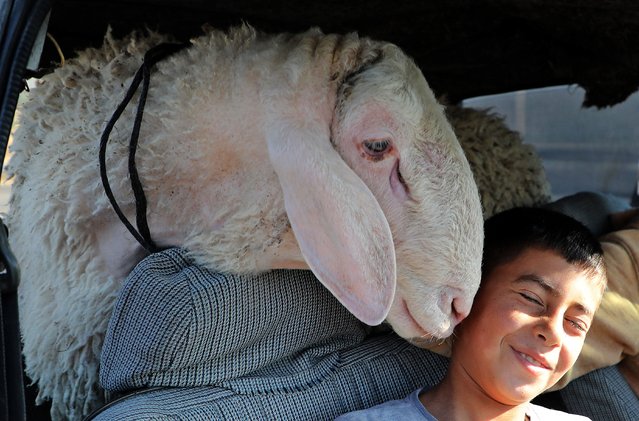
A Palestinian boy reacts to a sheep at a livestock market ahead of the Eid al-Adha (feast of sacrifice) in Hebron in the occupied West Bank on July 16, 2021. Known as the “big” festival, Eid Al-Adha is celebrated each year by Muslims sacrificing various animals according to religious traditions. (Photo by Mosab Shawer/AFP Photo)

A Palestinian boy reacts to a sheep at a livestock market ahead of the Eid al-Adha (feast of sacrifice) in Hebron in the occupied West Bank on July 16, 2021. Known as the “big” festival, Eid Al-Adha is celebrated each year by Muslims sacrificing various animals according to religious traditions. (Photo by Mosab Shawer/AFP Photo)
Details
29 Jul 2021 09:51:00
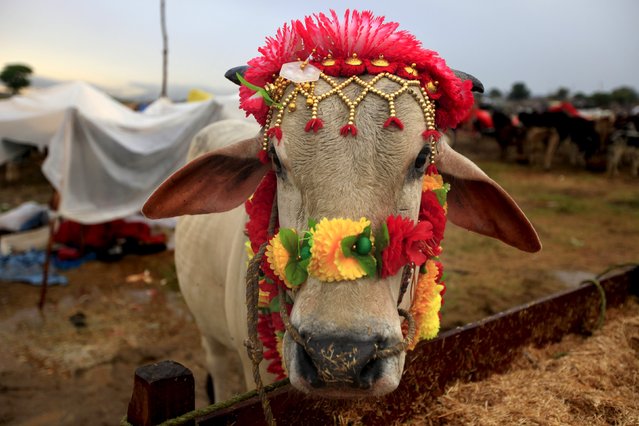
A sacrificial bull decorated for sale stands at its feed trough at the animal market on the outskirts of Islamabad, Pakistan, September 22, 2015. (Photo by Faisal Mahmood/Reuters)

A sacrificial bull decorated for sale stands at its feed trough at the animal market on the outskirts of Islamabad, Pakistan, September 22, 2015. Muslims across the world are preparing to celebrate the annual festival of Eid al-Adha or the Feast of the Sacrifice, which marks the end of the annual haj pilgrimage, by slaughtering goats, sheep, cows and camels in commemoration of the Prophet Abraham's readiness to sacrifice his son to show obedience to Allah. (Photo by Faisal Mahmood/Reuters)
Details
25 Sep 2015 08:04:00
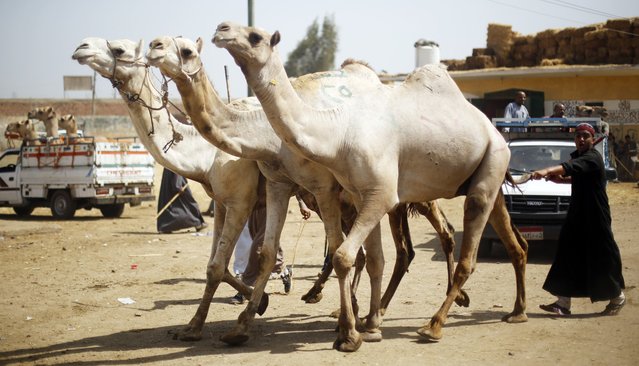
A man walks behind camels at the Birqash Camel Market, ahead of Eid al-Adha or Festival of Sacrifice, on the outskirts of Cairo September 29, 2014. (Photo by Amr Abdallah Dalsh/Reuters)

A man walks behind camels at the Birqash Camel Market, ahead of Eid al-Adha or Festival of Sacrifice, on the outskirts of Cairo September 29, 2014. Birqash Camel Market, one of the biggest markets for camel meat in Africa, draws sellers from Libya, Sudan, Somalia and other regions in Egypt. The camels sold at the market are also used in tourism. Traders say that the selling rate for a camel in 2014 is anywhere between 5,000 and 20,000 Egyptian pounds (700 – 2800 USD). (Photo by Amr Abdallah Dalsh/Reuters)
Details
02 Oct 2014 10:20:00