NATO and U.S. flags flutter as U.S. Air Force F-22 Raptor fighter flies over the military air base in Siauliai, Lithuania, April 27, 2016. (Photo by Ints Kalnins/Reuters)
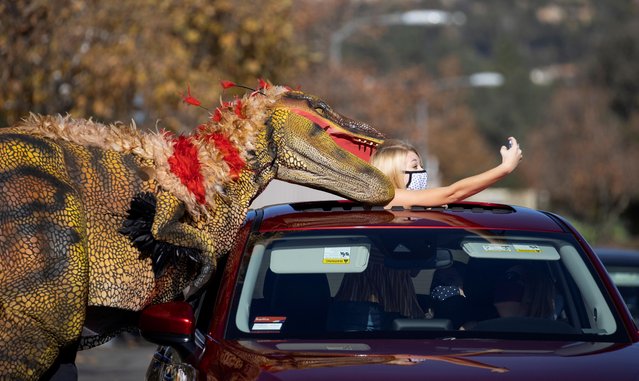
Samantha Bailey takes a selfie with a staff member dressed like a raptor at the Jurassic Quest drive-thru Experience outside The Rose Bowl Stadium during the outbreak of the coronavirus disease (COVID-19), in Pasadena, California, U.S., January 15, 2021. (Photo by Mario Anzuoni/Reuters)
A pilot looks up from a U.S. F-22 Raptor fighter as it prepares to refuel in mid-air with a KC-135 refuelling plane over European airspace during a flight to Britain from Mihail Kogalniceanu air base in Romania April 25, 2016. (Photo by Toby Melville/Reuters)
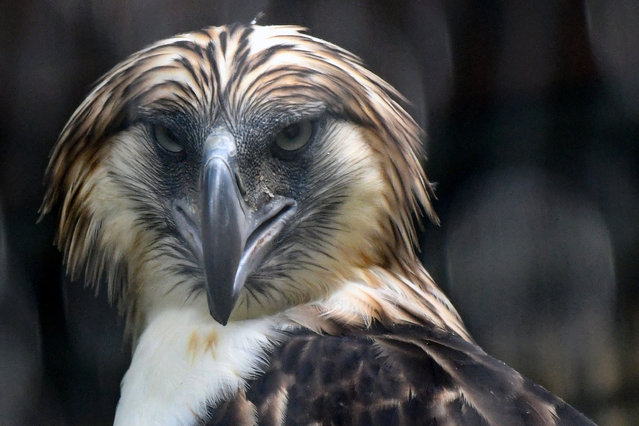
A male Philippine eagle named Geothermica is seen in an exclosure at Jurong Bird Park in Singapore on November 27, 2019. Singapore unveiled two Philippine eagles at its main aviary November 27, the first breeding pair of the critically endangered raptors to be brought outside their native country as part of a conservation plan. (Photo by Roslan Rahman/AFP Photo)
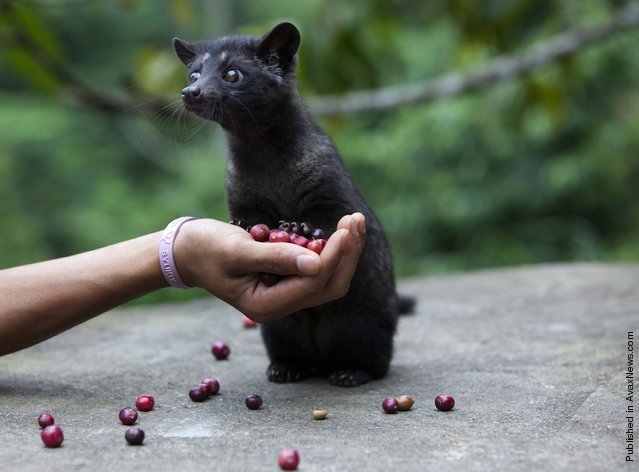
“Kopi luwak (Malay pronunciation), or civet coffee, is one of the world's most expensive and low-production coffee. It is made from the beans of coffee berries which have been eaten by the Asian Palm Civet (Paradoxurus hermaphroditus) and other related civets, then passed through its digestive tract. ...
U.S. Air Force Major Paul “Loco” Lopez performs in an F-22 Raptor during the AirPower Over Hampton Roads JBLE Air and Space Expo at Joint Base Langley-Eustis, Virginia, U.S. May 18, 2018. (Photo by U.S. Air Force/Staff Sgt. Areca T. Bell/Handout via Reuters)
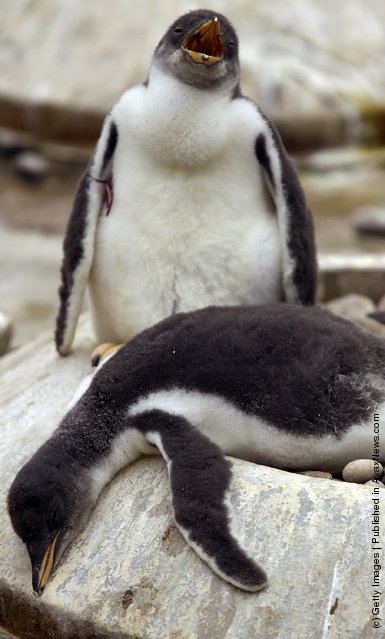
Adult gentoo penguins keep an eye on their newly born chick at Edinburgh Zoo on June 10, 2011 in Edinburgh, Scotland. The gentoo chicks which started hatching in early May are looked after by both parents who regurgitate part digested food. When the chicks are hungry they peck the beaks of their parents to signal feeding time. (Photo by Jeff J Mitchell/Getty Images)
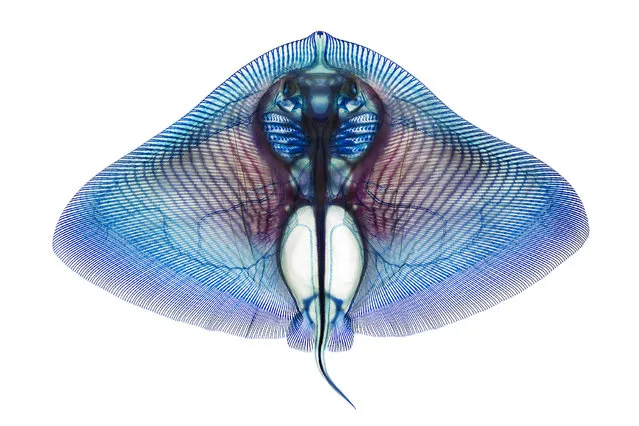
The photographs feature fish that have been specially treated to make the stained skeletal tissues visible through the skin and flesh. The technique, developed by Dr. Adam Summers, uses dyes, hydrogen peroxide, a digestive enzyme and glycerin to make the flesh seem to disappear. Photo: This image of the butterfly ray (Gymnura crebripunctata) helped scientists study the joints in its wings. (Photo by Adam Summers)