Loading...
Done
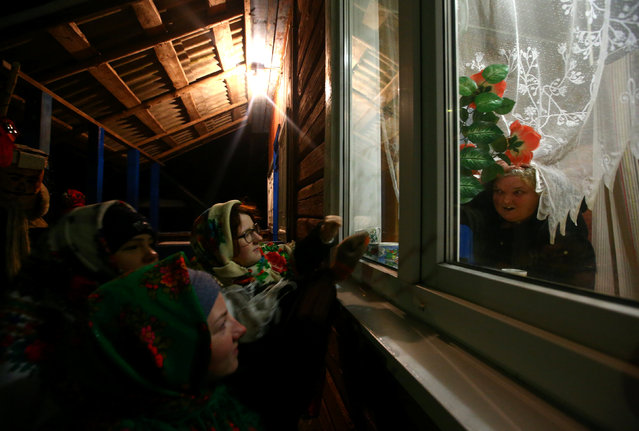
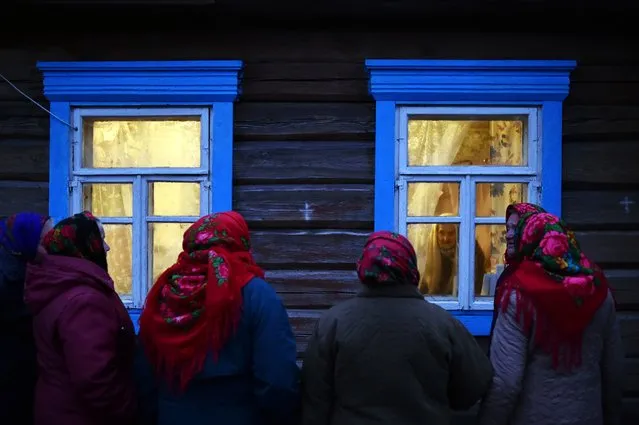
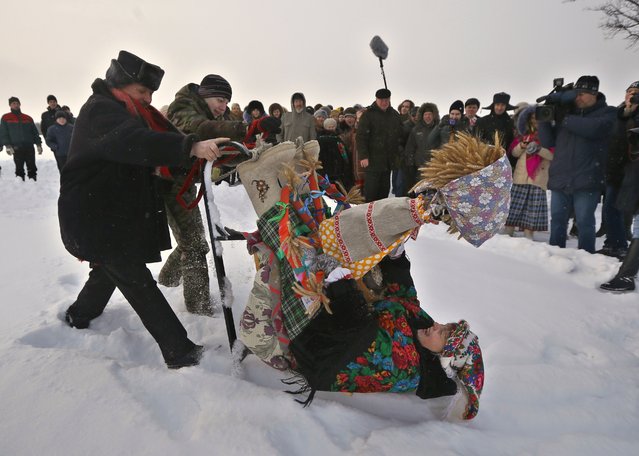
People celebrate the pagan rite called “Kolyadki” and mark the New Year, according to the Julian calendar on January 13, in the village of Vosava, Belarus January 13, 2017. (Photo by Vasily Fedosenko/Reuters)

People celebrate the pagan rite called “Kolyadki” and mark the New Year, according to the Julian calendar on January 13, in the village of Vosava, Belarus January 13, 2017. (Photo by Vasily Fedosenko/Reuters)
Details
15 Jan 2017 10:23:00
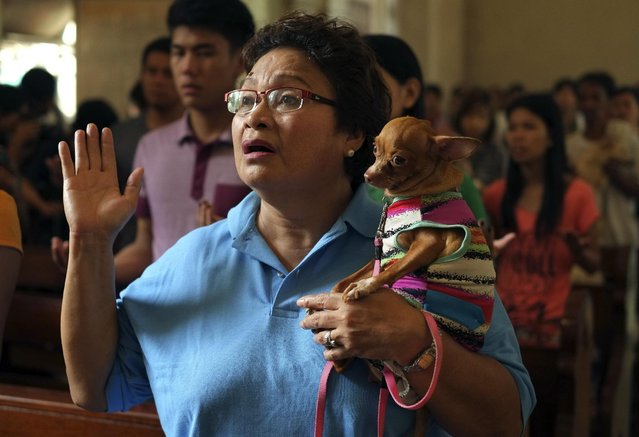
A Filipino pet owner carries her dog as she prays before the animal blessing rites at the Our Lady of Remedies Parish Church in Malate district, Manila, Philippines on Sunday, October 5, 2014. (Photo by Aaron Favila/AP Photo)

A Filipino pet owner carries her dog as she prays before the animal blessing rites at the Our Lady of Remedies Parish Church in Malate district, Manila, Philippines on Sunday, October 5, 2014. Several Filipinos brought their pets to be blessed during the annual event which is also done to celebrate the feast day of St. Francis of Assisi, the patron saint of animals and ecology. (Photo by Aaron Favila/AP Photo)
Details
05 Oct 2014 11:32:00
Belarusians wearing national costumes celebrate a Pull the Kolyada Up the Oak rite in the village of Martsiyanauka, some 77 km (48 miles) east of capital Minsk, Belarus, Thursday, January 21, 2016. (Photo by Sergei Grits/AP Photo)

Belarusians wearing national costumes celebrate a Pull the Kolyada Up the Oak rite in the village of Martsiyanauka, some 77 km (48 miles) east of capital Minsk, Belarus, Thursday, January 21, 2016. The merry ancient rite Pull the Kolyada Up the Oak marks the end of Orthodox Christmas celebrations in Belarus. On Jan. 21 a wheel, the so-called Kolyada, would be pulled up an oak or any old tree. The Belarusians believed that the ritual heralds a good harvest, luck and happiness for the entire year. (Photo by Sergei Grits/AP Photo)

Details
22 Jan 2016 10:13:00
Belarusian villagers celebrate the Christmas carol rite (Kalyady) in the village of Danilevichy, some 320 km south of Minsk on January 7, 2020. Kalyady is an ancient pagan holiday originally celebrated on winter solstice. Dressed-up people walk from house to house singing, dancing, eating and drinking with their neighbours. (Photo by Sergei Gapon/AFP Photo)

Belarusian villagers celebrate the Christmas carol rite (Kalyady) in the village of Danilevichy, some 320 km south of Minsk on January 7, 2020. Kalyady is an ancient pagan holiday originally celebrated on winter solstice. Dressed-up people walk from house to house singing, dancing, eating and drinking with their neighbours. (Photo by Sergei Gapon/AFP Photo)
Details
25 Mar 2020 00:01:00
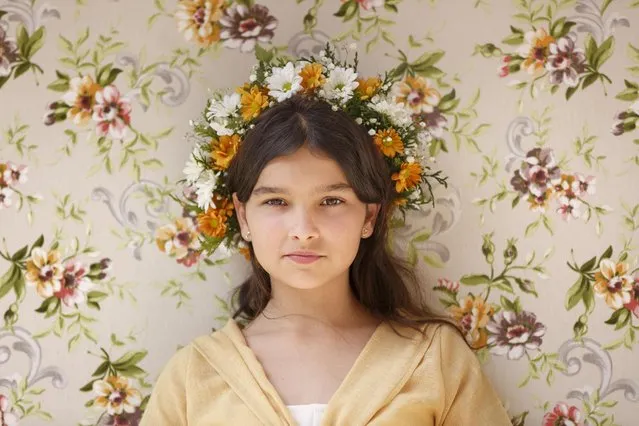
A “Maya” girl sits in an altar during the traditional celebration of “Las Mayas” on the streets in Madrid, Spain Sunday, May 10, 2015. The festivity of the Maya comes from pagan rites and dates from the medieval age, appearing in ancient documents. It takes place every year in the beginning of May and celebrates the beginning of the spring. (Photo by Daniel Ochoa de Olza/AP Photo)

A “Maya” girl sits in an altar during the traditional celebration of “Las Mayas” on the streets in Madrid, Spain Sunday, May 10, 2015. The festivity of the Maya comes from pagan rites and dates from the medieval age, appearing in ancient documents. It takes place every year in the beginning of May and celebrates the beginning of the spring. Girls between 7 and 11 years old are chosen as “Maya” and should sit still, serious and quiet for a couple of hours in altars on the street decorated with flowers and plants and afterwards they walk to the church with their family where they attend a ceremony. (Photo by Daniel Ochoa de Olza/AP Photo)
Details
14 May 2015 11:12:00
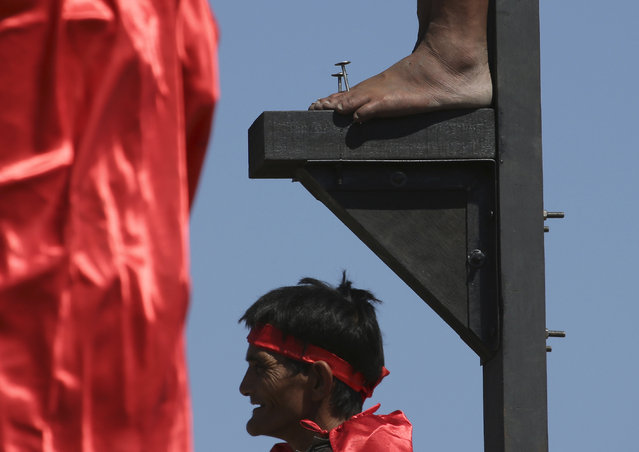
The feet of a Filipino penitent is nailed to a wooden cross during Good Friday rituals on April 3, 2015 at Cutud, Pampanga province, northern Philippines. Several Filipino devotees had themselves nailed to crosses Friday to remember Jesus Christ's suffering and death, an annual rite frowned upon by church leaders in this predominantly Roman Catholic country. (Photo by Aaron Favila/AP Photo)

The feet of a Filipino penitent is nailed to a wooden cross during Good Friday rituals on April 3, 2015 at Cutud, Pampanga province, northern Philippines. Several Filipino devotees had themselves nailed to crosses Friday to remember Jesus Christ's suffering and death, an annual rite frowned upon by church leaders in this predominantly Roman Catholic country. (Photo by Aaron Favila/AP Photo)
Details
05 Apr 2015 11:14:00
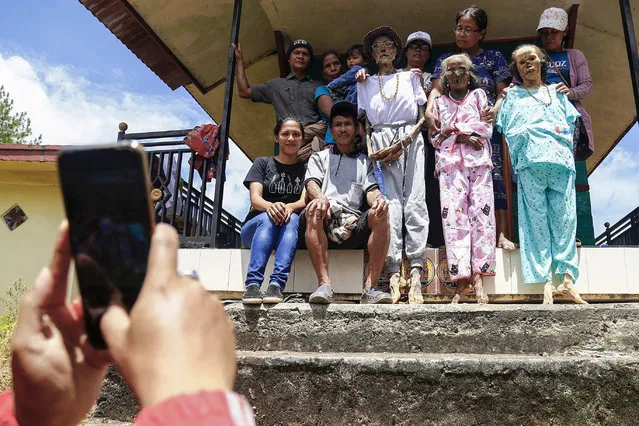
Family members perform the Manene traditional rite, cleaning the relatives' preserved remains, in Lembang on August 15, 2022, which is held every three years in August and is said to bless the harvest of rice fields. (Photo by Andri Saputra/AFP Photo)

Family members perform the Manene traditional rite, cleaning the relatives' preserved remains, in Lembang on August 15, 2022, which is held every three years in August and is said to bless the harvest of rice fields. (Photo by Andri Saputra/AFP Photo)
Details
19 Aug 2022 04:49:00
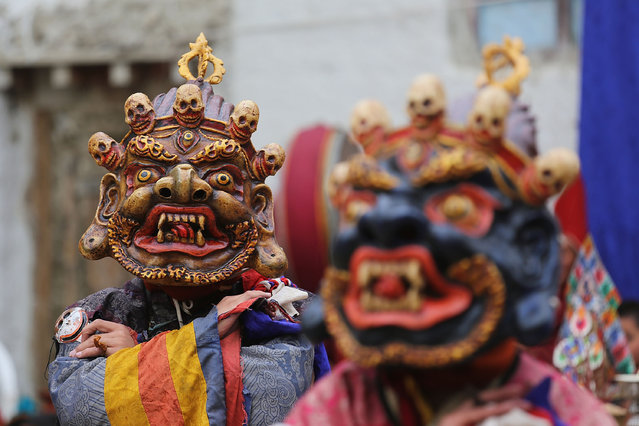
Elaborately dressed monks costumed as wrathful guardian spirits perform ceremonial dances during the Tenchi Festival on May 25, 2014 in Lo Manthang, Nepal. The Tenchi Festival takes place annually in Lo Manthang, the capital of Upper Mustang and the former Tibetan Kingdom of Lo. Each spring, monks perform ceremonies, rites, and dances during the Tenchi Festival to dispel evils and demons from the former kingdom. (Photo by Taylor Weidman/Getty Images)

Elaborately dressed monks costumed as wrathful guardian spirits perform ceremonial dances during the Tenchi Festival on May 25, 2014 in Lo Manthang, Nepal. The Tenchi Festival takes place annually in Lo Manthang, the capital of Upper Mustang and the former Tibetan Kingdom of Lo. Each spring, monks perform ceremonies, rites, and dances during the Tenchi Festival to dispel evils and demons from the former kingdom. (Photo by Taylor Weidman/Getty Images)
Details
04 Jul 2014 10:36:00