Loading...
Done
Salt

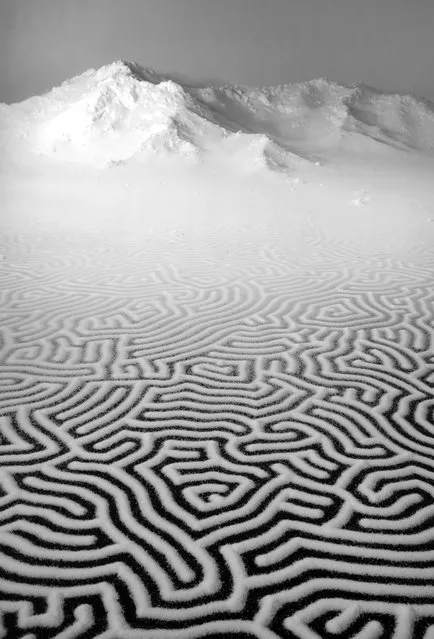
Motoi Yamamoto is an incredibly patient man. His intricate salt labyrinths can take weeks to create and require a slow, steady hand, not to mention a tremendous amount of salt. The result is a beautifully detailed, if impermanent, exhibition.
Details
13 Jul 2012 10:21:00
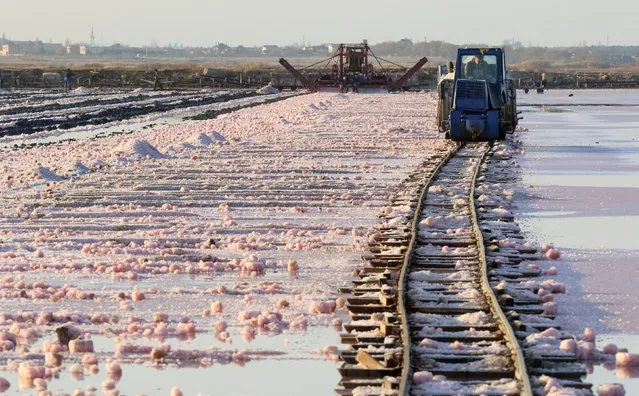
A train drives along a field at a salt production site at the Sasyk-Sivash lake near the city of Yevpatoria, Crimea, November 14, 2017. (Photo by Pavel Rebrov/Reuters)

A train drives along a field at a salt production site at the Sasyk-Sivash lake near the city of Yevpatoria, Crimea, November 14, 2017. A saltwater lagoon known as Lake Sasyk-Sivash on Ukraine's Crimea peninsula is the source of a rare resource: pink salt. The mineral is tinted by tiny algae that produce the pigment beta-carotene. Each autumn, seasonal workers collect thousands of tons of pink salt for processing and export. (Photo by Pavel Rebrov/Reuters)
Details
16 Nov 2017 08:18:00
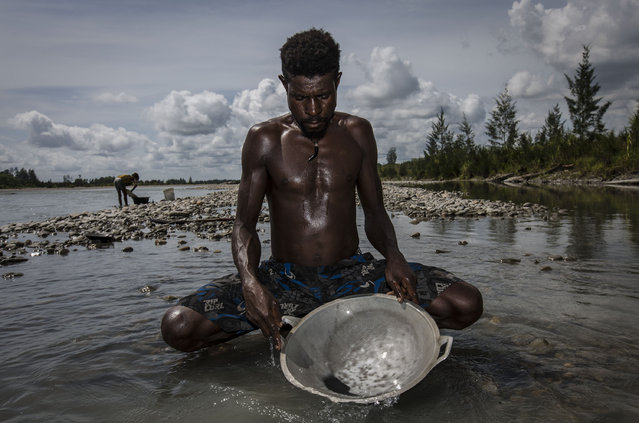
A illegal gold miner of Kamoro people, Tinus, pan for gold on February 4, 2017 in Timika, Papua Province, Indonesia. (Photo by Ulet Ifansasti/Getty Images)

A illegal gold miner of Kamoro people, Tinus, pan for gold on February 4, 2017 in Timika, Papua Province, Indonesia. Indonesia produces over 70 billion dollars in gold a year and is home to the largest gold mine and the third largest copper mine in the world, the Grasberg mine, which is located at West Papua. (Photo by Ulet Ifansasti/Getty Images)
Details
09 Feb 2017 00:05:00
Coal Mining In India's Jharia

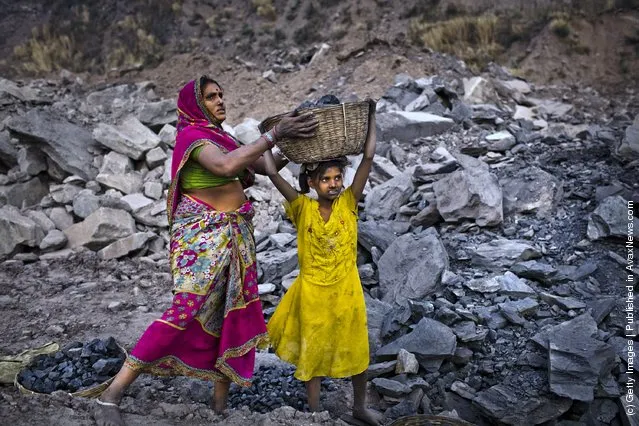
7 year old Soni has a basket of coal lifted onto her head by her mother, 28 year old Savita, after having scavenged coal illegally from an open-cast coal mine in the village of Bokapahari on February 08, 2012 near to Jharia, India. (Photo by Daniel Berehulak /Getty Images)
Details
15 Feb 2012 11:06:00
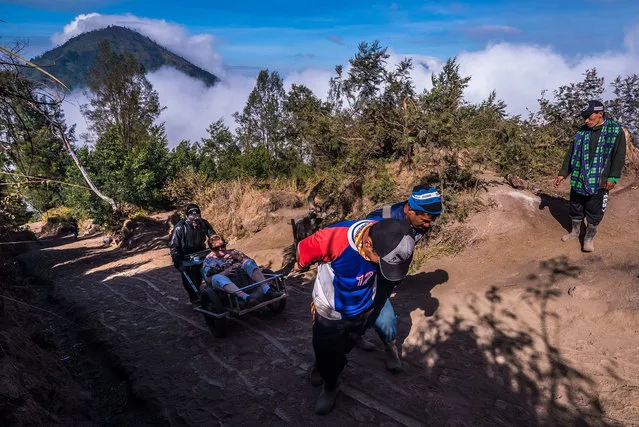
Miners pulling up lazy tourists to the rim of Kawah Ijen (Ijen Volcano), East Java, Indonesia on September 21, 2017. They will earn as much as they would bring down a load of sulfur. Nomadic Explorer, Cultural Lifestyle Photographer Claudio Sieber captured striking images of miners working at Ijen volcanic range in East Java, Indonesia. The sulphur miners risk their lives daily as they climb the active volcano carrying heavy loads, which they sell to sugar refineries. Shortly after midnight curious tourists are flocking in hundreds through the gate of Ijen's foothills to be right on time, driven by the images others took before them. Kawah Ijen is the one of the world's largest acidic volcanic crater lake; famous for its turquoise color as well as the unreal atmosphere it offers during darkness. A dusty path zigzags 3 kilometers up to the crater rim. This doesn't mean anything challenging; in particular, special sights have to be deserved anyway. The irritating smell of sulfur announces the near of the crater's existence. Arriving on the crater's rim the reward for the torture becomes visible. Blue fire darts its tongues through the fumes of sulfur dioxide. Somehow, the spectacle isn't as romantic as expected, since it is also the rough working space of approx. 150 sulfur miners who start their shift at 1 am. Lately, harvesting the abundance of devil's gold received international attention. This did obviously not really improve a miner's lifestyle; neither did it contribute to a better wage. (Photo by Claudio Sieber/Barcroft Images)

Miners pulling up lazy tourists to the rim of Kawah Ijen (Ijen Volcano), East Java, Indonesia on September 21, 2017. They will earn as much as they would bring down a load of sulfur. Nomadic Explorer, Cultural Lifestyle Photographer Claudio Sieber captured striking images of miners working at Ijen volcanic range in East Java, Indonesia. The sulphur miners risk their lives daily as they climb the active volcano carrying heavy loads, which they sell to sugar refineries. (Photo by Claudio Sieber/Barcroft Images)
Details
02 Oct 2017 08:31:00
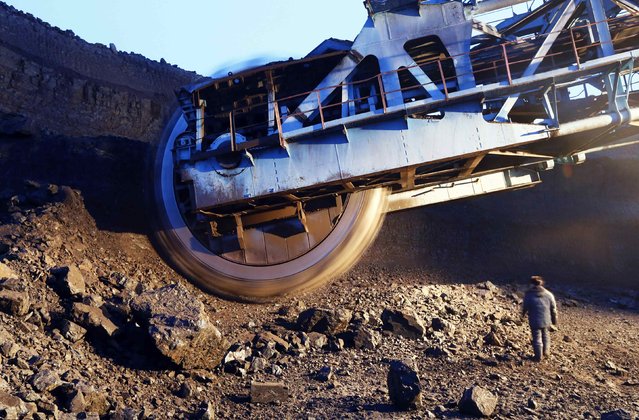
An employee walks near a rotary dredge which works on the coal face of the Borodinsky opencast colliery, near the Siberian town of Borodino, east of Krasnoyarsk, December 9, 2014. The Borodinsky colliery, 9 km (5.6 miles) long and more than 100 meters (328 feet) deep, annually produces more than 20 million tons of coal and is considered to be the biggest opencast coal mine in Russia, according to official representatives. (Photo by Ilya Naymushin/Reuters)

An employee walks near a rotary dredge which works on the coal face of the Borodinsky opencast colliery, near the Siberian town of Borodino, east of Krasnoyarsk, December 9, 2014. The Borodinsky colliery, 9 km (5.6 miles) long and more than 100 meters (328 feet) deep, annually produces more than 20 million tons of coal and is considered to be the biggest opencast coal mine in Russia, according to official representatives. (Photo by Ilya Naymushin/Reuters)
Details
11 Dec 2014 13:29:00
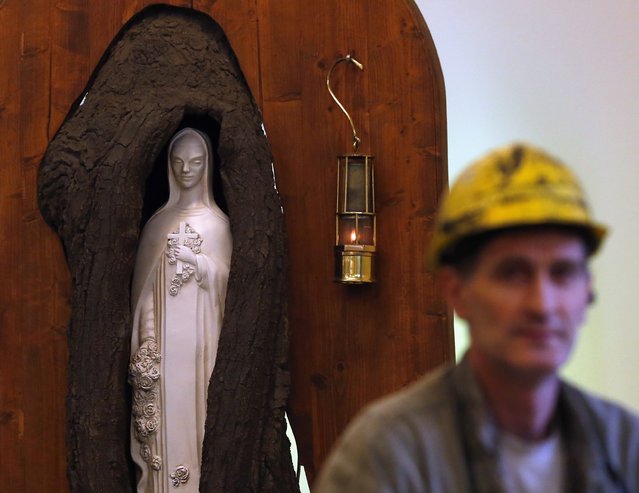
A miner sits front of the statue of St. Barbara, saint of the miners, during last working day at Hungary's last hard coal deep-cast mine at Markushegy December 23, 2014.The underground mine, west of the capital city Budapest, has to stop producing coal at the end of this year in line with a European Union effort to shut down uncompetitive hard coal mines. (Photo by Laszlo Balogh/Reuters)

A miner sits front of the statue of St. Barbara, saint of the miners, during last working day at Hungary's last hard coal deep-cast mine at Markushegy December 23, 2014.The underground mine, west of the capital city Budapest, has to stop producing coal at the end of this year in line with a European Union effort to shut down uncompetitive hard coal mines. (Photo by Laszlo Balogh/Reuters)
Details
24 Dec 2014 13:36:00
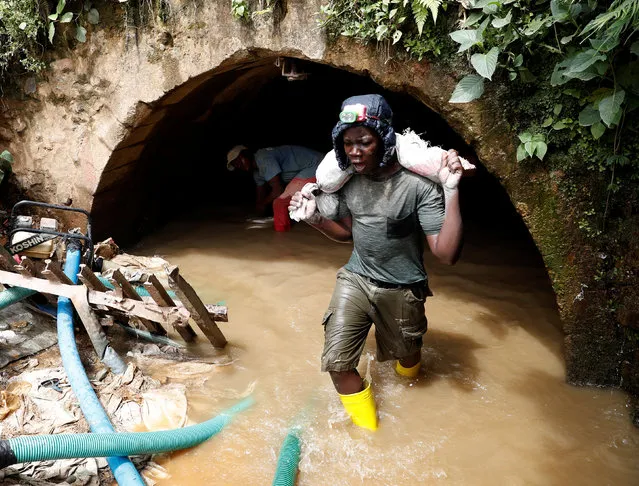
Men work at Makala gold mine camp near the town of Mongbwalu in Ituri province, eastern Democratic Republic of Congo on April 7, 2018. (Photo by Goran Tomasevic/Reuters)

Men work at Makala gold mine camp near the town of Mongbwalu in Ituri province, eastern Democratic Republic of Congo on April 7, 2018. (Photo by Goran Tomasevic/Reuters)
Details
13 Apr 2018 00:05:00