Loading...
Done
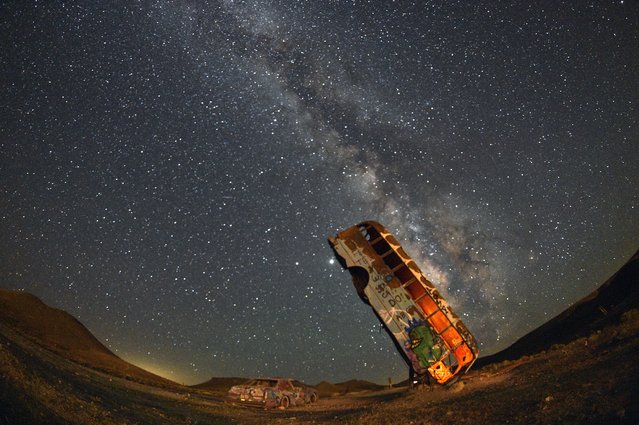
The Milky Way galaxy is seen in the sky above the International Car Forest of the Last Church in Goldfield, Nevada on July 18, 2020. The roadside attraction, created in 2002 by Mark Rippie, has over 36 automobiles including cars, trucks, vans and buses that have been balanced on their ends or stacked on top one of another. (Photo by David Becker/AFP Photo)

The Milky Way galaxy is seen in the sky above the International Car Forest of the Last Church in Goldfield, Nevada on July 18, 2020. The roadside attraction, created in 2002 by Mark Rippie, has over 36 automobiles including cars, trucks, vans and buses that have been balanced on their ends or stacked on top one of another. (Photo by David Becker/AFP Photo)
Details
20 Aug 2020 00:03:00
Star Wars Photographs By Mike Stimpson

Mike Stimpson a.k.a Balakov is in love with Star Wars, LEGO and photography. After a first series we published “A long time ago in a galaxy far, far away…” Here is a new selection of his photographs of LEGO Star Wars minifigs characters in their everyday life… If you like, I also recommend the series “LEGO Star Wars photography by Storm TK431” and “The secret life of Star Wars toys”
Details
16 Apr 2014 14:50:00
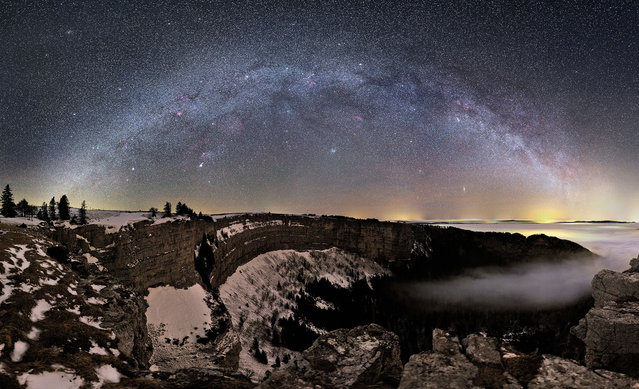
Milky Way over Switzerland

Milky Way over Switzerland

The Milky Way is the galaxy in which Earth is contained. This name derives from its appearance as a dim “milky” glowing band arching across the night sky, in which the naked eye cannot distinguish individual stars. The term “Milky Way” is a translation of the Classical Latin via lactea, from the Hellenistic Greek γαλαξίας κύκλος (pr. galaxías kýklos, “milky circle”). The Milky Way appears like a band because it is a disk-shaped structure being viewed from inside. The fact that this faint band of light is made up of stars was proven in 1610 when Galileo Galilei used his telescope to resolve it into individual stars. In the 1920s, observations by astronomer Edwin Hubble showed that the Milky Way is just one of many galaxies.


Details
20 Jun 2012 10:11:00
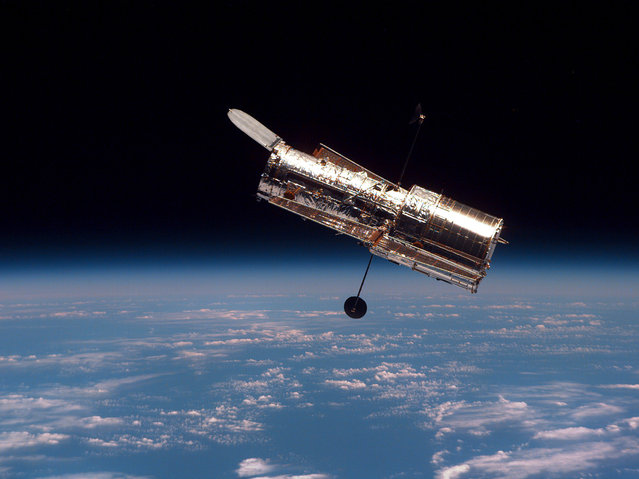
The Hubble Space Telescope is shown following its release from the space shuttle Discovery Wednesday, February 19, 1997. The Hubble Space Telescope, one of NASA'S crowning glories, marks its 25th anniversary on Friday, April 24, 2015. With more than 1 million observations, including those of the farthest and oldest galaxies ever beholden by humanity, no man-made satellite has touched as many minds or hearts as Hubble. (Photo by AP Photo/NASA)

The Hubble Space Telescope is shown following its release from the space shuttle Discovery Wednesday, February 19, 1997. The Hubble Space Telescope, one of NASA'S crowning glories, marks its 25th anniversary on Friday, April 24, 2015. With more than 1 million observations, including those of the farthest and oldest galaxies ever beholden by humanity, no man-made satellite has touched as many minds or hearts as Hubble. (Photo by AP Photo/NASA)
Details
24 Apr 2015 11:25:00
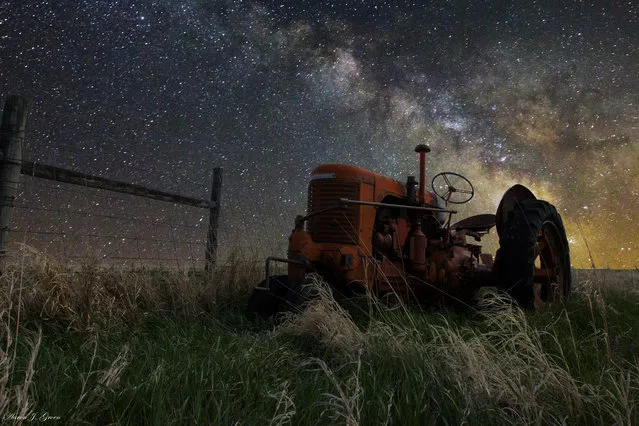
Dark Places By Aaron Groen

Looking at the photos taken by Aaron Groenom, very easy to get lost in this starry wonderland. A series of photos Dark Places - a collection of works in which the artist from South Dakota contrasts the beauty of the universe to various natural or man-made forms on Earth. Using long exposures, it captures the magical landscape filled with fabulous atmosphere, striking color palettes and far-distant galaxies.
Details
06 Jul 2013 17:56:00
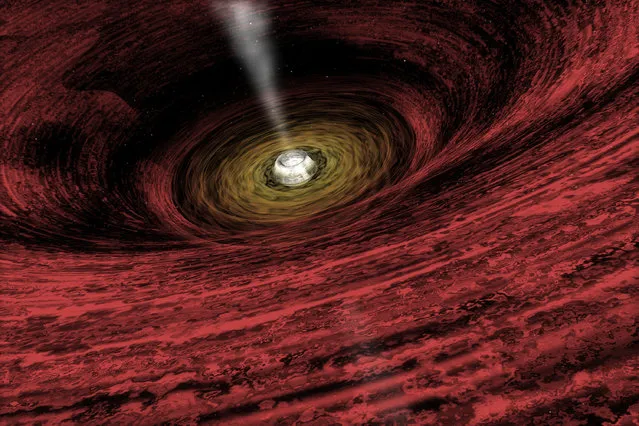
An artist's impression of a growing supermassive black hole located in the early Universe is seen in this NASA handout illustration released on June 15, 2011. Using the deepest X-ray image ever taken, astronomers found the first direct evidence that massive black holes were common in the early universe. This discovery from NASA's Chandra X-Ray Observatory shows that very young black holes grew more aggressively than previously thought, in tandem with the growth of their host galaxies. (Photo by Reuters/NASA/Chandra X-Ray Observatory/A.Hobart)

An artist's impression of a growing supermassive black hole located in the early Universe is seen in this NASA handout illustration released on June 15, 2011. Using the deepest X-ray image ever taken, astronomers found the first direct evidence that massive black holes were common in the early universe. This discovery from NASA's Chandra X-Ray Observatory shows that very young black holes grew more aggressively than previously thought, in tandem with the growth of their host galaxies. (Photo by Reuters/NASA/Chandra X-Ray Observatory/A.Hobart)
Details
11 Feb 2016 12:57:00
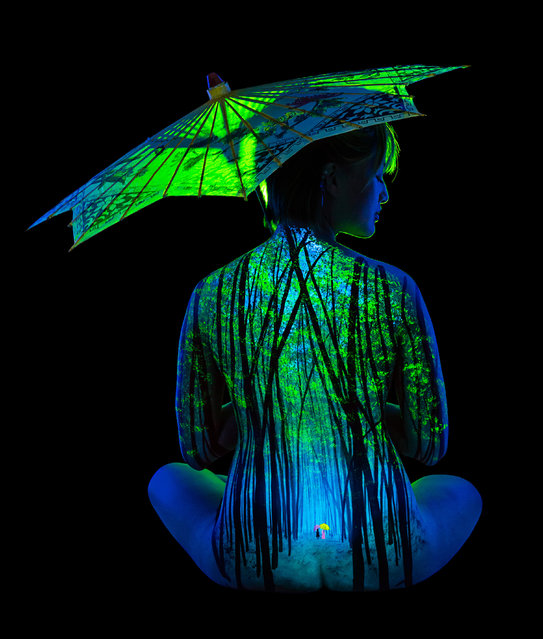
“Bamboo Mist”. (Photo by John Poppleton/Caters News)

A bodypainter uses UV paint to create electrifying masterpieces of stunning landscapes on models. John Poppletons vibrant Bodyscapes feature bright savannahs, lightning storms and vivid galaxies leaping from the bodies of his subjects. The artist, who lives in Wellsville in Utah, USA, uses a black light on his paintings to make them look as close to real life as possible. He predominantly uses female models and often paints across their backs to give him the largest surface area to work with. Here: “Bamboo Mist”. (Photo by John Poppleton/Caters News)
Details
17 Jul 2015 13:56:00
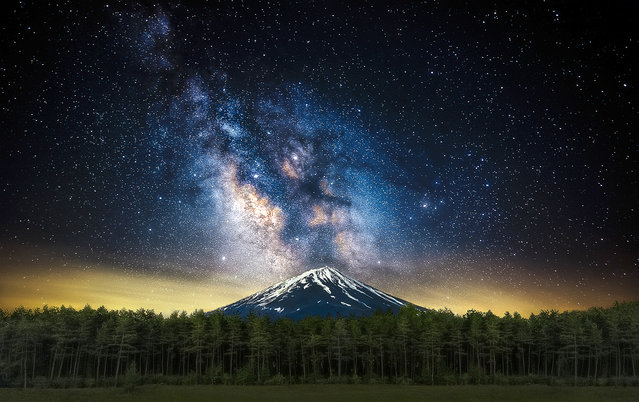
The beautiful image captured by Steve Lance Lee of the Milky Way seemingly errupting from Mt. Fuji in Japan. (Photo by Steve Lance Lee/Caters News)

This is the mesmerising image of a colourful Milky Way shining down on Mount Fuji. Steve Lance Lee, 37, captured the sky above the iconic mountain whilst on his honey moon in Lake Kawaguchiko, Japan. Mount Fuji is illuminated underneath the galaxy of stars, creating an impressive landscape. Here: The beautiful image captured by Steve Lance Lee of the Milky Way seemingly errupting from Mt. Fuji in Japan. (Photo by Steve Lance Lee/Caters News)
Details
14 Oct 2017 09:29:00