Loading...
Done
A Hindu devotee offers prayers at the Sangam, the confluence of three rivers – the Ganges, the Yamuna and the mythical Saraswati, to take a ritualistic bath during Makar Sankranti festival that falls during the annual traditional fair of Magh Mela festival, one of the most sacred pilgrimages in Hinduism, in Prayagraj, India. Friday, January 14, 2022. (Photo by Rajesh Kumar Singh/AP Photo)

A Hindu devotee offers prayers at the Sangam, the confluence of three rivers – the Ganges, the Yamuna and the mythical Saraswati, to take a ritualistic bath during Makar Sankranti festival that falls during the annual traditional fair of Magh Mela festival, one of the most sacred pilgrimages in Hinduism, in Prayagraj, India. Friday, January 14, 2022. (Photo by Rajesh Kumar Singh/AP Photo)
Details
26 Jan 2022 07:40:00
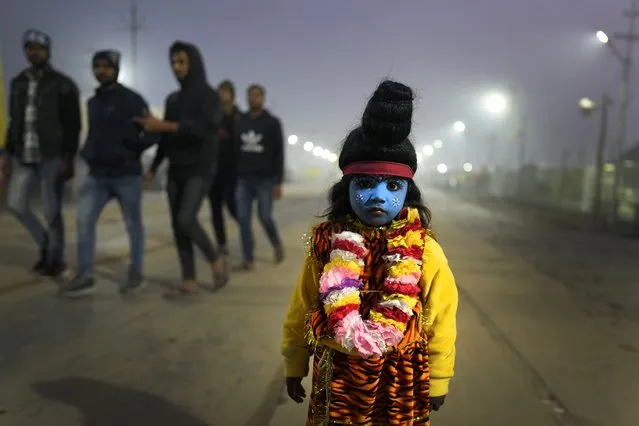
A child dressed as Hindu God Shiva begs for alms from devotees at the Sangam, the confluence of three rivers – the Ganges, the Yamuna and the mythical Saraswati, on the Makar Sankranti festival during the annual traditional fair of Magh Mela in Prayagraj, in the northern Indian state of Uttar Pradesh, Sunday, January 14, 2024. Hundreds of thousands of Hindu pilgrims are expected to take dips in the confluence, hoping to wash away sins during the month-long festival. (Photo by Rajesh Kumar Singh/AP Photo)

A child dressed as Hindu God Shiva begs for alms from devotees at the Sangam, the confluence of three rivers – the Ganges, the Yamuna and the mythical Saraswati, on the Makar Sankranti festival during the annual traditional fair of Magh Mela in Prayagraj, in the northern Indian state of Uttar Pradesh, Sunday, January 14, 2024. Hundreds of thousands of Hindu pilgrims are expected to take dips in the confluence, hoping to wash away sins during the month-long festival. (Photo by Rajesh Kumar Singh/AP Photo)
Details
05 Feb 2024 11:34:00
Members of Panchayati Akhara Bada Udasin take part in a religious procession as they head towards the Kumbh Mela festival ahead of the royal bath near the Sangam, the confluence of three of the holiest rivers in Hindu mythology – Ganga, Yamuna, and the mythical Saraswati – in Prayagraj, Uttar Pradesh, India, 12 January 2025. Every 12 years, Hindu pilgrims gather for ritual baths at the river's banks during the Maha Kumbh Mela festival. (Photo by Rajat Gupta/EPA)

Members of Panchayati Akhara Bada Udasin take part in a religious procession as they head towards the Kumbh Mela festival ahead of the royal bath near the Sangam, the confluence of three of the holiest rivers in Hindu mythology – Ganga, Yamuna, and the mythical Saraswati – in Prayagraj, Uttar Pradesh, India, 12 January 2025. Every 12 years, Hindu pilgrims gather for ritual baths at the river's banks during the Maha Kumbh Mela festival. (Photo by Rajat Gupta/EPA)
Details
18 Jan 2025 04:05:00
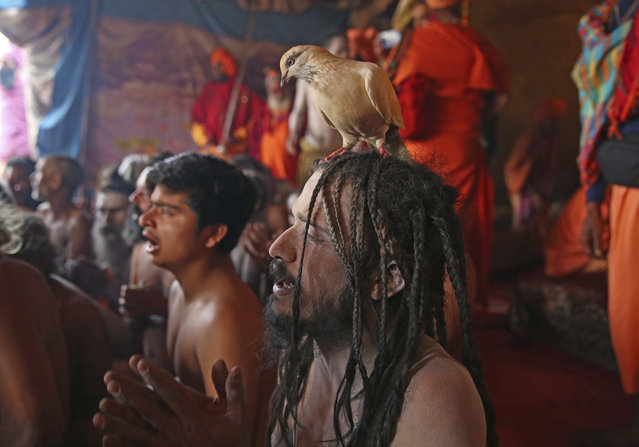
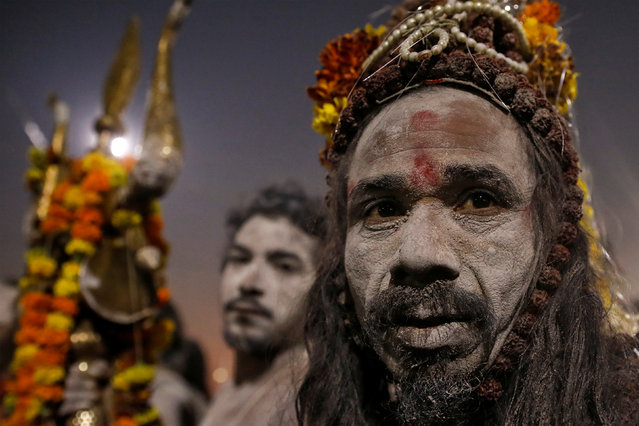
In this January 27, 2019, photo, Hindu holy men of monastic order Juna Akhara participate in a ritual before becoming Naga Sadhus or naked holy men at Sangam, the confluence of three holy rivers during the Kumbh Mela or pitcher festival in Prayagraj Uttar Pradesh state, India. At every Kumbh, including this year's, thousands of devotees were initiated into the reclusive sect of the Naga Sadhus, naked, ash-smeared cannabis-smoking Hindu warriors and onetime-armed defenders of the faith who for centuries have lived as ascetics in jungles and caves. (Photo by Rajesh Kumar Singh/AP Photo)

In this January 27, 2019, photo, Hindu holy men of monastic order Juna Akhara participate in a ritual before becoming Naga Sadhus or naked holy men at Sangam, the confluence of three holy rivers during the Kumbh Mela or pitcher festival in Prayagraj Uttar Pradesh state, India. At every Kumbh, including this year's, thousands of devotees were initiated into the reclusive sect of the Naga Sadhus, naked, ash-smeared cannabis-smoking Hindu warriors and onetime-armed defenders of the faith who for centuries have lived as ascetics in jungles and caves. (Photo by Rajesh Kumar Singh/AP Photo)
Details
18 Feb 2019 00:05:00


“Kumbh Mela is a mass Hindu pilgrimage in which Hindus gather at the Ganges river. The normal Kumbh Mela is celebrated every 3 years, the Ardh (half) Kumbh Mela is celebrated every six years at Haridwar and Prayag, the Purna (complete) Kumbh takes place every twelve years, at four places (Prayag (Allahabad), Haridwar, Ujjain, and Nashik). The Maha (great) Kumbh Mela which comes after 12 “Purna Kumbh Melas”, or 144 years, is held at Allahabad.

The last Ardh Kumbh Mela was held over a period of 45 days beginning in January 2007, more than 70 million Hindu pilgrims took part in the Ardh Kumbh Mela at Prayag, and on January 15, the most auspicious day of the festival of Makar Sankranti, more than 5 million participated. The previous Maha Kumbh Mela, held in 2001, was attended by around 60 million people, making it at the time the largest gathering anywhere in the world in recorded history”. – Wikipedia

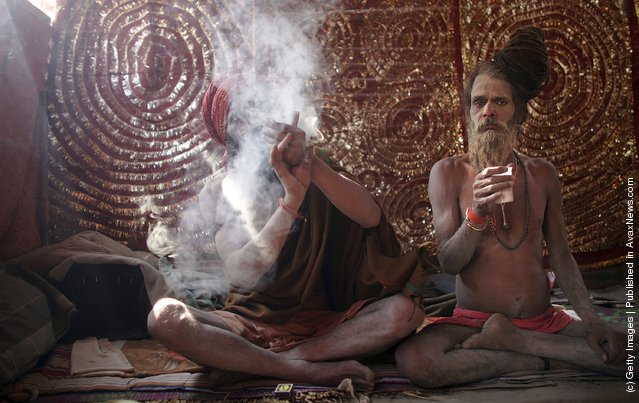
Photo: Sadhus (holy men) smoke at their camp near the ritual site at Sangam, the confluence of the Ganges, Yamuna and mythical Saraswati rivers during the Ardh Kumbh Mela festival (Half Pitcher festival) January 18, 2007 in Allahabad, India. Millions of Hindu pilgrims have flocked to the largest religious gathering in the world which lasts for 45 days in northern India. The festival commemorates the mythical conflict between gods and demons over a pitcher filled with the “nectar of immortality”. Devotees believe that taking a holy dip in the Ganges at this time washes away their sins and paves the path to salvation. (Photo by Mario Tama/Getty Images)

Details
30 Jun 2011 10:27:00
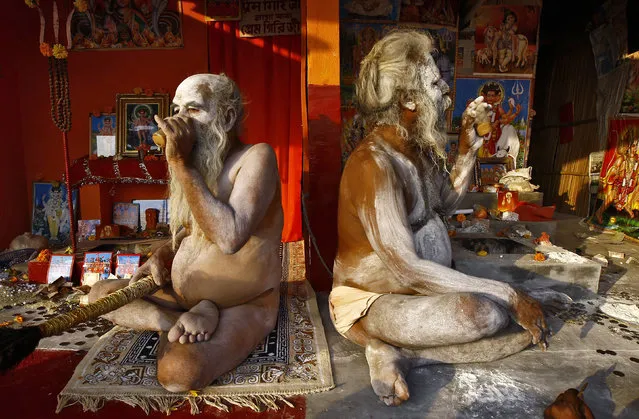
Naga Sadhus or Hindu holy men, smeared with ash, drink tea inside their makeshift camps near the confluence of river Ganges and the Bay of Bengal, ahead of Makar Sankranti festival at Sagar Island, south of Kolkata January 13, 2015. (Photo by Rupak De Chowdhuri/Reuters)

Naga Sadhus or Hindu holy men, smeared with ash, drink tea inside their makeshift camps near the confluence of river Ganges and the Bay of Bengal, ahead of Makar Sankranti festival at Sagar Island, south of Kolkata January 13, 2015. Hindu monks and pilgrims are making their annual trip to Sagar Island for the one-day festival of “Makar Sankranti” on Wednesday. (Photo by Rupak De Chowdhuri/Reuters)
Details
14 Jan 2015 12:22:00
Naga Sadhus or Hindu Holy men leave after taking a dip during the first "Shahi Snan" (grand bath) at “Kumbh Mela” or the Pitcher Festival, in Prayagraj, previously known as Allahabad, India, January 15, 2019. (Photo by Danish Siddiqui/Reuters)

Naga Sadhus or Hindu Holy men leave after taking a dip during the first "Shahi Snan" (grand bath) at “Kumbh Mela” or the Pitcher Festival, in Prayagraj, previously known as Allahabad, India, January 15, 2019. (Photo by Danish Siddiqui/Reuters)
Details
17 Jan 2019 00:03:00
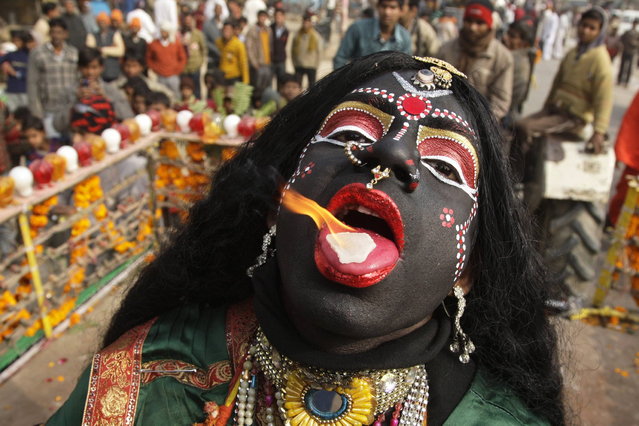
A man dressed as Hindu goddess Kali, the goddess of power, performs with a burning camphor tablet on his tongue during a religious procession ahead of the “Kumbh Mela”, or Pitcher Festival, in the northern Indian city of Allahabad January 6, 2013. During the festival, hundreds of thousands of Hindus take part in a religious gathering at the banks of the river Ganges. The festival is held every 12 years in different Indian cities. (Photo by Jitendra Prakash/Reuters)

A man dressed as Hindu goddess Kali, the goddess of power, performs with a burning camphor tablet on his tongue during a religious procession ahead of the “Kumbh Mela”, or Pitcher Festival, in the northern Indian city of Allahabad January 6, 2013. During the festival, hundreds of thousands of Hindus take part in a religious gathering at the banks of the river Ganges. The festival is held every 12 years in different Indian cities. (Photo by Jitendra Prakash/Reuters)
Details
14 Jan 2013 10:54:00