Loading...
Done
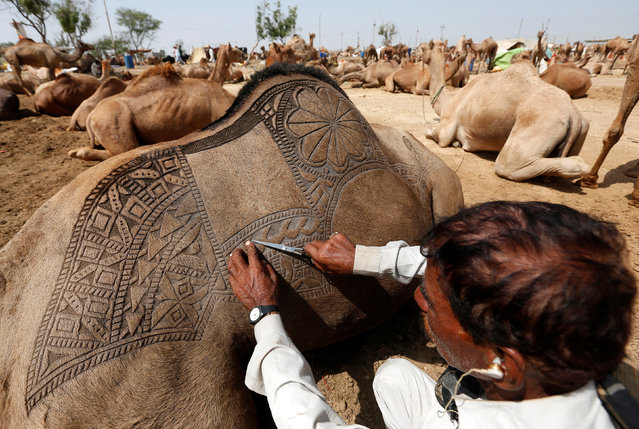
A man uses a scissors to make intricate decorative patterns on a camel's back before displaying it for sale at a makeshift cattle market ahead of the Eid al-Adha festival in Karachi, Pakistan, September 9, 2016. (Photo by Akhtar Soomro/Reuters)

A man uses a scissors to make intricate decorative patterns on a camel's back before displaying it for sale at a makeshift cattle market ahead of the Eid al-Adha festival in Karachi, Pakistan, September 9, 2016. (Photo by Akhtar Soomro/Reuters)
Details
10 Sep 2016 09:03:00
Yussef Saluta (R), 20, an Israeli Arab soldier from the Desert Reconnaissance battalion takes part in a drill near Kissufim in southern Israel November 29, 2016. (Photo by Amir Cohen/Reuters)

Yussef Saluta (R), 20, an Israeli Arab soldier from the Desert Reconnaissance battalion takes part in a drill near Kissufim in southern Israel November 29, 2016. A battalion of soldiers crawls across the desert sand with assault rifles cocked. It's a routine exercise, but these are no ordinary troops – they are Arabs who have chosen to fight for the Jewish state. (Photo by Amir Cohen/Reuters) (Photo by Amir Cohen/Reuters)
Details
07 Dec 2016 11:48:00
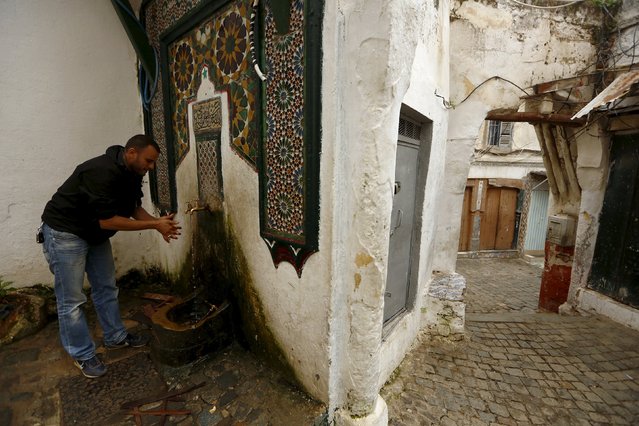
A man performs ablution using water at an old fountain before performing prayers in the old city of Algiers Al Casbah, Algeria December 3, 2015. (Photo by Zohra Bensemra/Reuters)

A man performs ablution using water at an old fountain before performing prayers in the old city of Algiers Al Casbah, Algeria December 3, 2015. The Algiers Casbah is a UNESCO World heritage site that includes the Sidi Ramdane mosque and former fortress, 10 centuries old. Decay from the passing years, as well as earthquake damage in 2003, leads some to consider a move to modern apartments with financial backing from the government. Others refuse to leave a neighbourhood they have called home for decades. (Photo by Zohra Bensemra/Reuters)
Details
22 Jan 2016 11:00:00
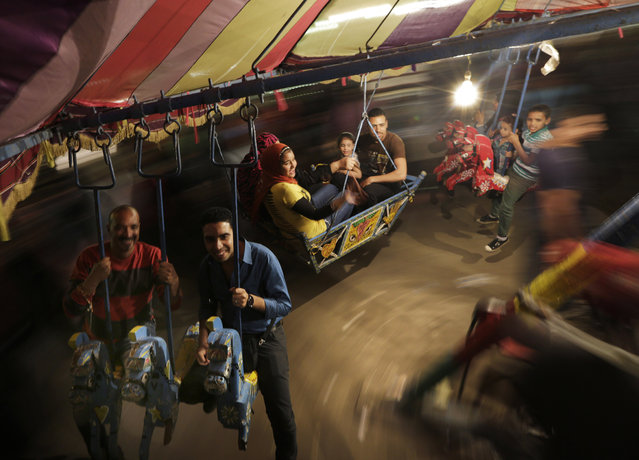
In this photo taken Tuesday, May 12, 2015, people ride on a carousel as they celebrate a religious festival, or moulid, which commemorates of the birth of Muslim Prophet Muhammad's granddaughter Sayyeda Zeinab, outside the mosque and shrine named for her, in Cairo, Egypt. (Photo by Amr Nabil/AP Photo)

In this photo taken Tuesday, May 12, 2015, people ride on a carousel as they celebrate a religious festival, or moulid, which commemorates of the birth of Muslim Prophet Muhammad's granddaughter Sayyeda Zeinab, outside the mosque and shrine named for her, in Cairo, Egypt. (Photo by Amr Nabil/AP Photo)
Details
14 May 2015 11:19:00
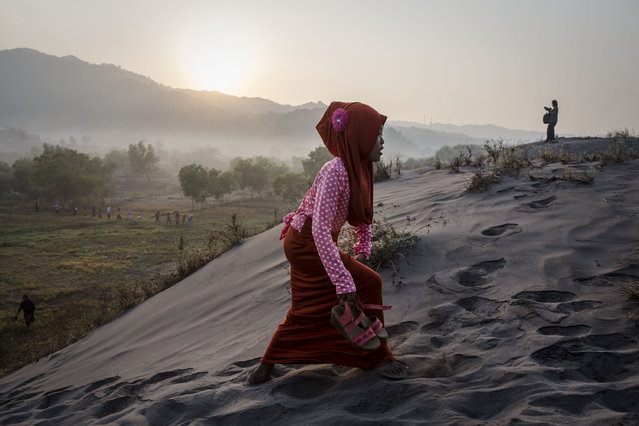
An Indonesian muslim woman walks on 'sea of sands' as they prepare for Eid Al-Fitr prayer at Parangkusumo beach on July 17, 2015 in Yogyakarta, Indonesia. (Photo by Ulet Ifansasti/Getty Images)

An Indonesian muslim woman walks on “sea of sands” as they prepare for Eid Al-Fitr prayer at Parangkusumo beach on July 17, 2015 in Yogyakarta, Indonesia. Muslims worldwide observe the Eid Al-Fitr prayer to mark the end of Ramadan and the beginning of the new month of blessing Shawwal 1436 Hijriah. (Photo by Ulet Ifansasti/Getty Images)
Details
17 Jul 2015 12:47:00
People remove meat from the bones of animals slaughtered for Eid al-Adha after they have been discarded at a garbage dump in Yangon, Myanmar, September 25, 2015. (Photo by Soe Zeya Tun/Reuters)

People remove meat from the bones of animals slaughtered for Eid al-Adha after they have been discarded at a garbage dump in Yangon, Myanmar, September 25, 2015. (Photo by Soe Zeya Tun/Reuters)
Details
28 Sep 2015 08:04:00
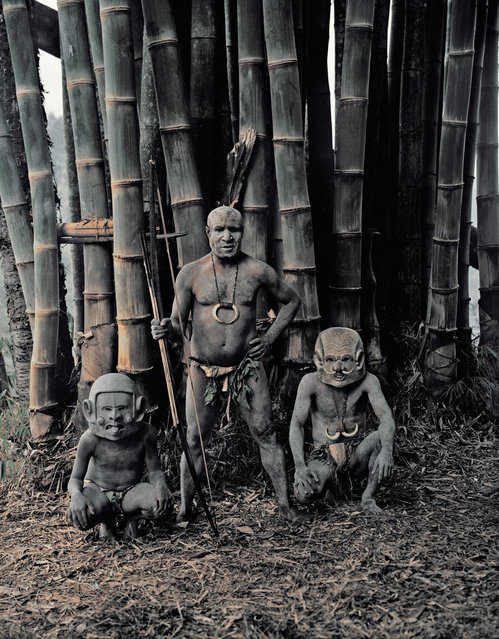
“Asaro from the Eastern Highlands”. The mudmen could not cover their faces with mud because the people of Papua New Guinea thought that the mud from the Asaro river was poisonous. So instead of covering their faces with this alleged poison, they made masks from pebbles that they heated and water from the waterfall, with unusual designs such as long or very short ears either going down to the chin or sticking up at the top, long joined eyebrows attached to the top of the ears, horns and sideways mouths. (Jimmy Nelson)

“Asaro from the Eastern Highlands”. The mudmen could not cover their faces with mud because the people of Papua New Guinea thought that the mud from the Asaro river was poisonous. So instead of covering their faces with this alleged poison, they made masks from pebbles that they heated and water from the waterfall, with unusual designs such as long or very short ears either going down to the chin or sticking up at the top, long joined eyebrows attached to the top of the ears, horns and sideways mouths. (Photo and caption by Jimmy Nelson)
Details
20 Oct 2013 08:54:00
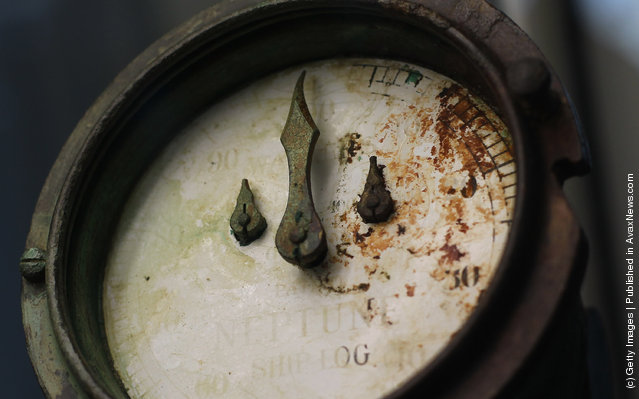
A logometer used to determine the Titanic's speed is seen among artifacts recovered from the RMS Titanic

A logometer used to determine the Titanic's speed is seen among artifacts recovered from the RMS Titanic wreck site at a press preview of a Titanic artifact auction at the Intrepid Sea, Air & Space Museum on January 5, 2012 in New York City. On April 11, 2012, the 100th anniversary of the maiden voyage of the Titanic, Guernsey's will auction the complete collection of more than 5,000 artifacts recovered from the Titanic wreck site. (Photo by Mario Tama/Getty Images)
Details
06 Jan 2012 13:28:00