Loading...
Done
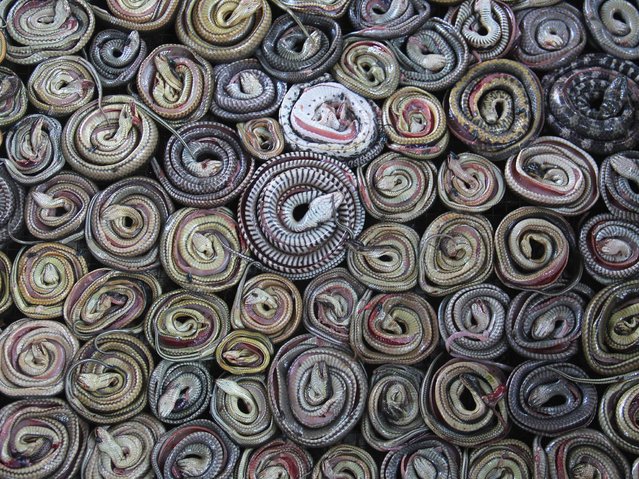
Snakes are collected and rolled before putting into the oven on March 2, 2014 in the village of Kertasura, Cirebon, Indonesia. (Photo by Nurcholis Anhari Lubis/Getty Images)

Snakes are collected and rolled before putting into the oven on March 2, 2014 in the village of Kertasura, Cirebon, Indonesia. At slaughter house snake skins measuring in the hundreds of metres, are sold to bag factories in the West and Central Java provinces on a monthly basis. From snake skin was manufactured into bags, shoes, wallets and belts. The price of a bag made from snake skin costs between 150,000 rupiah ($15 USD) and 300,000 rupiah ($30 USD), depending on its size. When snake skins reach Western fashion houses their price can increase dramatically and sell for up to $4,000 USD. (Photo by Nurcholis Anhari Lubis/Getty Images)
Details
05 Mar 2014 07:31:00
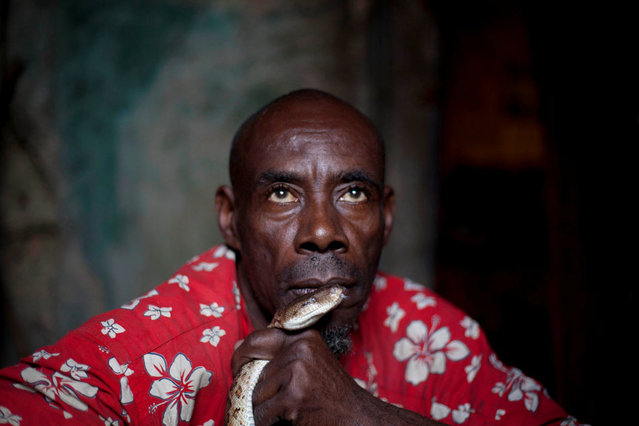
In this January 25, 2013 photo, snake handler Saintilus Resilus holds a snake in front of his lips as he trains the snake to recognize his smell as he prepares for his street performances during the pre-Lenten Carnival season, at his home in Petionville, Haiti. Resilus sees himself as something of a performance artist, showing off with snakes and other animals that Haitians don't see every day, earning tips from impromptu audiences. (Photo by Dieu Nalio Chery/AP Photo/Matt Dayhoff)

In this January 25, 2013 photo, snake handler Saintilus Resilus holds a snake in front of his lips as he trains the snake to recognize his smell as he prepares for his street performances during the pre-Lenten Carnival season, at his home in Petionville, Haiti. Resilus sees himself as something of a performance artist, showing off with snakes and other animals that Haitians don't see every day, earning tips from impromptu audiences. (Photo by Dieu Nalio Chery/AP Photo via Matt Dayhoff)
Details
02 Feb 2013 10:11:00
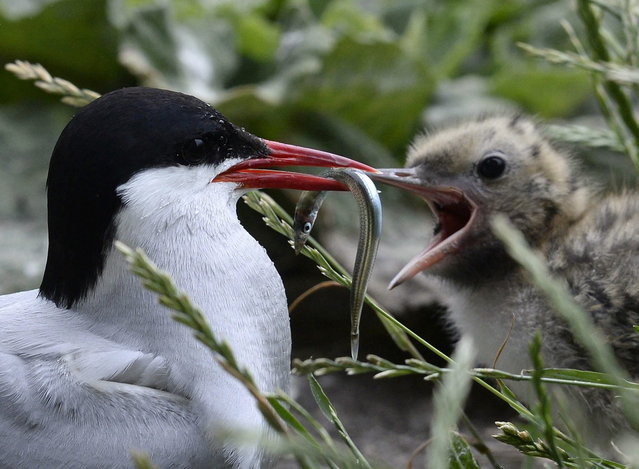
An arctic tern feeds its chick on the Farne Islands off the Northumberland coast, northern England July 8, 2013. (Photo by Nigel Roddis/Reuters)

An arctic tern feeds its chick on the Farne Islands off the Northumberland coast, northern England July 8, 2013. The Farne Islands, which lie off the coast of northeast England, are home to a huge array of wildlife. The islands are owned and protected by the British conservation charity, the National Trust, which says they host some 23 species of seabird, as well as a substantial colony of grey seals, who come to have their pups there in the autumn. Every five years the National Trust carries out a census of the islands' population of puffins, and this year's survey showed there were almost 40,000 nesting pairs on the islands – an 8 percent rise from 2008. (Photo by Nigel Roddis/Reuters)
Details
11 Dec 2013 09:21:00
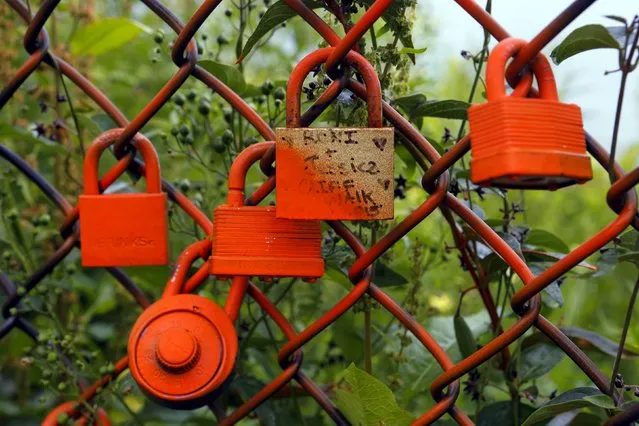
Locks hang on a fence along the Cliff Walk in Newport, Rhode Island July 14, 2015. (Photo by Brian Snyder/Reuters)

Locks hang on a fence along the Cliff Walk in Newport, Rhode Island July 14, 2015. They say the whole world loves a lover, but in Newport, Rhode Island, at least, not everyone is fond of the so-called “love locks” that sweethearts are leaving along the resort city's famed seaside Cliff Walk. Hundreds of the padlocks left behind by tourists as romantic tokens now cover sections of a chain-link fence along the route. Each is meant to represent the bond lovers shared during their visit. By custom, the key is thrown away. (Photo by Brian Snyder/Reuters)
Details
15 Jul 2015 09:48:00


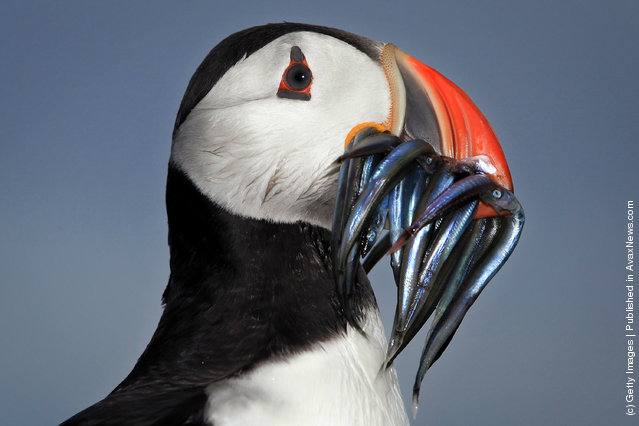
A Puffin returns to it's nest with a beak full of sand eels on June 25, 2011 on Inner Farne, England. The Farne Islands, which are run by the National Trust, are situated two to three miles off the Northumberland coastline. The archipeligo of 16-28 separate islands (depending on the tide) make the summer home to approximately 100,000 pairs of breeding seabirds including around 36,000 Puffins, 32,000 Guillemots and 2,000 pairs of Arctic Terns. The species of birds which nest in internationally important numbers include Shag, Sandwich Tern and Arctic Tern. The coastline around The Farnes are also the breeding ground to one of Europe's largest Grey Seal colonies with around 4,000 adults giving birth to 1500 pups every year. (Photo by Dan Kitwood/Getty Images)
Details
27 Jun 2011 12:58:00
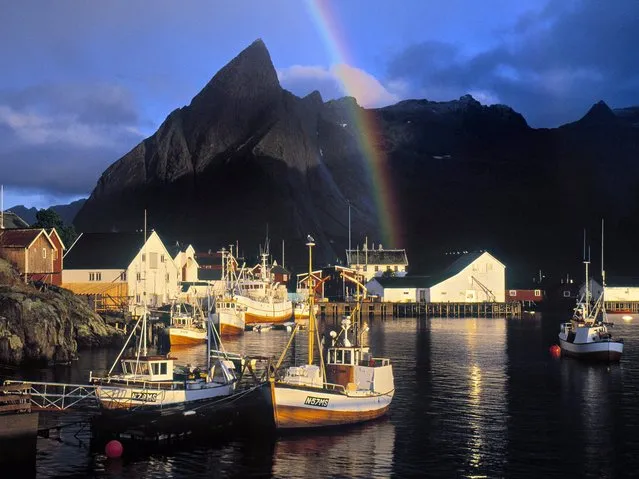
Lofoten Island, Norway

Lofoten is an archipelago and a traditional district in the county of Nordland, Norway. Though lying within the Arctic Circle, the archipelago experiences one of the world's largest elevated temperature anomalies relative to its high latitude.
Details
25 Oct 2013 10:15:00
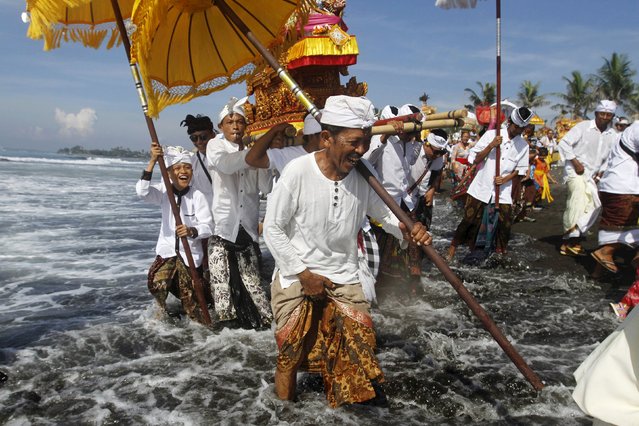
Balinese Hindus carry Pratimas, or symbols of God, on the beach during Melasti, a purification ceremony, ahead of the holy day of Nyepi, in Gianyar on the Indonesian resort island of Bali, March 6, 2016. Nyepi is a day of silence to celebrate the Balinese new year, reserved for self-reflection, where people are not allowed to use lights, light fires, work, travel or enjoy entertainment. (Photo by Roni Bintang/Reuters)

Balinese Hindus carry Pratimas, or symbols of God, on the beach during Melasti, a purification ceremony, ahead of the holy day of Nyepi, in Gianyar on the Indonesian resort island of Bali, March 6, 2016. Nyepi is a day of silence to celebrate the Balinese new year, reserved for self-reflection, where people are not allowed to use lights, light fires, work, travel or enjoy entertainment. (Photo by Roni Bintang/Reuters)
Details
07 Mar 2016 11:19:00
The vendors show the toy of snake at the Spring Festival Temple Fair for celebrating Chinese Lunar New Year of Snake at the Temple of Earth park on February 9, 2013 in Beijing, China. The Chinese Lunar New Year of Snake also known as the Spring Festival, which is based on the Lunisolar Chinese calendar, is celebrated from the first day of the first month of the lunar year and ends with Lantern Festival on the Fifteenth day.  (Photo by Feng Li)

The vendors show the toy of snake at the Spring Festival Temple Fair for celebrating Chinese Lunar New Year of Snake at the Temple of Earth park on February 9, 2013 in Beijing, China. The Chinese Lunar New Year of Snake also known as the Spring Festival, which is based on the Lunisolar Chinese calendar, is celebrated from the first day of the first month of the lunar year and ends with Lantern Festival on the Fifteenth day. (Photo by Feng Li)
Details
10 Feb 2013 13:03:00