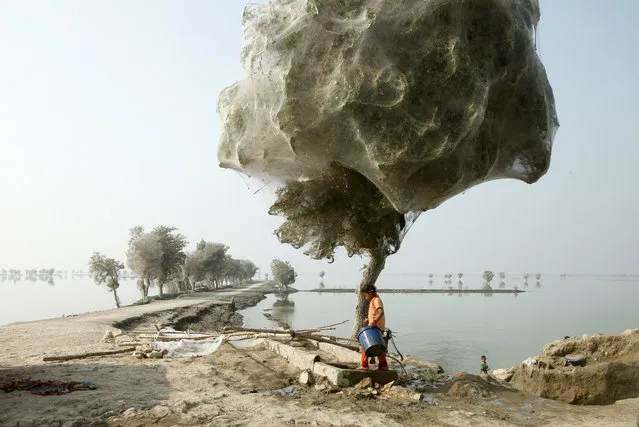
An unexpected side-effect of the flooding in parts of Pakistan has been that millions of spiders climbed up into the trees to escape the rising flood waters. Because of the scale of the flooding and the fact that the water has taken so long to recede, many trees have become cocooned in spiders’ webs.
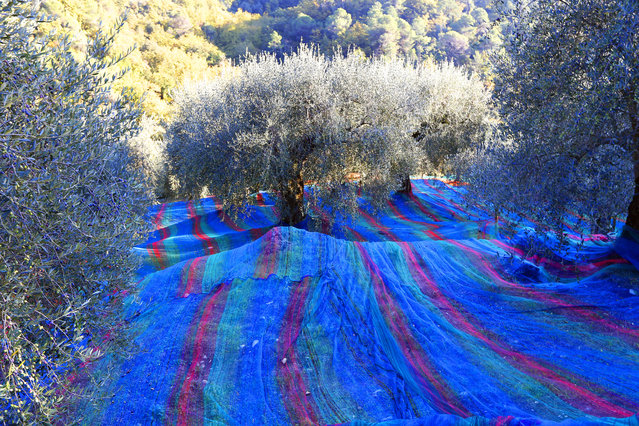
Multicolored nets are set under olive trees to collect the olives on November 27, 2013 in Castagniers, southeastern France. (Photo by Valery Hache/AFP Photo)
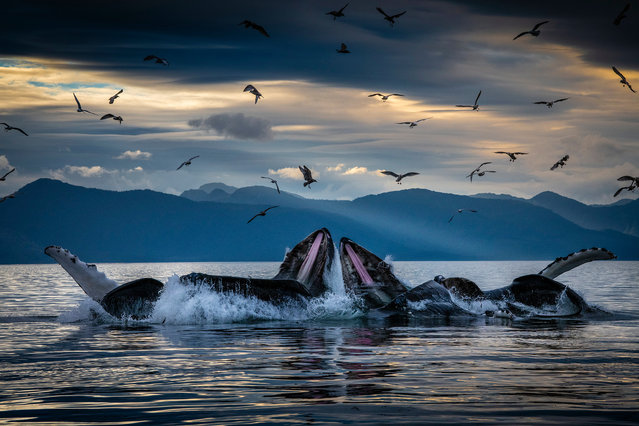
“Secrets of the Whales”. Skerry’s photographs celebrate the lives and culture of whales, illuminating recent research and their diverse behaviours. His latest work focuses on four key species: sperm whales, humpbacks, orca and beluga whales. Humpback whales bubble-net feeding off the coast of Alaska. They work cooperatively to feed on herring by blowing a perfect ring of bubbles underwater to form a net encircling the fish. The whales then swim up through the centre of the bubble net with their mouths open. (Photo by Brian Skerry/National Geographic Photo/Visa pour l'Image)
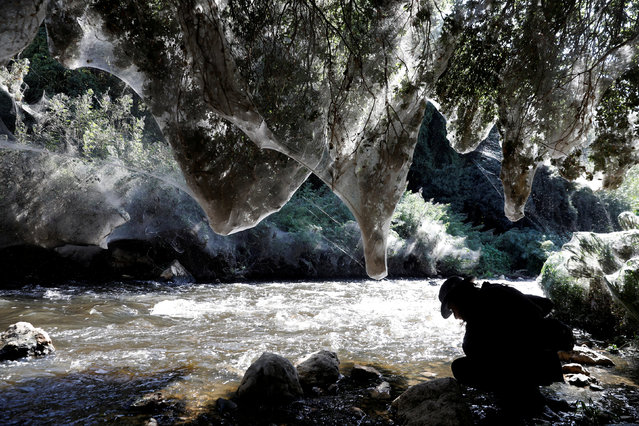
Igor Armicach, a doctoral student at Hebrew University's Arachnid Collection, looks onto giant spider webs, spun by long-jawed spiders (Tetragnatha), covering sections of the vegetation along the Soreq creek bank, near Jerusalem, Israel on November 7, 2017. (Photo by Ronen Zvulun/Reuters)
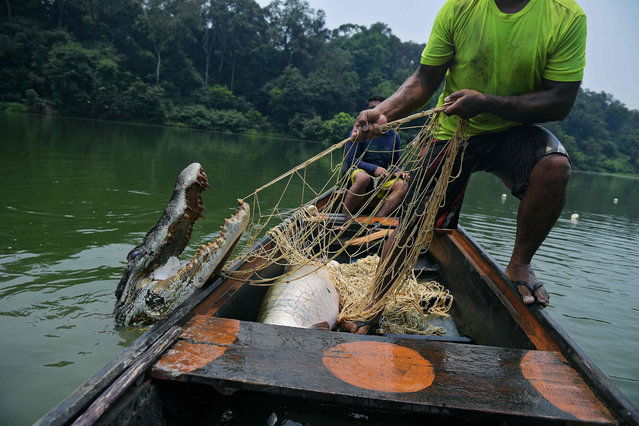
Fishermen pull up a live 2.5 metre crocodile in their net in the Western Amazon region, Brazil on September 20, 2017. The fishermen were fishing for a large river fish called Arapaima but sometimes crocodiles become stuck in the nets as well. (Photo by Carl de Souza/AFP Photo)
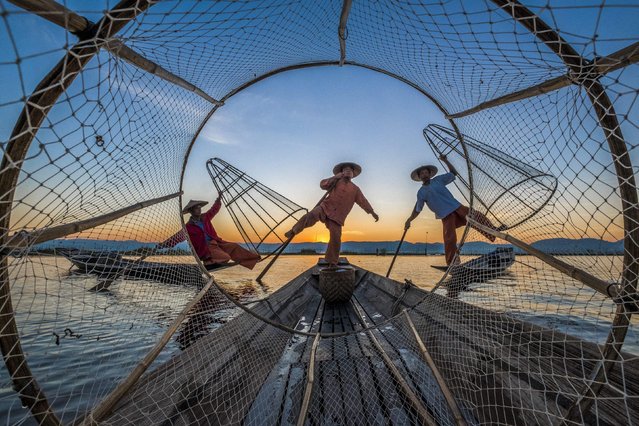
Fishermen use traditional cone-shaped nets on Inle lake in Myanmar in February 2022. The men steer their boats with an oar that they control with their feet. They throw the net into the water and push it down so it sinks to the bottom, then drag it back to the surface with the fish trapped inside. (Photo by Alahattin Kanlioglu/Solent News)