Loading...
Done
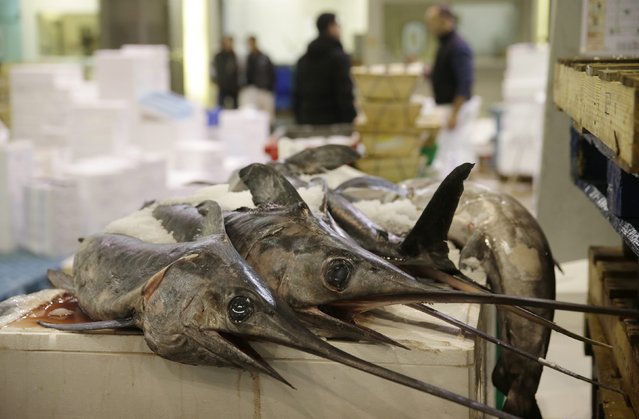
Swordfish are sold at the fish pavilion in Rungis International food market as buyers prepare for the Christmas holiday season in Rungis, south of Paris, December 11, 2015. (Photo by Philippe Wojazer/Reuters)

Rungis is a commune in the southern suburbs of Paris, France. It is best known as the location of the large wholesale food market serving the Paris metropolitan area and beyond, the Marché d'Intérêt National de Rungis, said to be the largest food market in the world. The name Rungis was recorded for the first time in a royal charter of 1124 as Rungi Villa. Here: swordfish are sold at the fish pavilion in Rungis International food market as buyers prepare for the Christmas holiday season in Rungis, south of Paris, December 11, 2015. (Photo by Philippe Wojazer/Reuters)
Details
13 Dec 2015 08:02:00
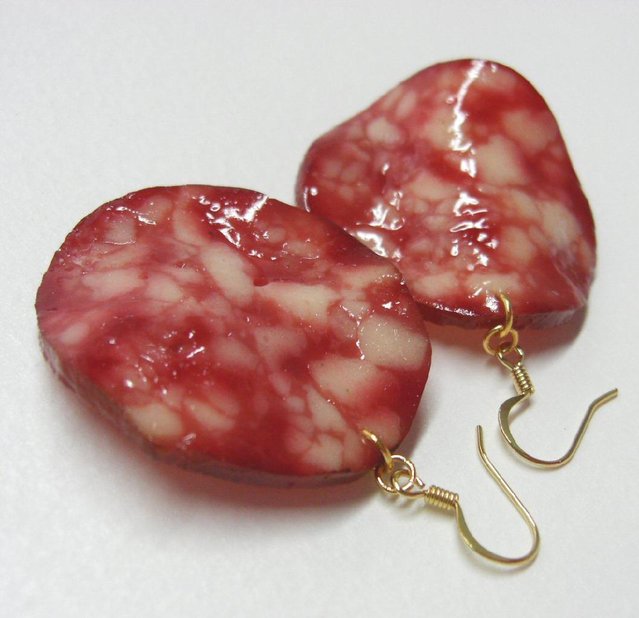
Fake Food Hatanaka

Japanese manufacturer Fake Food Hatanaka had the idea to combine the two to create a line of fashion accessories, strange and twisted! From the Fries/Ketchup hairclip to the Pizza bread necklace through the Cheeseburger pendant, the bacon & eggs headbands or even spaghetti bolognaise earrings and necklace sausages, here is some ultra-realistic and WTF Japanese gadgets to turn Fake Food / Fast Food into fashion accessory!
Details
15 Aug 2013 11:01:00
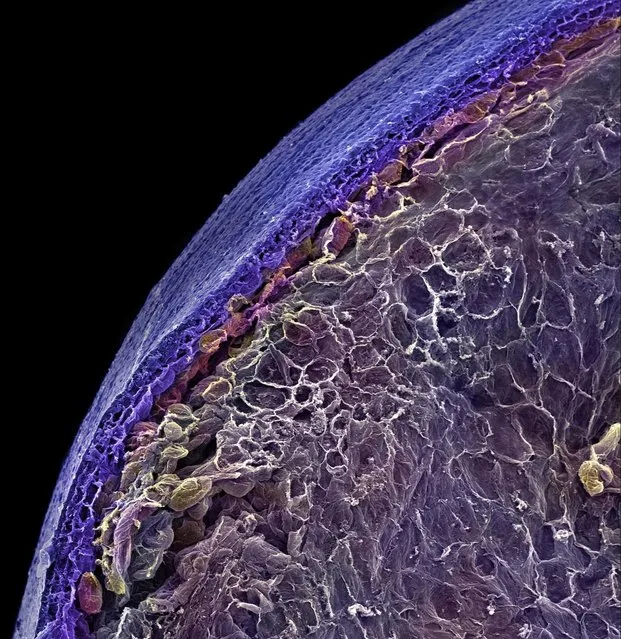
Blueberry. (Photo by SPL/Barcroft Media)

Scientists have captured these images in laboratories during research into what makes our daily food. Photo: Blueberry. (Photo by SPL/Barcroft Media)
Details
11 Oct 2013 08:10:00
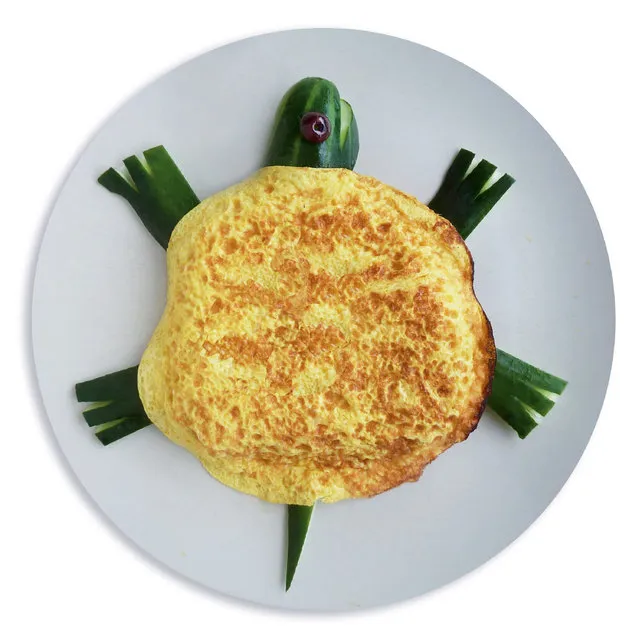
Egg, cucumber, olive. (Photo by Bill and Claire Wurtzel/Welcome Books)

Some creations from the new “Funny Food Made Easy” book by Bill and Claire Wurtzel. “Inspiring kids to eat healthy foods with creative works of plate art and easy-to-follow instructions and illustrations. Through finished plate art, detailed step-by-step illustrations, recipes, and tips, Funny Food Made Easy provides all you and your kids need to make, eat, and enjoy healthy breakfasts, lunches, and snacks” – roughly speaking so. Here: Egg, cucumber, olive. (Photo by Bill and Claire Wurtzel/Welcome Books)
Details
05 Sep 2016 11:03:00
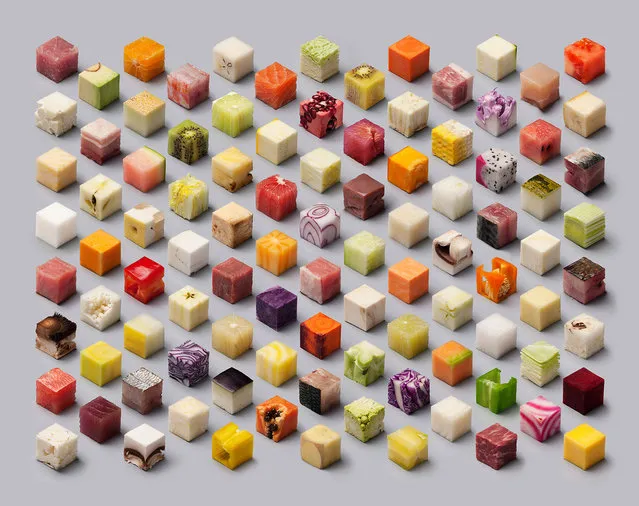
Foods Cut Into Cubes by Lernert & Sander

Dutch artists Lernert and Sander cut raw food into 98 perfect 2.5 x 2.5 x 2.5 cm cubes, creating a tantalizing geometric display. This viral photo was commissioned by Dutch newspaper de Volkskrant for their their food-themed documentary photography special.
Details
18 May 2015 11:14:00
Anti-Capitalist protestors from the Occupy LSX movement at St. Paul's Cathedral

An Anti-Capitalist protestor from the Occupy LSX movement at St. Paul's Cathedral on February 22, 2012 in London, England. (Photo by Matthew Lloyd/Getty Images)
Details
23 Feb 2012 10:31:00


“The Lovell Telescope is a radio telescope at Jodrell Bank Observatory, near Goostrey, Cheshire in the north-west of England. When it was constructed in 1955, the telescope was the largest steerable dish radio telescope in the world at 76.2 m (250 ft) in diameter; it is now the third largest, after the Green Bank telescope in West Virginia, USA, and the Effelsberg telescope in Germany. It was originally known as the 250 ft (76 m) telescope or the Radio Telescope at Jodrell Bank, before becoming the Mark I telescope around 1961 when future telescopes (the Mark II, III, and IV) were being discussed. It was renamed to the Lovell Telescope in 1987 after Bernard Lovell, and became a Grade I listed building in 1988. The telescope forms part of the MERLIN and European VLBI Network arrays of radio telescopes”. – Wikipedia

Photo: The Lovell Telescope listens to the night sky for radio signals from space at Jodrell Bank on June 22, 2011 in Holmes Chapel, England. Jodrell Bank Centre for Astrophysics and it's world famous Lovell Telescope is on the shortlist of Britain's submission for Unesco World Heritage Site status. (Photo by Christopher Furlong/Getty Images)
Details
24 Jun 2011 09:34:00
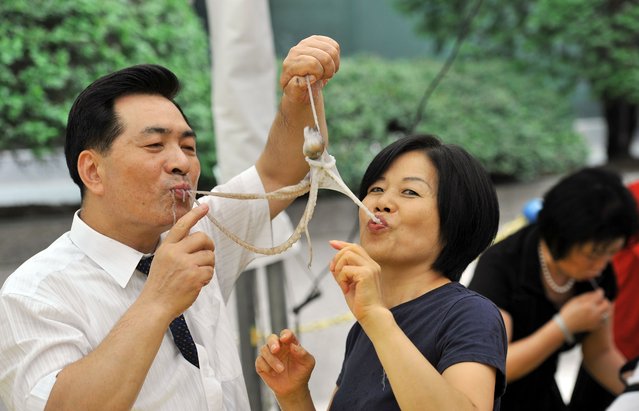
A South Korean man and a woman eat a live octopus during an event to promote a local food festival in Seoul on September 12, 2013. (Photo by Jung Yeon-Je/AFP Photo)

Live octopus is a delicacy in South Korea but is a known choking hazard, since the still-moving suction cups can cause tentacle pieces to stick in a person's throat. A baby octopus is often consumed whole, while larger varieties are cut up and the still-wriggling tentacles eaten with a splash of sesame oil. Photo: A South Korean man and a woman eat a live octopus during an event to promote a local food festival in Seoul on September 12, 2013. (Photo by Jung Yeon-Je/AFP Photo)
Details
13 Sep 2013 09:40:00