Loading...
Done


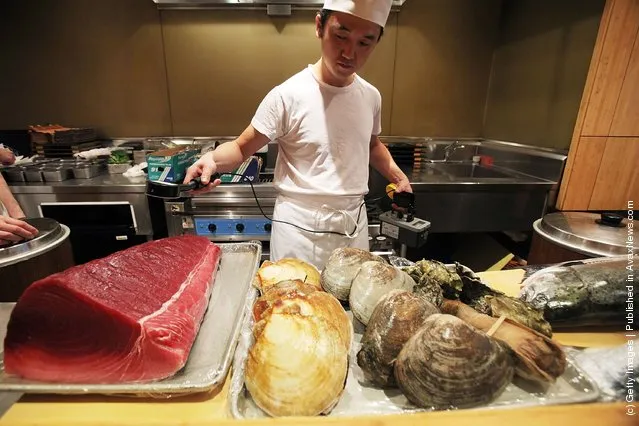
Sushi chef Mitsuru Tamura uses a radiation detector on seafood before it is prepared in Manhattan's Sushi Yasuda restaurant April 8, 2011 in New York City. The restaurant has begun using the detector as a precautionary measure due to consumer concerns over possible radiation contamination in seafood from the nuclear emergency in Japan. Health officials believe contamination is unlikely to threaten the food supply chain and none has been found in this restaurant. (Photo by Mario Tama/Getty Images)
Details
09 Apr 2011 08:52:00
Police evacuate passengers during an emergency services exercise at the disused Aldwych underground station in London

A simulated casualty is evacuated during an emergency services exercise at the disused Aldwych underground station on February 22, 2012 in London, England. Operation Forward Defensive aims to test the response to a terrorist incident on the London Underground network during the 2012 Olympic Games. (Photo by Peter Macdiarmid/Getty Images)
Details
23 Feb 2012 09:55:00
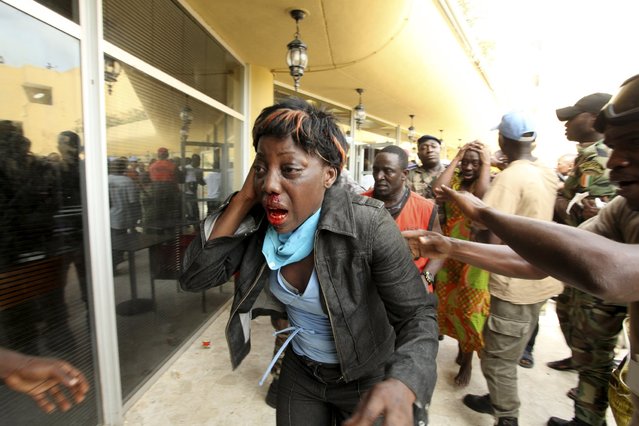
An injured supporter of Ivory Coast's Laurent Gbagbo reacts outside the premises of Hotel Golf, where Gbagbo is currently being held after his arrest, in Abidjan April 11, 2011. (Photo by Reuters/Stringer)

An injured supporter of Ivory Coast's Laurent Gbagbo reacts outside the premises of Hotel Golf, where Gbagbo is currently being held after his arrest, in Abidjan April 11, 2011. The trial of Laurent Gbagbo on charges of crimes against humanity during post-election violence, in which around 3,000 people were killed, will begin on January 28, 2016 at the International Criminal Court. (Photo by Reuters/Stringer)
Details
27 Jan 2016 13:45:00
Maria, 18, wearing a traditional Sevillana outfit, poses for a portrait during the traditional Feria de Abril (April fair) in the Andalusian capital of Seville April 16, 2013. (Photo by Marcelo del Pozo/Reuters)

Maria, 18, wearing a traditional Sevillana outfit, poses for a portrait during the traditional Feria de Abril (April fair) in the Andalusian capital of Seville April 16, 2013. (Photo by Marcelo del Pozo/Reuters)
Details
22 Apr 2013 06:34:00
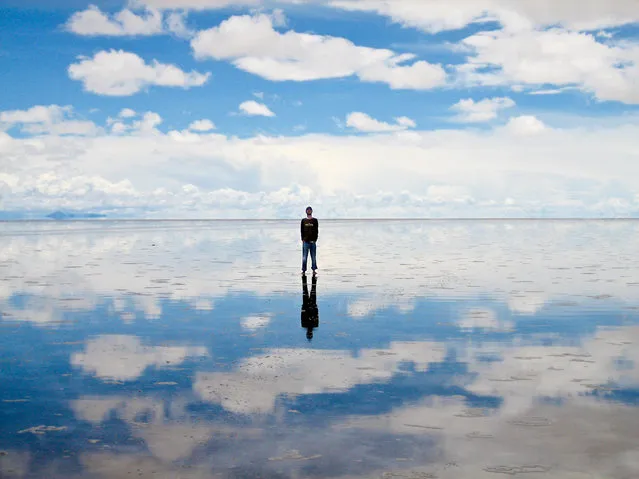
Salar de Uyuni

Salar de Uyuni (or Salar de Tunupa) is the world's largest salt flat at 10,582 square kilometers (4,086 sq mi). It is located in the Potosí and Oruro departments in southwest Bolivia, near the crest of the Andes, and is elevated 3,656 meters (11,995 ft) above mean sea level. The Salar was formed as a result of transformations between several prehistoric lakes. It is covered by a few meters of salt crust, which has an extraordinary flatness with the average altitude variations within one meter over the entire area of the Salar.
Details
04 Aug 2012 08:42:00
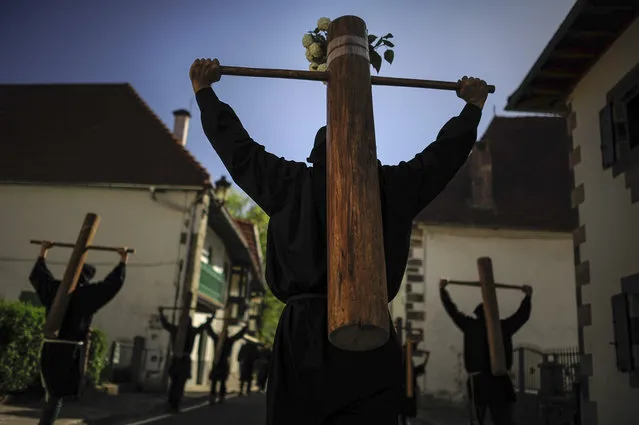
Masked penitents holds their crosses during spring “Romeria Cruceros de Arce”, in Roncesvalles, northern Spain, Sunday, May 10, 2015. (Photo by Alvaro Barrientos/AP Photo)

Masked penitents holds their crosses during spring “Romeria Cruceros de Arce”, in Roncesvalles, northern Spain, Sunday, May 10, 2015. Every year on the second Sunday in spring, people with crosses march from their small Pyrenees towns to Roncesvalles Church in tribute of the Virgin. (Photo by Alvaro Barrientos/AP Photo)
Details
12 May 2015 12:50:00
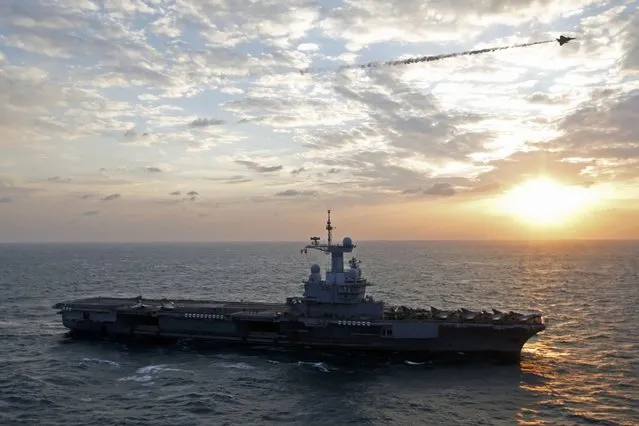
A Rafale fighter jet flies over France's Charles de Gaulle aircraft carrier as it makes its way in the Gulf, January 28, 2016. (Photo by Philippe Wojazer/Reuters)

A Rafale fighter jet flies over France's Charles de Gaulle aircraft carrier as it makes its way in the Gulf, January 28, 2016. (Photo by Philippe Wojazer/Reuters)
Details
29 Jan 2016 12:32:00
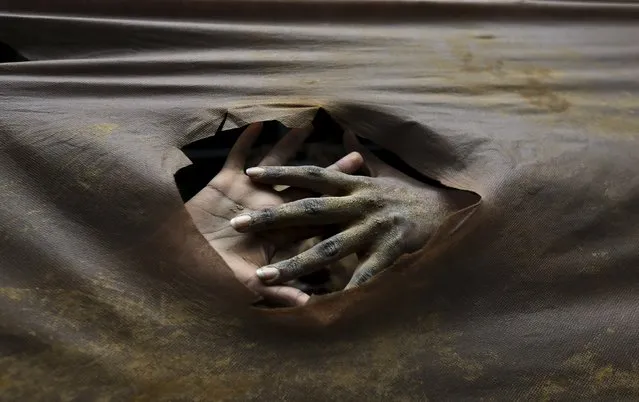
An environmental activist performs during a protest in front of the headquarters of Brazilian mining company Vale SA in downtown Rio de Janeiro, Brazil, November 16, 2015. (Photo by Sergio Moraes/Reuters)

An environmental activist performs during a protest in front of the headquarters of Brazilian mining company Vale SA in downtown Rio de Janeiro, Brazil, November 16, 2015. The collapse of two dams at a Brazilian mine, owned by Vale SA and BHP Billiton Ltd, has cut off drinking water for quarter of a million people and saturated waterways downstream with dense orange sediment that could wreck the ecosystem for years to come. Nine people were killed, 19 are still listed as missing and 500 people were displaced from their homes when the dams burst at an iron ore mine in southeastern Brazil on November 5. (Photo by Sergio Moraes/Reuters)
Details
18 Nov 2015 08:00:00