Loading...
Done
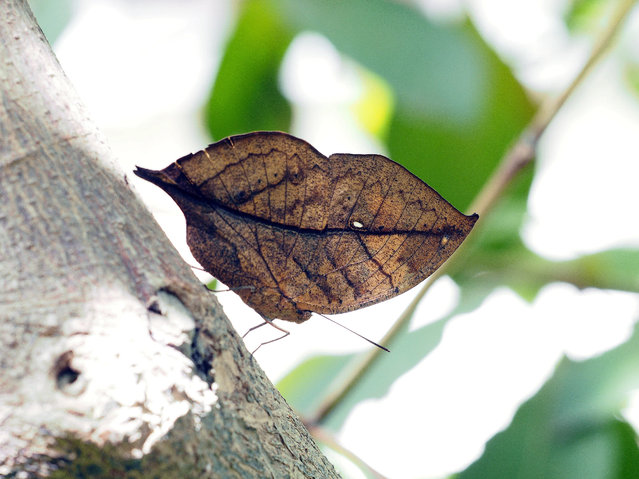
A Dead Leaf butterfly (Kallima inachu formosana, also called Orange Oakleaf Butterfly) rests on a tree trunk at the Taipei Zoo in Taipei, Tawian, 03 August 2019. Dead Leaf butterfly can be found in Tropical Asia from India to Japan. When its wings close, it resembles a dead leaf, providing camouflage against predators including birds, ants, spiders and wasps. (Photo by David Chang/EPA/EFE)

A Dead Leaf butterfly (Kallima inachu formosana, also called Orange Oakleaf Butterfly) rests on a tree trunk at the Taipei Zoo in Taipei, Tawian, 03 August 2019. Dead Leaf butterfly can be found in Tropical Asia from India to Japan. When its wings close, it resembles a dead leaf, providing camouflage against predators including birds, ants, spiders and wasps. (Photo by David Chang/EPA/EFE)
Details
18 Aug 2019 00:01:00
Ants

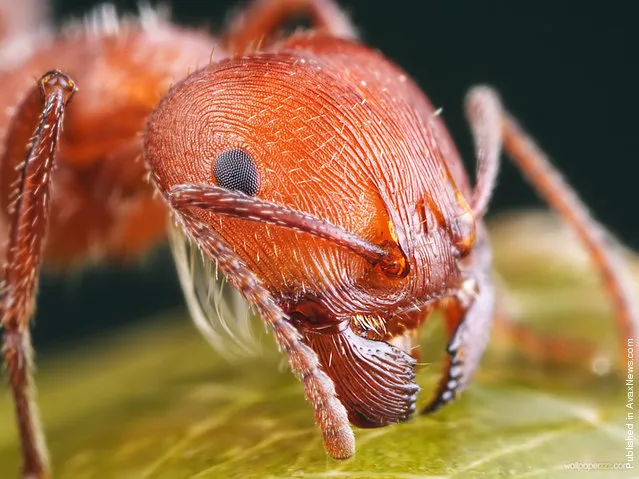
Once upon a time a myth was born that insects, unlike animals, are just a machines that not capable of learning and survive only based on their instincts. That myth has become the widespread opinion. Of course, this opinion is indeed erroneous, like many other widespread opinions. Let us try to find out which part is a myth and which part is true.
Details
30 Oct 2011 11:34:00
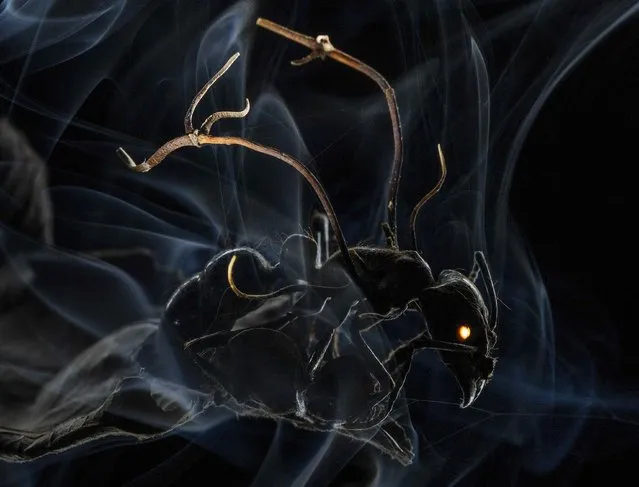
Anand Varma, a U.S. photographer working for the National Geographic, won the First Prize in the Nature Category, Stories, of the 2015 World Press Photo contest with his series of pictures, which includes this one of spores of a fungus landing on an ant, penetrating its exoskeleton and entering its brain, compelling the host to leave its normal habitat on the forest floor and scale a nearby tree, in this picture taken January 22, 2014 and released by the World Press Photo on February 12, 2015. (Photo by Anand Varma/Reuters/National Geographic/World Press Photo)

Anand Varma, a U.S. photographer working for the National Geographic, won the First Prize in the Nature Category, Stories, of the 2015 World Press Photo contest with his series of pictures, which includes this one of spores of a fungus landing on an ant, penetrating its exoskeleton and entering its brain, compelling the host to leave its normal habitat on the forest floor and scale a nearby tree, in this picture taken January 22, 2014 and released by the World Press Photo on February 12, 2015. (Photo by Anand Varma/Reuters/National Geographic/World Press Photo)
Details
15 Feb 2015 15:21:00
A woman gets ready for her performance at the backstage of the Heart restaurant in Ibiza on June 29, 2015. Take the Spanish chefs Ferran and Albert Adria, the Cirque du Soleil founder French Guy Laliberte and contemporary artists such as Japanese Takashi Murakami. Put them together on the luxurious Mediterranean island of Ibiza and shake well to get “Heart” an innovative multi-sensory experience. (Photo by Jaime Reina/AFP Photo)

A woman gets ready for her performance at the backstage of the Heart restaurant in Ibiza on June 29, 2015. Take the Spanish chefs Ferran and Albert Adria, the Cirque du Soleil founder French Guy Laliberte and contemporary artists such as Japanese Takashi Murakami. Put them together on the luxurious Mediterranean island of Ibiza and shake well to get “Heart” an innovative multi-sensory experience. The idea of provoking emotions through a collision of avant-garde creativities appeared two years ago from Adria brothers and Laliberte's passion about art and cuisine. They met a decade ago at the famous restaurant El Bulli, closed in 2011. (Photo by Jaime Reina/AFP Photo)
Details
01 Jul 2015 13:50:00
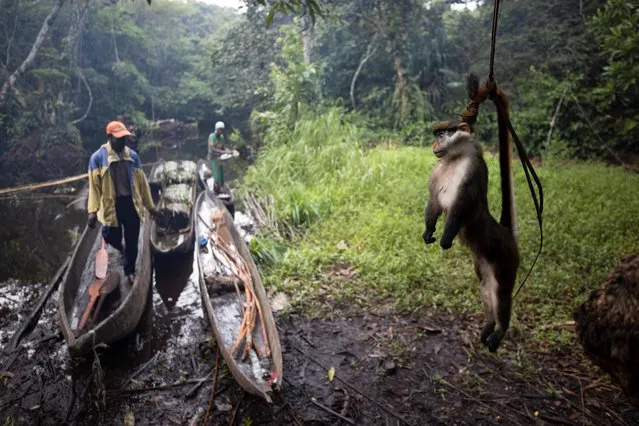
A dead red-tailed monkey hangs by its tail above the ground, in order to keep it away from ants, in the forest near the city of Mbandaka, Democratic Republic of the Congo, April 5, 2019. Bushmeat hunters are emptying Central Africa's forests at a high rate, researchers say. A growing appetite for wild meat in cities has ramped up the scale of hunting. Research shows around 6 million tonnes of bushmeat are sourced annually from the Congo Basin, whose forest spans across six countries and is second in size only to the Amazon. (Photo by Thomas Nicolon/Reuters)

A dead red-tailed monkey hangs by its tail above the ground, in order to keep it away from ants, in the forest near the city of Mbandaka, Democratic Republic of the Congo, April 5, 2019. Bushmeat hunters are emptying Central Africa's forests at a high rate, researchers say. A growing appetite for wild meat in cities has ramped up the scale of hunting. Research shows around 6 million tonnes of bushmeat are sourced annually from the Congo Basin, whose forest spans across six countries and is second in size only to the Amazon. (Photo by Thomas Nicolon/Reuters)
Details
14 Oct 2019 00:03:00
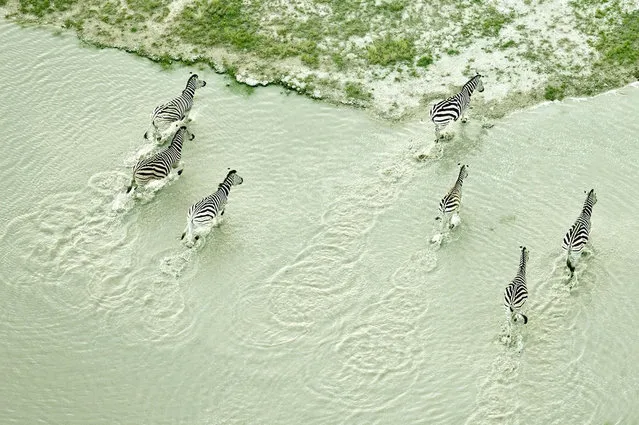
Botswana By Zack Seckler

Aerial shots always amaze us by their magnificence. Human-sized footprints look like ant trails, trees resemble little pieces of broccoli, and landscapes are transformed into breathtaking images, which look like something that can be seen under a microscope. This set of pictures features surreal aerial shots of Botswana taken by Zack Seckler. In the past, to make these kinds of shots, someone had to go up in a helicopter to take a picture. However, today, such images can be easily made using quadcopters, such as DJI Phantom or any other. Thanks to the new technology, we are able to view our world in new ways, allowing us to better appreciate its complexity and beauty. (Photo by Zack Seckler)
Details
14 Dec 2014 11:32:00
Miniature Painting By Lorraine Loots

Postcards for Ants is an ongoing painting project by Cape Town artist Lorraine Loots who has been creating a miniature painting every single day since January 1, 2013. The artist works with paint brushes, pencils, and bare eyes to render superbly detailed paintings scarcely larger than a small coin. After the first year, Loots relaunched the project in a second phase inspired by Cape Town’s designation as World Design Capital 2014.
Details
26 Sep 2014 10:04:00


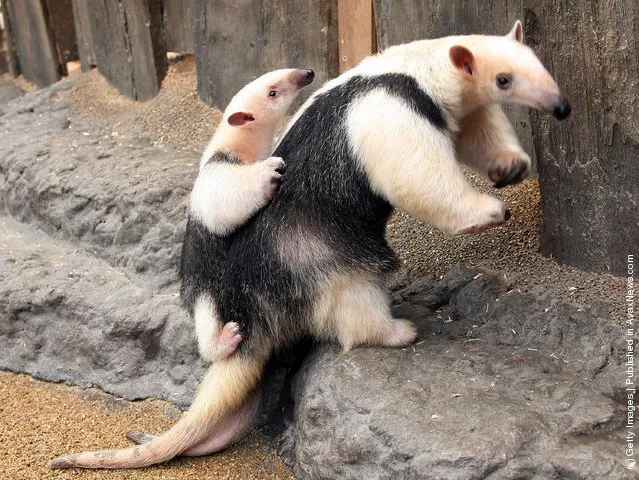
“The Southern Tamandua, Collared Anteater or Lesser Anteater (Tamandua tetradactyla) is a species of anteater from South America. It is a solitary animal, found in many habitats from mature to highly disturbed secondary forests and arid savannas. It feeds on ants, termites and bees. It has very strong foreclaws that can be used to break insect nests or to defend itself”. – Wikipedia

Photo: A three-month-old baby Southern Tamandua “Konbu” lies on its mother Tae's back at Sunshine International Aquarium on July 7, 2009 in Tokyo, Japan. Baby Southern Tamandua feels safe and comfortable holding onto something and normally stays on the mother's back until around 3 months old. (Photo by Junko Kimura/Getty Images)
Details
19 May 2011 10:31:00