Loading...
Done
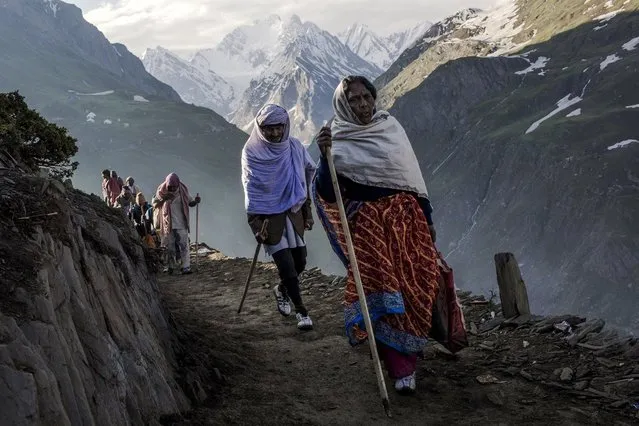
Thousands Of Hindu Pilgrims Take Part In Amarnath Yatra

Hindu pilgrims walk along a mountain path as they make their pilgrimage to the sacred Amarnath Cave, one of the most revered Hindu shrines, near Baltal, Kashmir, India. (Photo by Daniel Berehulak)
Details
07 May 2015 08:47:00
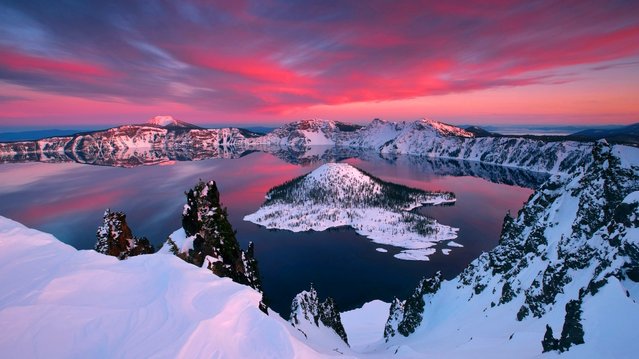
Crater Lake In Oregon

As you look at the majestic Crater Lake, located in south-central Oregon, United States, it is hard to imagine that thousands of years ago this place was one giant crater with scorching hot lava spilling over the sides. Those were the times of turmoil. Now, however, this place is the essence of tranquility. The lake that was formed, after the volcano died down, is amazingly clear due to the fact that the water isn’t moving at all. No rivers go in or out of the Crater Lake, and the water lost through evaporation is compensated by the rain and snowfall. This lake is also frighteningly deep – 1,943 feet (592 m) at its deepest point – making it the deepest lake in the United States. If you love nature and if you ever come to Oregon, this is truly a sight to behold.
Details
19 Nov 2014 14:14:00
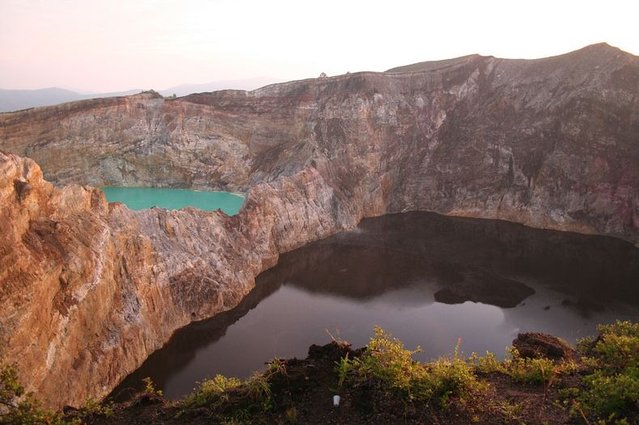
Indonesia Lakes of Mount Kelimutu

Kelimutu is a volcano, close to the small town of Moni about 50 km to the east of Ende, Indonesia in central Flores Island of Indonesia.
Details
27 Jun 2013 11:31:00
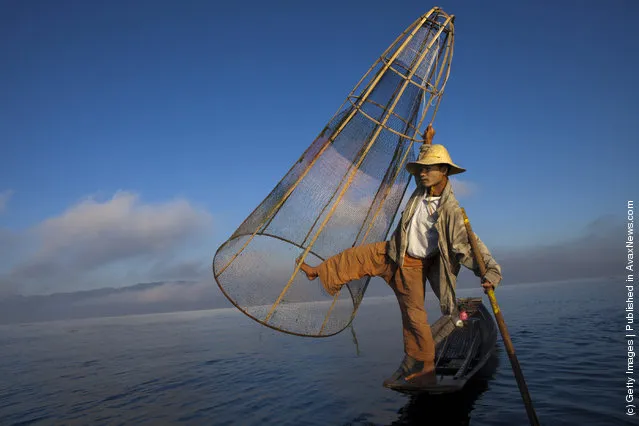
Intha leg rowing fishermen starts to fish in the early morning hours on Inle Lake in Myanmar

An Intha leg rowing fisherman paddles on Inle Lake December 17, 2011 in Inle Lake, Myanmar. The famous lake is 22 kilometers long and 11 wide and has been a fisherman's paradise for years where they use their leg rowing technique, standing on the stern on one leg and wrapping the other leg around the oar. (Photo by Paula Bronstein /Getty Images)
Details
22 Dec 2011 12:17:00
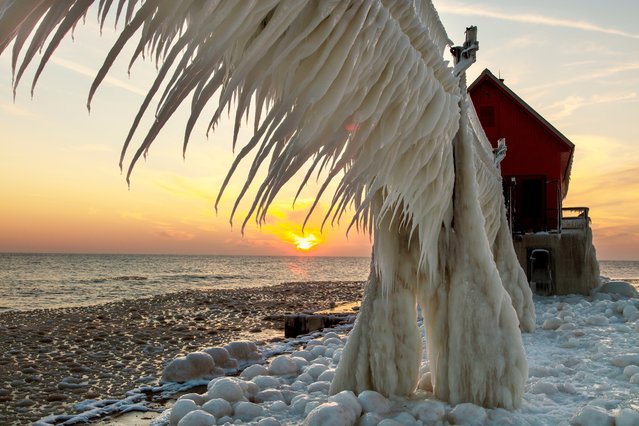
Huge icicles hang from the pier. (Photo by Mike Kline/Barcroft Media)

The twin lighthouses of St Joseph on Lake Michigan have been transformed by a winter storm. Ice encases the buildings, giant icicles hang from the piers and the beach is frosted white. Here: Huge icicles hang from the pier. (Photo by Mike Kline/Barcroft Media)
Details
23 Jan 2016 13:11:00
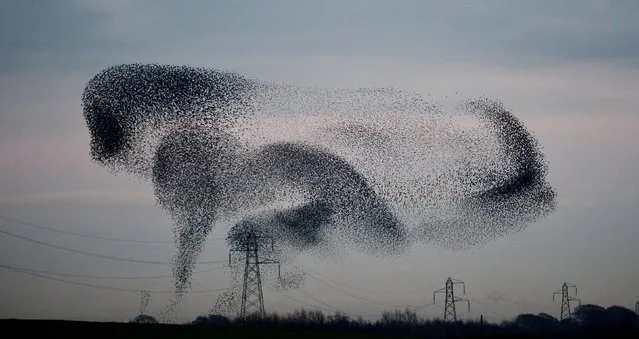
A murmuration of starlings above the  the small village of Rigg, near Gretna, in the Scottish Borders, on November 25, 2013. The weight of the resting birds on power lines caused some power localised power outages in the village. Still one of the commonest of garden birds, its decline elsewhere puts it on the Red List of endangered species. (Photo by Owen Humphreys/PA Wire)

A murmuration of starlings above the the small village of Rigg, near Gretna, in the Scottish Borders, on November 25, 2013. The weight of the resting birds on power lines caused some power localised power outages in the village. Still one of the commonest of garden birds, its decline elsewhere puts it on the Red List of endangered species. (Photo by Owen Humphreys/PA Wire)
Details
27 Nov 2013 11:00:00
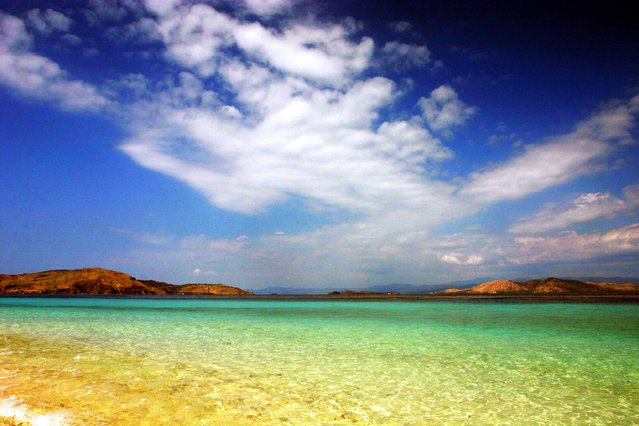
Komodo National Park

The Komodo National Park is a national park in Indonesia located within the Lesser Sunda Islands in the border region between the provinces of East Nusa Tenggara and West Nusa Tenggara. The park includes the three larger islands Komodo, Padar and Rinca, and 26 smaller ones, with a total area of 1,733 km² (603 km² of it land). The national park was founded in 1980 to protect the Komodo dragon, the world's largest lizard. Later it was dedicated to protecting other species, including marine species. In 1991 the national park was declared a UNESCO World Heritage Site and later as Man and Biosphere Reserve.
Details
12 Aug 2013 12:28:00
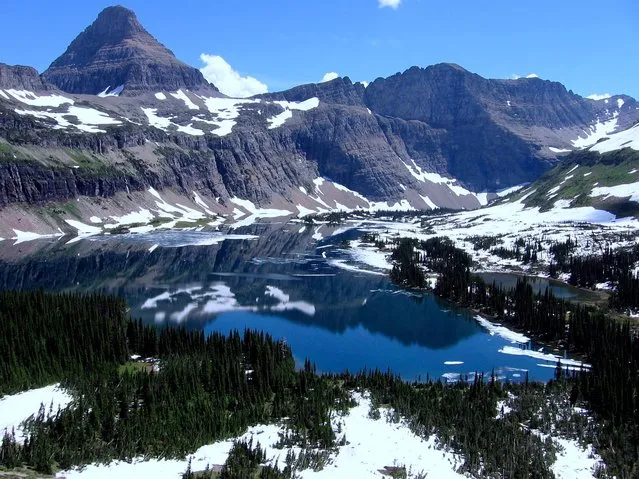
Glacier National Park Montana

Glacier National Park is a national park located in the U.S. state of Montana, on the Canada–United States border with the Canadian provinces of Alberta and British Columbia. The park encompasses over 1,000,000 acres (4,000 km2) and includes parts of two mountain ranges (sub-ranges of the Rocky Mountains), over 130 named lakes, more than 1,000 different species of plants and hundreds of species of animals. This vast pristine ecosystem is the centerpiece of what has been referred to as the "Crown of the Continent Ecosystem", a region of protected land encompassing 16,000 square miles (41,000 km2).
Details
29 Oct 2013 11:13:00