Loading...
Done
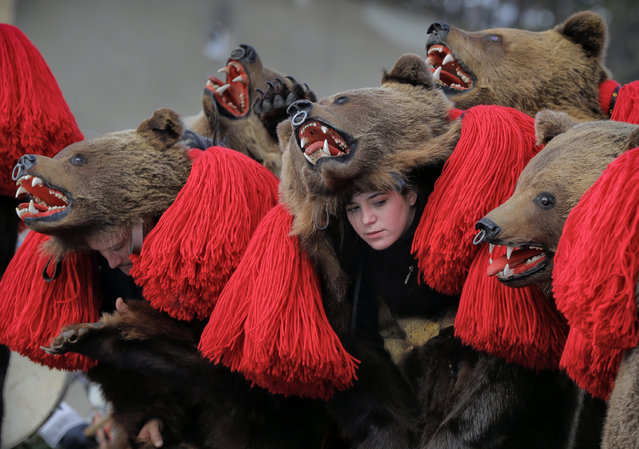
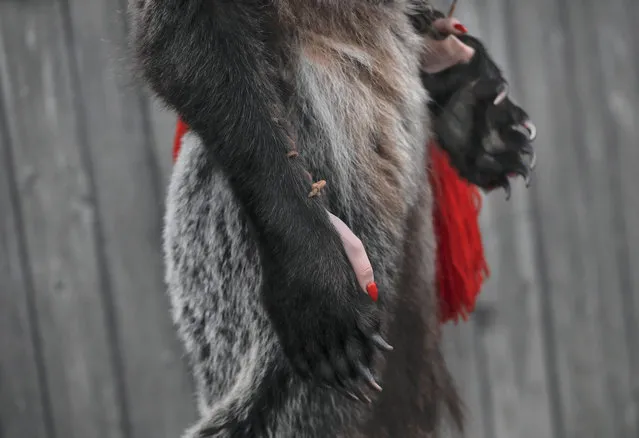
In this Saturday, December 30, 2017, picture a girl wearing a bear fur costume takes part in an annual bear parade in Comanesti, Romania. (Photo by Vadim Ghirda/AP Photo)

In this Saturday, December 30, 2017, picture a girl wearing a bear fur costume takes part in an annual bear parade in Comanesti, Romania. It's a tradition that originated in pre-Christian times, when dancers wearing colored costumes or animal furs went from house to house in villages, singing and dancing to ward off evil. (Photo by Vadim Ghirda/AP Photo)
Details
08 Jan 2018 07:05:00
People wearing bear fur costumes dance during the annual bear ritual gathering in Comanesti, Romania, Friday, December 30, 2016. In pre-Christian rural traditions, dancers wearing colored costumes or animal furs, toured from house to house in villages singing and dancing to ward off evil, in the present the tradition has moved to Romania's cities too, where dancers travel to perform the ritual for money. (Photo by Vadim Ghirda/AP Photo)

People wearing bear fur costumes dance during the annual bear ritual gathering in Comanesti, Romania, Friday, December 30, 2016. In pre-Christian rural traditions, dancers wearing colored costumes or animal furs, toured from house to house in villages singing and dancing to ward off evil, in the present the tradition has moved to Romania's cities too, where dancers travel to perform the ritual for money. (Photo by Vadim Ghirda/AP Photo)
Details
31 Dec 2016 09:51:00
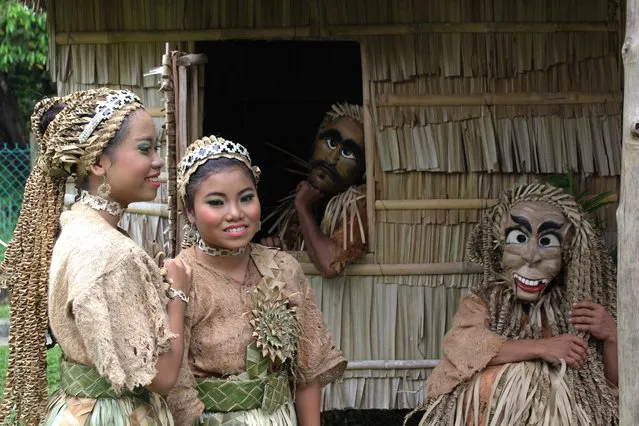
The People of Mah Meri tribe at home at Pulau Carey village on December 03, 2016 in Selangor, Malaysia. (Photo by Yuli Seperi/Sijori Images/Barcroft India)

The People of Mah Meri tribe at home at Pulau Carey village on December 03, 2016 in Selangor, Malaysia. The Mah Meri people are one 18 tribes of Orang Asal (indigenous people) living in west Malaysia. The Mah Meri are know for thei wood carvings and also for the richness of their songs and dances. (Photo by Yuli Seperi/Sijori Images/Barcroft India)
Details
06 Dec 2016 10:38:00
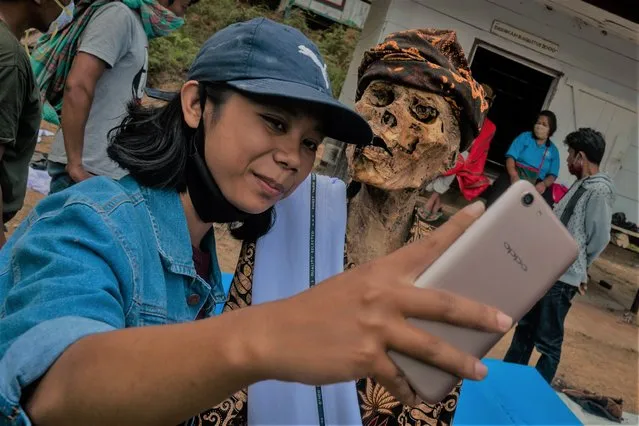
Iin Arensia taking a selfie with his grandfather preserved body Ne Potta during a traditional ritual called “Manene” in Panggala, Nort Toraja, South Sulawesi, Indonesia, Tuesday, August 25th 2020. (Photo by Hariandi Hafid/ZUMA Wire/Rex Features/Shutterstock)

Iin Arensia taking a selfie with his grandfather preserved body Ne Potta during a traditional ritual called “Manene” in Panggala, Nort Toraja, South Sulawesi, Indonesia, Tuesday, August 25th 2020. (Photo by Hariandi Hafid/ZUMA Wire/Rex Features/Shutterstock)
Details
27 Aug 2020 00:03:00
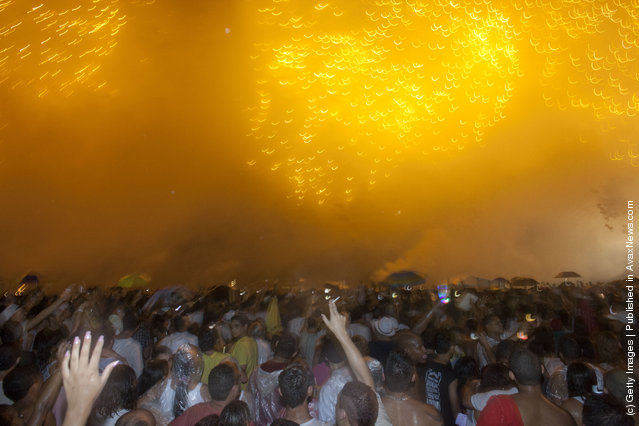
Brazilians Flock To Ocean For New Year's Eve Ritual

Brazilians celebrate at the annual New Year's Eve beach party on December 31, 2011 for the Copacabana Reveillon in Rio De Janeiro, Brazil. (Photo by Konrad Fiedler/Getty Images)
Details
01 Jan 2012 11:12:00
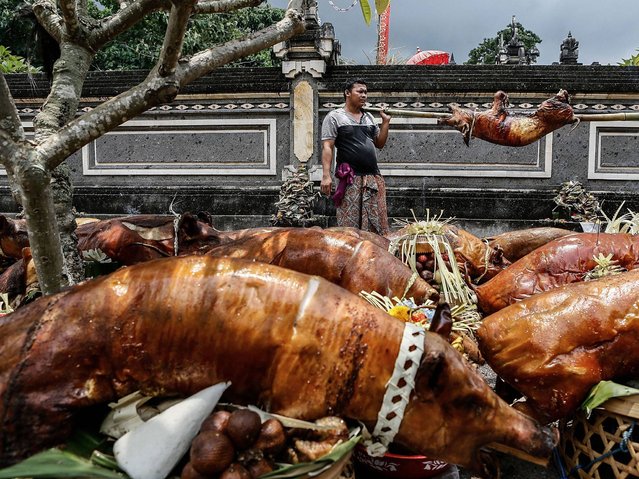
Villager searches for a place for the roasted pigs in Dalem Temple at Timbrah Village in Karangasem. (Photo by Putu Sayoga/Getty Images)

Villager search for a place for the roasted pigs in Dalem Temple at Timbrah Village on February 27, 2014 in Karangasem, Bali, Indonesia. Usaba Dalem is an annual ritual held by the people of Timbrah Village, during this ritual all the villagers will cook roasted pigs and carry them to Dalem Temple as an offering to God and an expression of gratitude for a successful harvest. (Photo by Putu Sayoga/Getty Images)
Details
28 Feb 2014 07:28:00
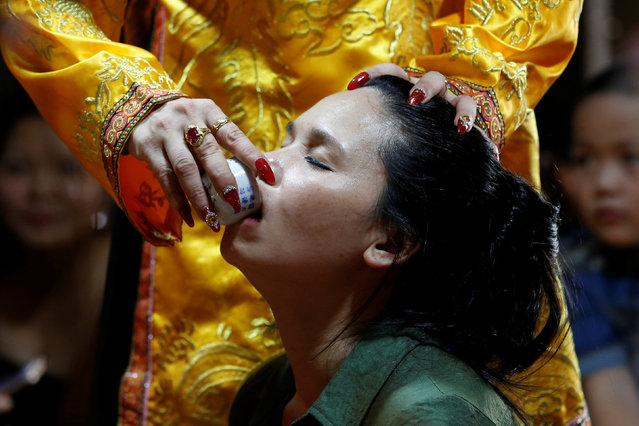
Pham Thi Thanh drinks a glass of water used as a treatment during a medium ritual at a Hau Dong ceremony at Phu Day temple in Nam Dinh province, Vietnam, May 7, 2017. (Photo by Reuters/Kham)

Pham Thi Thanh drinks a glass of water used as a treatment during a medium ritual at a Hau Dong ceremony at Phu Day temple in Nam Dinh province, Vietnam, May 7, 2017. Dating to the 16th century, Hau Dong centres on a belief in the Mother Goddesses of three realms – forest, water and heaven. It draws from elements of Taoism, Buddhism and other religions. (Photo by Reuters/Kham)
Details
27 May 2017 08:03:00
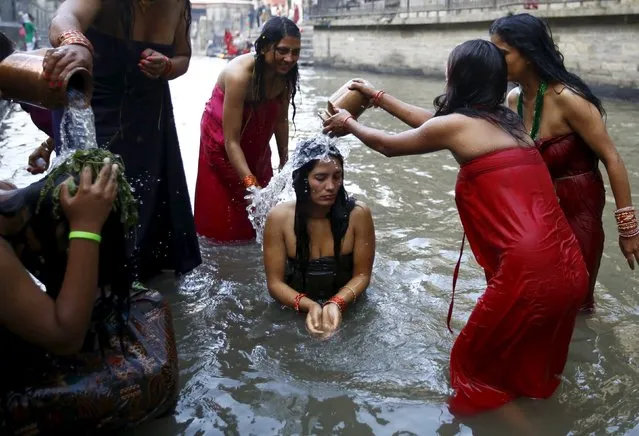
Nepalese women performs ritual as they take a holy bath in the Bagmati River, during the Rishi Panchami festival, in Kathmandu, Nepal September 18, 2015. Rishi Panchami is observed on the last day of Teej when women worship Sapta Rishi (Seven Saints) to ask for forgiveness for sins committed during their menstrual periods throughout the year. (Photo by Navesh Chitrakar/Reuters)

Nepalese women performs ritual as they take a holy bath in the Bagmati River, during the Rishi Panchami festival, in Kathmandu, Nepal September 18, 2015. Rishi Panchami is observed on the last day of Teej when women worship Sapta Rishi (Seven Saints) to ask for forgiveness for sins committed during their menstrual periods throughout the year. The Hindu religion considers menstruation as a representation of impurity and women are prohibited from taking part in religious practices during their monthly menstruations. (Photo by Navesh Chitrakar/Reuters)
Details
21 Sep 2015 12:23:00