Loading...
Done
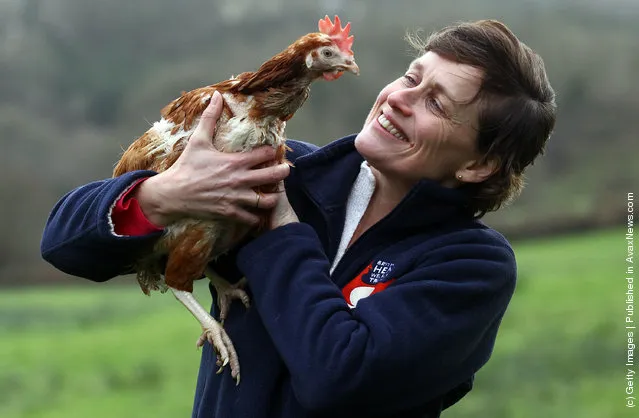
Britain's Last Battery Hen Is Released

Jane Howorth from national charity the British Hen Welfare Trust holds Liberty the last ex-battery hen to be rehomed on December 29, 2011 in Chulmleigh, England. The rehoming of Liberty signifies the end of the small battery hen cage, which has been phased out and replaced by enriched cages in preparation of the European Union directive banning the smaller cages from January 1, 2012. (Photo by Matt Cardy/Getty Images)
Details
30 Dec 2011 11:20:00
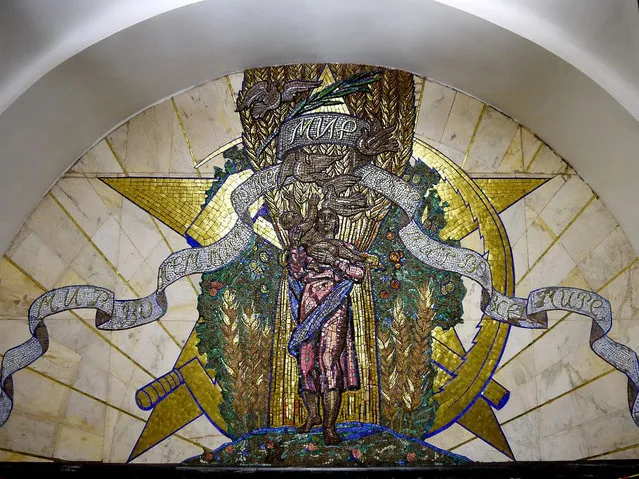
Moscow Metro

The is a rapid transit system serving Moscow and the neighbouring town of Krasnogorsk. Opened in 1935 with one 11-kilometre (6.8 mi) line and 13 stations, it was the first underground railway system in the Soviet Union. As of 2011, the Moscow Metro has 185 stations and its route length is 305.7 kilometres (190.0 mi). The system is mostly underground, with the deepest section 84 metres (276 ft) at the Park Pobedy station. The Moscow Metro is the world's second most heavily used rapid transit system after Tokyo's twin subway.
Details
13 Jun 2012 09:17:00
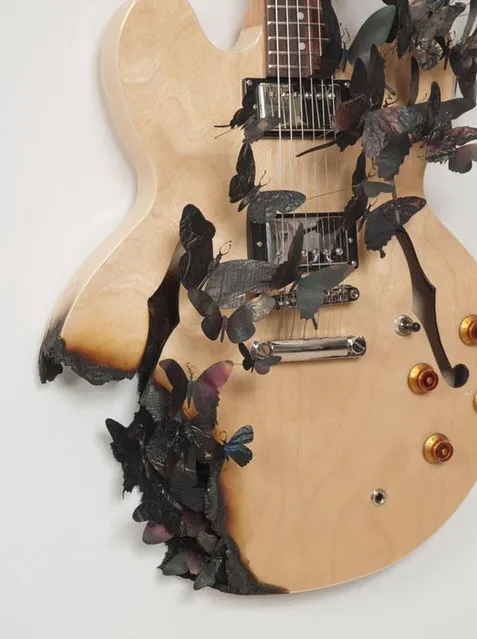
Paul Villinskis By Butterflies Art

Paul Villinski is a professional visual artist who has created studio and large-scale artworks for more than three decades. Villinski was born in York, Maine, USA, in 1960, son of an Air Force navigator. He has lived and worked in New York City since 1982. A scenic route through the educational system included stops at Phillips Exeter Academy and the Massachusetts College of Art, and a BFA with honors from the Cooper Union for the Advancement of Science and Art in 1984. He lives with his partner, the painter Amy Park, and their son, Lark, in their studios in Long Island City, NY.
Details
02 Mar 2013 12:24:00
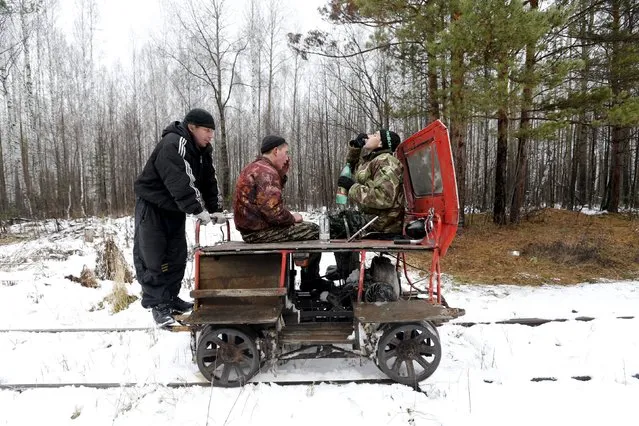
(L-R) A man nicknamed "Barcelona", Alexey Bolotov and Alexey Jakushin drink vodka as they travel by a pioneer motorised railcar on their way to Kalach, Sverdlovsk region, Russia October 18, 2015. The "pioneer," a light auxiliary rail vehicle, is a popular form of transport among people who live along the Alapayevsk railway. (Photo by Maxim Zmeyev/Reuters)

(L-R) A man nicknamed "Barcelona", Alexey Bolotov and Alexey Jakushin drink vodka as they travel by a pioneer motorised railcar on their way to Kalach, Sverdlovsk region, Russia October 18, 2015. The "pioneer," a light auxiliary rail vehicle, is a popular form of transport among people who live along the Alapayevsk railway. In a remote corner of the Urals region at the end of a narrow-gauge railway is Kalach, population about a dozen. Three decades ago 600 people called the village home, but the local forestry industry suffered as the former Soviet Union imploded and people moved away in search of work. In Kalach today there are no telephones, no mobile reception and only a few hours of electricity a day. (Photo by Maxim Zmeyev/Reuters)
Details
15 Nov 2015 08:06:00
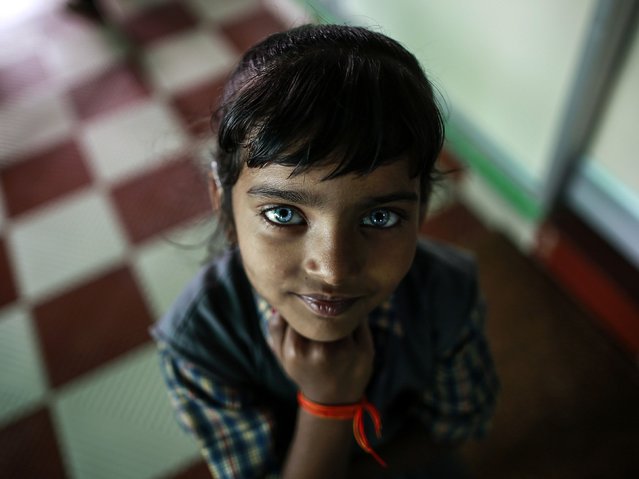
A girl who suffers from hearing and speech disorders reacts to the camera at a rehabilitation centre supported by Bhopal Medical Appeal, for children who were born with mental and physical disabilities, in Bhopal November 11, 2014.(Photo by Danish Siddiqui/Reuters)

A girl who suffers from hearing and speech disorders reacts to the camera at a rehabilitation centre supported by Bhopal Medical Appeal, for children who were born with mental and physical disabilities, in Bhopal November 11, 2014. The rehabilitation centre only treats families they believe have been affected by the Union Carbide gas leak 30 years ago. Human rights groups say that thousands of tonnes of hazardous waste remain buried underground, and the government has conceded it is contaminated. There has, however, been no long-term epidemiological research which conclusively proves that birth defects are directly related to the drinking of the contaminated water. (Photo by Danish Siddiqui/Reuters)
Details
30 Nov 2014 12:00:00
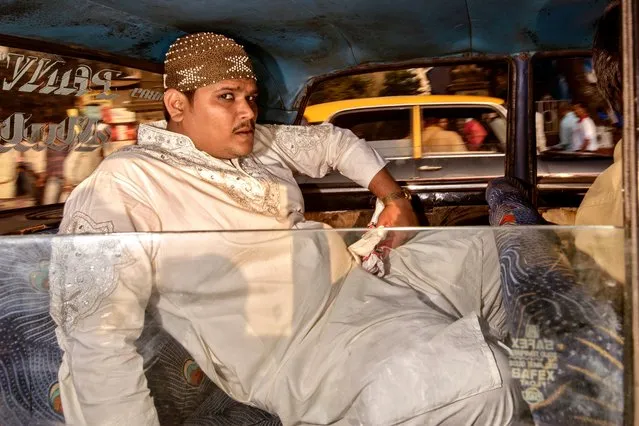
“I’m not scared of breaking the fourth wall”, Wallace has said of the photos where the subject is clearly aware of him taking the shot. “If they are looking at you in a photograph most photographers will think, oh, that’s not a good image. (But) people like to be involved and in the picture. You can see what they are thinking, see them talking”. (Photo by Dougie Wallace/The Guardian)

In Dougie Wallace’s photos of Mumbai taxis, the chatter, yelling, and constant horns of the city are almost audible. A selection of his images is on show at Gayfield Creative Spaces, Edinburgh, as part of the Retina photography festival until 30 July. For four years, the Glasgow-born Wallace focused his photos on one kind of taxi in particular: the Premier Padmini, a 1960s workhorse painted in black and yellow. Locally known as “Kaali-Peeli”, there were once more than 60,000 of them in the Indian city. But thanks to laws restricting pollution, the cars now are fast disappearing from Mumbai’s streets. (Photo by Dougie Wallace/The Guardian)
Details
13 Jul 2016 13:50:00
A female member of the anti-balaka, a Christian militia, patrols with other militiamen outside village of Zawa April 8, 2014. (Photo by Goran Tomasevic/Reuters)

Anti-balaka militia originally sprang up to protect the Christian population of the Central African Republic, but now stand accused of human rights abuses themselves. Last month, the African Union branded militia targeting Muslims in Central African Republic as “terrorists” and said they would be treated as enemy combatants, a day after killing a Congolese peacekeeper and amid deepening international frustration at continuing violence in the impoverished and landlocked country. Photo: A female member of the anti-balaka, a Christian militia, patrols with other militiamen outside village of Zawa April 8, 2014. (Photo by Goran Tomasevic/Reuters)
Details
10 Apr 2014 10:26:00
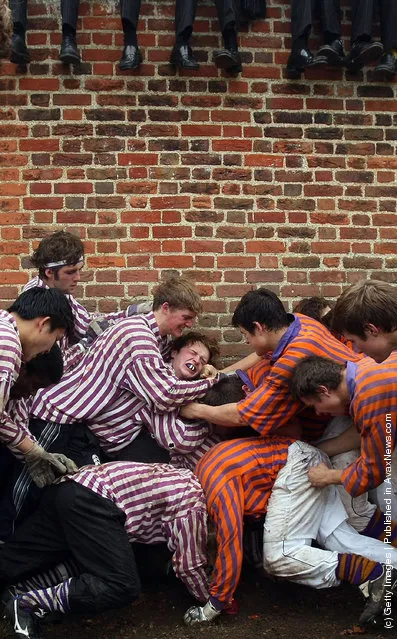
Eton Wall Game

“The Eton wall game is a game similar to football and Rugby Union, that originated from and is still played at Eton College. It is played on a strip of ground 5 metres wide and 110 metres long next to a slightly curved brick wall, erected in 1717”. – Wikipedia

Photo: The “Collegers” and the “Oppidans” of Eton College take part in the “Wall Game” as boys in their traditional school uniform watch from on top of the wall on November 17, 2007 in Eton, near Windsor, Berkshire, England. The first recorded “Wall Game” took place in 1766 with competition between the two houses at the boarding school remaining as fierce as ever on the annual St. Andrew's day event. The object of the game is to get the ball to either end of the wall and score a goal, which has not happened since 1909. As well as scoring a goal the players can win points with a “shy”, where the ball is held against the wall and touched by the hand and awarded one point. (Photo by Christopher Furlong/Getty Images)
Details
22 Sep 2011 11:01:00